Which Fabrics Shrink, and How to Size for Them
By the ZeDaq.ai team · · 5 min read
On this page
Natural and plant-based fabrics such as cotton, linen, wool and viscose are the ones most likely to shrink, while synthetics such as polyester and nylon rarely do. To size for shrinkage, check whether the garment is preshrunk, follow the care label, and choose the size that fits after one wash, not only the size that fits new.
This guide is for shoppers and for store owners who write size notes. Shrinkage is one of the fit details that a size recommendation for fashion stores cannot see on its own, so the product page has to say it.
Why do some fabrics shrink?
Fibers shrink when heat, water and movement let them relax into a tighter shape. Many yarns are stretched during spinning and weaving. When they are washed, they can return toward their natural, shorter state.
Different fibers behave differently:
- Cotton and linen are plant fibers that can tighten in the first wash.
- Wool can shrink and, with heat and agitation, felt, which is a permanent tightening.
- Viscose and rayon are made from plant cellulose and can shrink and lose shape when wet.
- Polyester and nylon are synthetic and generally keep their size, though high heat can still damage them.
Construction matters too. A loose knit has more room to tighten than a dense woven cloth.
Which fabrics shrink the most?
Use this table as a guide to risk. It is general fabric knowledge, not a measured test, so rely on the care label first.
| Fabric | Shrinkage risk | What to watch |
|---|---|---|
| Cotton, unwashed | Moderate to high | Tees, jeans and shirts that are not preshrunk |
| Linen | Moderate | Can shrink and wrinkle after hot washes |
| Wool and knitwear | High if machine washed hot | Felting from heat and agitation |
| Viscose and rayon | High | Shrink and warp when wet |
| Cotton-polyester blends | Low to moderate | Cotton portion can still tighten |
| Polyester and nylon | Low | Heat can still damage the surface |
| Denim, raw | High | Often sold unwashed on purpose |
What does "preshrunk" mean?
Preshrunk means the manufacturer washed or treated the fabric before cutting it, so most shrinking has already happened. Such garments change less at home.
It does not mean no shrinking at all. A preshrunk cotton tee can still tighten a little in a hot wash and hot dryer. Check the product page and the care label.
How do you size for a fabric that might shrink?
Work through these steps.
- Read the fabric composition. Note the main fiber.
- Check for preshrunk or sanforized wording. Sanforized is a common term for fabric treated to limit shrinking.
- Read the care label. Cold wash and air dry reduce shrinkage for most fabrics.
- Compare your body measurements to the size chart.
- If the item is untreated cotton, linen or wool, and your measurements sit at the top of a range, consider the next size up.
- Look at the brand's fit note for comments such as "will shrink slightly on first wash".
The goal is to be comfortable after the first wash, which is when the garment is at its final size. If a garment is sold to be washed hot and tumble dried, plan for more change.
How is shrinkage different from stretch?
Shrinkage is a permanent size change. Stretch is a temporary give in the fabric that returns when you release it. A stretchy fabric can also shrink.
If you are sizing a close-fitting stretch garment, read stretch fabrics and sizing next. It covers the opposite question of when to size down.
What should store owners write on product pages?
Don't leave shrinkage for shoppers to discover. Add these details.
- Fabric composition from the label
- Whether the fabric is preshrunk
- Care instructions in plain words
- A fit note about expected change, such as "may relax or tighten slightly after the first wash"
- Body-measurement size chart and the size the model wears
If you sell items that change in the wash, test one yourself. Measure a sample before and after a wash according to your care label, and record the difference in your own notes. Publish only what you measured.
How does fabric shrinkage connect to returns?
Fit complaints often start after the first wash, when the garment feels different from the day it arrived. Clear fabric notes reduce surprise. Our guide to where fit-related returns come from shows how to sort returns by cause so you can spot a shrinkage problem.
If you sell a wide range, make sure every size gets the same fabric notes. For terms and ranges, see plus-size, curvy and extended sizing.
How can a size tool help?
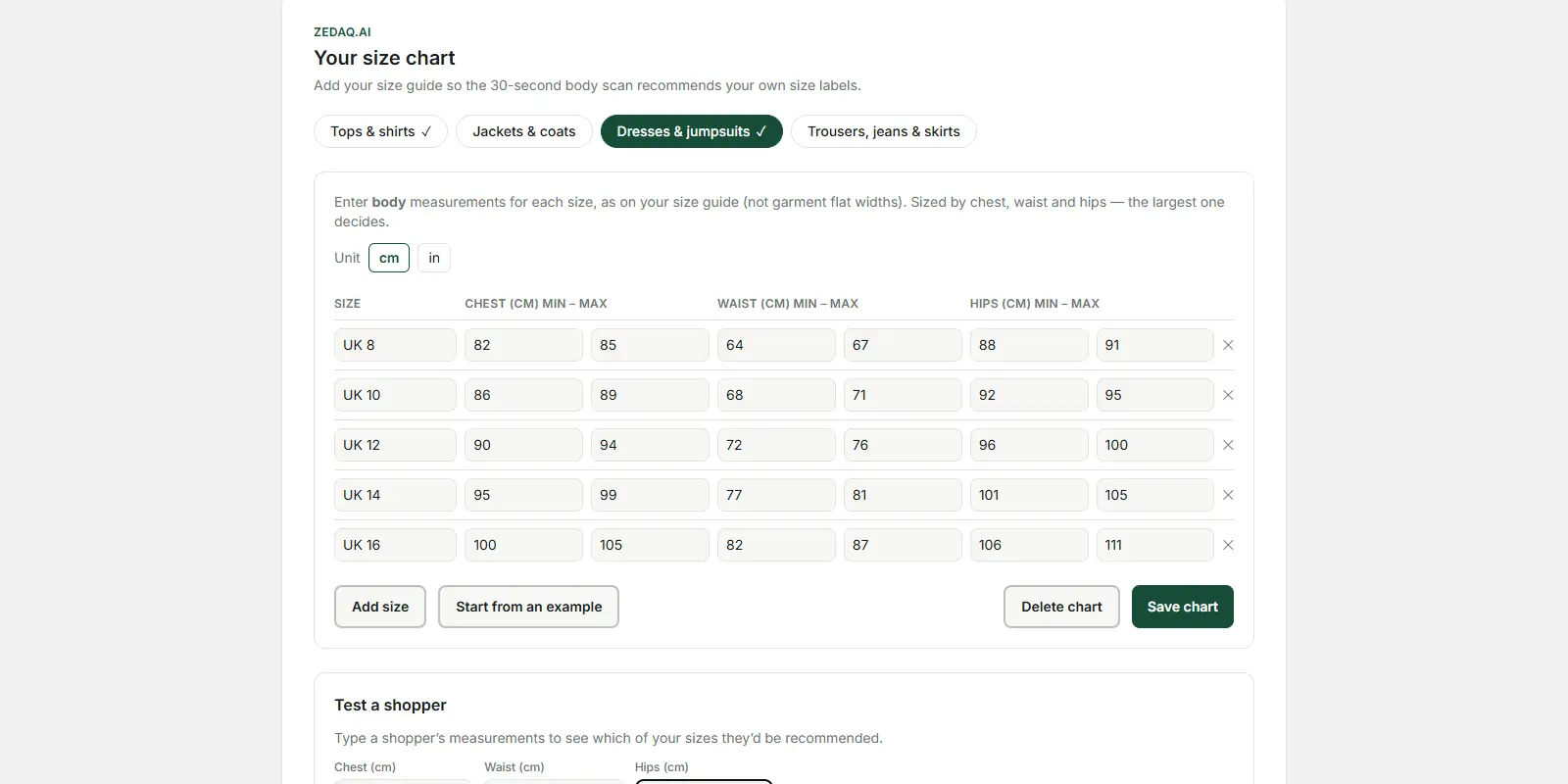
A size tool can't predict how a given garment will shrink, but it can match the shopper's body to your size chart. With ZeDaq.ai, the shopper uploads one photo and their height, and the measurements are matched to the chart you entered. If they fall between sizes, the tool recommends the larger relevant one.
That cautious rule gives some room for a garment that may tighten. You can try the scan on yourself in the live demo.
Try the body scan yourself
Try it on yourself
Live renderUpload a photo, pick a piece, see it rendered on you.
Pick something to try on
Match shoppers to your own size chart
FAQs
Does cotton shrink every time you wash it?
Most shrinkage happens in the first washes. After that, the change slows, though hot washes and hot dryers can cause more.
Can you un-shrink clothes?
Sometimes you can relax a little give back into some fabrics, but the result is not reliable. It is safer to wash with care and size sensibly.
Should I buy a size up for a cotton tee?
Only if the tee is untreated and you are at the top of a size range. If it is preshrunk, your usual size is usually fine.
Do blends shrink less than pure cotton?
Often, yes, because the synthetic part resists shrinkage. The cotton part can still tighten, so follow the care label.
Try ZeDaq.ai free
Virtual try-on and Find my size for your store, plus client, order and invoicing tools for tailors, in one subscription.

