Stretch Fabrics and Sizing: When to Size Down
By the ZeDaq.ai team · · 6 min read
On this page
- What does "stretch" actually mean on a label?
- When should you size down in stretch fabric?
- When should you keep your usual size?
- How does stretch change sizing by garment type?
- How do stretch jeans behave over time?
- What should store owners put on the product page?
- How can a size recommendation tool handle stretch?
- What is a simple method to decide?
Size down in stretch fabrics only when the garment is designed to fit close to the body and the fabric snaps back after stretching. For sizing, if the item is cut loose or the fabric has little recovery, keep your usual size. The fabric label and the brand's size chart tell you which case you are in.
This guide is for store owners who need to explain stretch to shoppers, and for shoppers who want a rule they can use. Stretch is one of the details that AI size recommendation for fashion stores has to handle, because a tape measurement alone doesn't say how much a garment gives.
What does "stretch" actually mean on a label?
Stretch usually comes from elastane, also sold as spandex or Lycra, blended with cotton, polyester, viscose or nylon. A small share of elastane adds give. A large share adds give and strong snap-back.
Knit construction stretches too, even with no elastane. A jersey T-shirt or a rib-knit dress gives because the loops of yarn can open up. A woven shirt with no elastane does not.
So there are two separate ideas:
- Stretch is how far the fabric extends when pulled.
- Recovery is how well it returns to its original shape afterward.
Recovery matters more than stretch when you pick a size. A fabric that stretches a lot but recovers poorly will bag out at the knees or seat after a few wears.
When should you size down in stretch fabric?
Size down when all three of these are true:
- The garment is meant to be close-fitting, such as leggings, a bodycon dress, a ribbed top or skinny jeans.
- The fabric has good recovery, meaning it springs back quickly when you release it.
- The size chart puts your measurements at the top of a size range, not the bottom.
If only one or two are true, stay with your usual size. A brand's fit note, such as "runs large" or "designed to fit snug", is more useful than the fabric alone.
When should you keep your usual size?
Keep your usual size when the fabric has stretch but the cut is relaxed. A loose knit sweater or a drop-shoulder jersey is built with room. Sizing down makes it tight across the shoulders and arms.
Also keep your size when you are between two sizes and the garment has no stretch in one direction. Many stretch woven trousers stretch across the width but not along the length. Sizing down can leave them too short.
Finally, think about comfort. Fabric that is stretched tight all day can feel restrictive, even if it looks fine. If you sell a wide size range, the guide to plus-size, curvy and extended sizing explains how to label it.
How does stretch change sizing by garment type?
The table below is a rule of thumb from general fit practice, not a measured standard. Check each brand's own chart.
| Garment | Common stretch behavior | Sizing guidance |
|---|---|---|
| Leggings and bike shorts | High stretch, good recovery | Often true to size, size down only if the brand says it runs large |
| Stretch jeans | Moderate stretch, may relax with wear | Choose your usual size if you want a snug fit, size down only if waist gaping is a worry |
| Jersey T-shirts | Gentle stretch across the body | Usual size, size up for a looser look |
| Ribbed knit dresses | High stretch across, limited along the length | Usual size, check length separately |
| Stretch woven trousers | Stretch in one direction | Usual size, check rise and inseam |
| Bodysuits | High stretch, fit depends on torso length | Check torso length before the width |
How do stretch jeans behave over time?
Stretch jeans often feel snug when new and ease up with wear. The warmth of your body and repeated bending loosen the fabric, especially at the waist, knees and seat.
That is why shoppers sometimes size down in jeans and then regret it. A good approach is to choose the size that fits comfortably when new, then expect a small amount of give. Washing with heat can also change how the fabric recovers, which is why the care label matters. For the opposite problem, see which fabrics shrink and how to size for them.
What should store owners put on the product page?
Shoppers can't feel the fabric, so you have to describe it. Add these to each stretch product:
- Fabric composition, copied from the label.
- A stretch rating in words, such as no stretch, light stretch or high stretch.
- A fit note, such as "fitted, size up if between sizes" or "stretchy, many shoppers size down".
- Model details, including the size the model wears and their height.
- Body measurements for each size, not just garment measurements.
Clear body-measurement ranges matter because stretch lets a garment cover more than one size. A size chart that lists garment width alone will mislead shoppers when the fabric extends. Our guide to virtual try-on versus size charts explains where a chart helps and where a visual preview helps more.
How can a size recommendation tool handle stretch?
A size tool can only match what you give it. With ZeDaq.ai, the shopper uploads one photo and their height, and the body measurements are matched to your own size chart. Where a shopper falls between two sizes, the recommendation goes up to the largest relevant measurement.
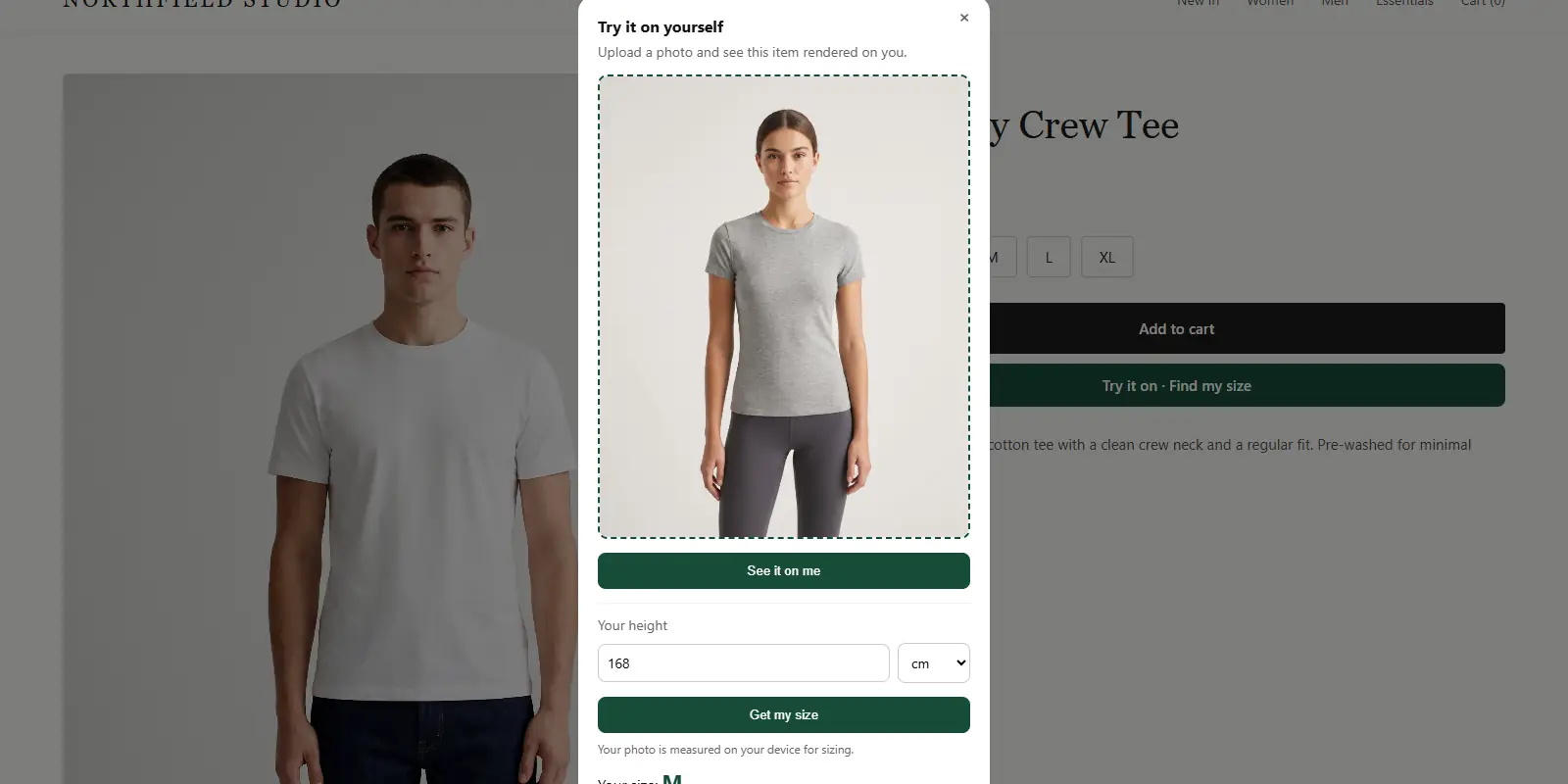
That rule is cautious by design. For a stretch garment, you can adjust the ranges in your chart to reflect how far the fabric extends, and use a separate chart per garment type. You can see how the scan feels from the shopper side in the demo below.
Try the scan on yourself
Try it on yourself
Live renderUpload a photo, pick a piece, see it rendered on you.
Pick something to try on
What is a simple method to decide?
Use this quick check before you size down:
- Read the fabric label and note whether there is elastane.
- Pull a small area of the fabric and let go. Does it return fully?
- Read the brand's fit note and size chart.
- Compare your body measurements to the chart, not to a garment you already own.
- If you are still unsure, keep your usual size and check the return policy.
Let shoppers see which size fits before they buy
FAQs
Should I size down in stretch jeans?
Only if you like a very snug fit or the jeans gape at the waist. Most people do better with their usual size, because stretch denim eases with wear.
Does elastane make a garment true to size?
Not by itself. Elastane makes a size cover a wider range of bodies, but the cut and the brand's chart still decide the fit.
Will stretch fabric lose its shape?
It can. Poor recovery, heat and repeated stretching all wear down elastane, so the garment can bag out over time. Following the care label helps.
How do I explain stretch to online shoppers?
Give the fabric composition, a plain-language stretch rating and a fit note. Add the model's size and height so shoppers can compare.
Try ZeDaq.ai free
Virtual try-on and Find my size for your store, plus client, order and invoicing tools for tailors, in one subscription.

