US Women's Dress Size Chart: How to Read It
By the ZeDaq.ai team · · 4 min read
On this page
- Why can't you trust the number on the label?
- What do you need to measure?
- How do you read the chart columns?
- How do you choose when your measurements span two sizes?
- Does the dress style change which measurement matters most?
- What else should you check before ordering?
- How can stores make their dress charts easier to read?
To read a US women's dress size chart, take your bust, waist and hip measurements and find the row where all three fit the brand's ranges. The number on the label (2, 8, 14) is only a name, and it means different things at different brands.
This guide shows you how to measure, how to read the columns, and what to do when you land between sizes. Store owners can also see how AI size recommendation uses the same measurements to pick a size automatically.
Why can't you trust the number on the label?
US dress sizes are not a fixed measurement. Each brand decides what a "size 8" is, so the same body can be a 6 in one store and a 10 in another.
That is why the chart matters more than the label. The chart lists the body measurements the brand designed that size for. If you want to understand the gap, the article on why clothing sizes vary between brands explains how it happens.
What do you need to measure?
You need three numbers. Use a soft tape measure, stand relaxed, and measure over light clothing or underwear.
- Bust: around the fullest part of your chest, with the tape level across your back.
- Waist: around the narrowest part of your torso, usually just above the belly button.
- Hips: around the fullest part of your hips and seat, with feet together.
Write the numbers in inches. Most US charts use inches, and many list centimeters beside them.
How do you read the chart columns?
Look at the chart from left to right. The first column is the size label. The next columns are body measurements, often shown as a range.
Here is an example chart. It is illustrative only, so check your brand's own chart before you buy.
| Size label | Bust (in) | Waist (in) | Hips (in) |
|---|---|---|---|
| 4 | 34 | 26 | 36 |
| 6 | 35 | 27 | 37 |
| 8 | 36 | 28 | 38 |
| 10 | 37.5 | 29.5 | 39.5 |
| 12 | 39 | 31 | 41 |
Source of the table: example chart for teaching, not a published standard.
Some brands give a single number per size. Others give a range, such as "bust 35 to 36". If your measurement sits inside the range, that size is a match.
How do you choose when your measurements span two sizes?
Many people are not one size on every measurement. The usual advice is to size to the measurement the dress is least forgiving about.
A worked example, using the example chart above:
- Bust 36 in, which is a size 8.
- Waist 28 in, which is a size 8.
- Hips 40 in, which falls between a 10 and a 12.
A fitted sheath dress needs the hips to fit, so you would pick the 10 or 12 and have the waist taken in if needed. A loose shift dress is more forgiving, so the 8 may work.
Take the larger size for fitted styles. Take the size that matches your bust for styles that hang from the shoulders.
Does the dress style change which measurement matters most?
Yes. The silhouette decides where the dress needs to fit closely.
- Fitted or bodycon: hips and bust matter most, because there is no extra fabric.
- A-line or fit-and-flare: bust and waist matter most, since the skirt flares over the hips.
- Wrap dresses: the tie adjusts the waist, so go by bust and hips.
- Shift or tent dresses: go by bust, and check the length.
Stretch fabric also changes the answer. A knit dress gives more room than a woven dress with no stretch, so read the fabric note before you decide.
What else should you check before ordering?
- Garment measurements. Some brands list the dress itself, not the body. Compare your numbers to the right type of chart.
- Length. Charts rarely say where a hem lands on you. Compare the listed length with a dress you own.
- Fit notes and reviews. A line such as "runs small" can change your pick by a size.
Seeing the dress on a body like yours helps too. The comparison of virtual try-on and size charts shows what each tool can and cannot tell you.
How can stores make their dress charts easier to read?
If you run a store, publish body measurements, not just labels. Give one chart per garment type, and keep ranges that meet without gaps.
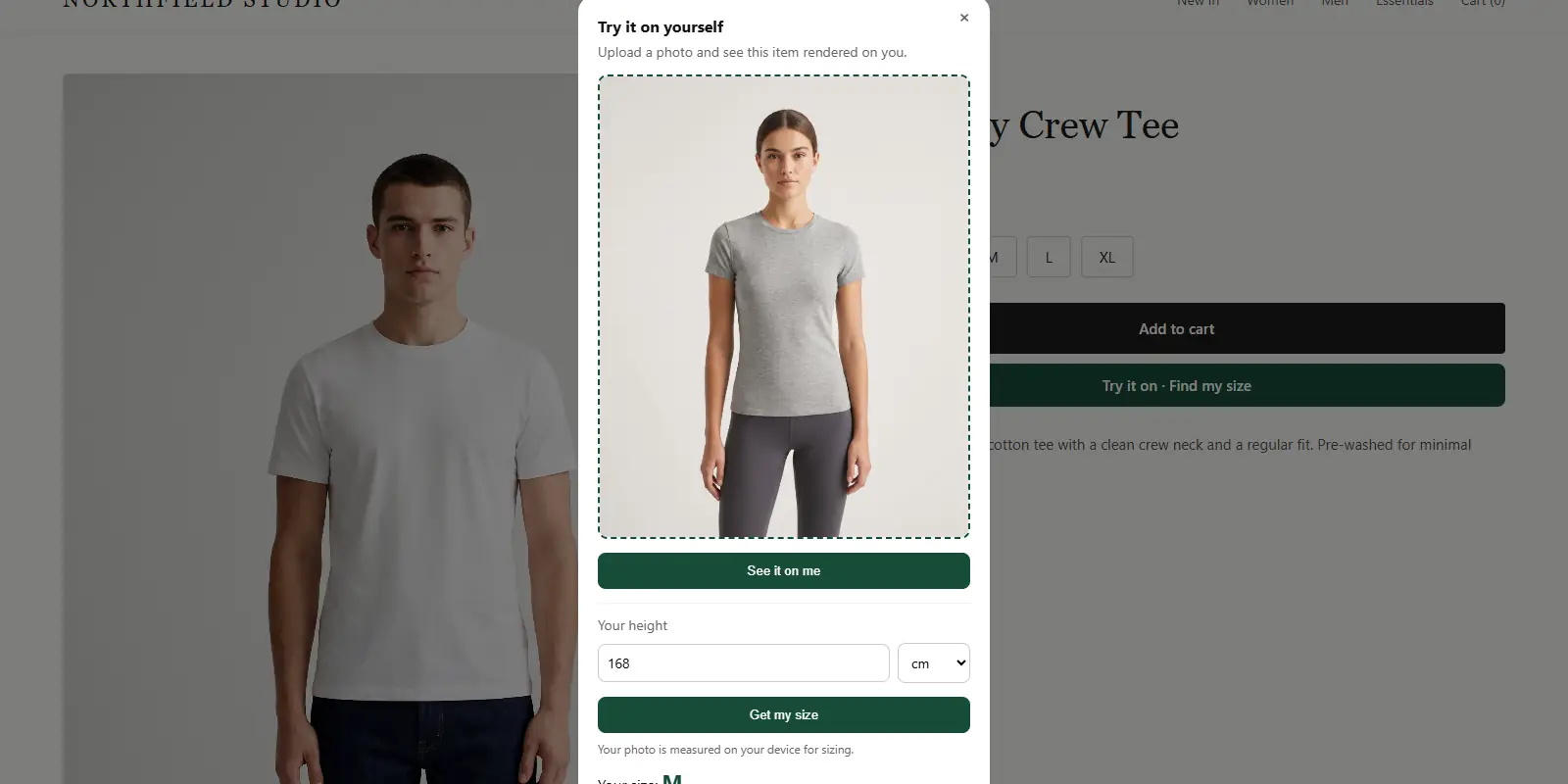
ZeDaq.ai lets merchants enter their own size guide and recommends the store's own labels from a 30-second body scan (one photo plus height). You can see how that works with the live demo.
See how a body scan picks a dress size
Related charts use the same method: the guides to women's jeans sizing and men's shirt sizing show where the waist, neck and chest columns come in.
FAQs
Is a size 8 the same everywhere?
No. Each brand sets its own measurements for a size 8, so the same body can wear different labels across stores. Use the brand's chart.
What if my bust and hips are different sizes?
Choose by the measurement the style is least forgiving about. For fitted dresses that is usually the hips, and a tailor can take in the waist.
Should I size up if I am between sizes?
For fitted or non-stretch dresses, usually yes, because a dress is easier to take in than let out. For stretch or loose styles, the smaller size may fit well.
Are US and UK dress sizes the same?
No. The labels use different numbering systems, so convert by measurements, not by label. Check the brand's own conversion table.
Try ZeDaq.ai free
Virtual try-on and Find my size for your store, plus client, order and invoicing tools for tailors, in one subscription.

