Women's Jeans Size Chart: How to Read It
By the ZeDaq.ai team · · 4 min read
On this page
- What are the two common jeans size systems?
- How do you measure for jeans?
- How do you read the chart columns?
- What if your waist and hips fall in different sizes?
- How does stretch change your size?
- Does rise or inseam change the fit?
- What about "28 equivalent" conversions?
- How can stores help shoppers choose jeans?
To read a women's jeans size chart, measure your waist and hips, find the size whose ranges include both, then check the rise, inseam and fabric stretch. The label number alone is unreliable, because brands define sizes differently.
Jeans are hard to size online because they must fit the waist, hips and thighs at once. The same measurements that power AI size recommendation help here, and this guide shows you how to use them by hand.
What are the two common jeans size systems?
Jeans use two main systems.
- Number sizes such as 2, 4, 6 and 8. These are common for women's jeans in the US.
- Waist sizes such as 26, 27 and 28. These refer to waist in inches, though the actual garment may differ.
Many brands use both, with a size like "28" or "6" and a length such as "30". Because brands set their own meaning, check the chart for each brand.
How do you measure for jeans?
You need a soft tape measure and a few minutes.
- Waist: around the narrowest part of your torso, or where you wear your jeans.
- Hips: around the fullest part of your hips and seat.
- Inseam: from the crotch seam down the inside of your leg to where you want the hem.
- Rise (optional): from the crotch seam up to the top of the waistband on a pair that fits you well.
Measure in inches. If a chart uses centimeters, convert with the chart's own table.
How do you read the chart columns?
Look for waist and hip columns first, then the size label. A typical chart lists a range per size.
Here is an example. It is illustrative, so check your brand's own chart.
| Size label | Waist (in) | Hips (in) |
|---|---|---|
| 26 | 26 | 36 |
| 27 | 27 | 37 |
| 28 | 28 | 38 |
| 29 | 29 | 39 |
| 30 | 30 | 40 |
Source of the table: example chart for teaching, not a published standard.
If your waist is 28 and hips are 38, you match the 28 row. Compare your own numbers across both columns.
What if your waist and hips fall in different sizes?
This is the most common jeans problem. Use the hips to decide for fitted styles, since jeans that fit the hips can be taken in at the waist.
A worked example with the chart above: waist 27 (size 27) and hips 39 (size 29). For skinny or slim jeans, choose the 29 and look for a stretch fabric or have the waist altered. For relaxed jeans, the 27 may be fine.
Some brands sell curvy fits made with a smaller waist for the same hip size. The jeans fit guide to how jeans should fit explains what to check once you try them on.
How does stretch change your size?
Stretch denim gives more room and recovers its shape. Rigid denim gives little, so it needs a more exact size.
Check the fabric note. A pair with stretch can be a size smaller than a rigid pair, while rigid denim often feels tight at first and softens with wear.
Does rise or inseam change the fit?
Yes. Rise sets where the waistband sits, and it changes how the jeans feel at the hips.
- Low rise: sits below the navel.
- Mid rise: sits near the navel.
- High rise: sits at or above the natural waist.
Inseam sets the length. If a brand offers short, regular and long lengths, pick by your inseam measurement.
What about "28 equivalent" conversions?
People often ask for a number-to-waist conversion, such as what a 28 is in numbered sizes. There is no reliable universal table, because brands decide their own sizing.
Use the brand's own chart. If a store gives a conversion, treat it as that store's guide only. The article on why clothing sizes vary so much explains the reason.
How can stores help shoppers choose jeans?
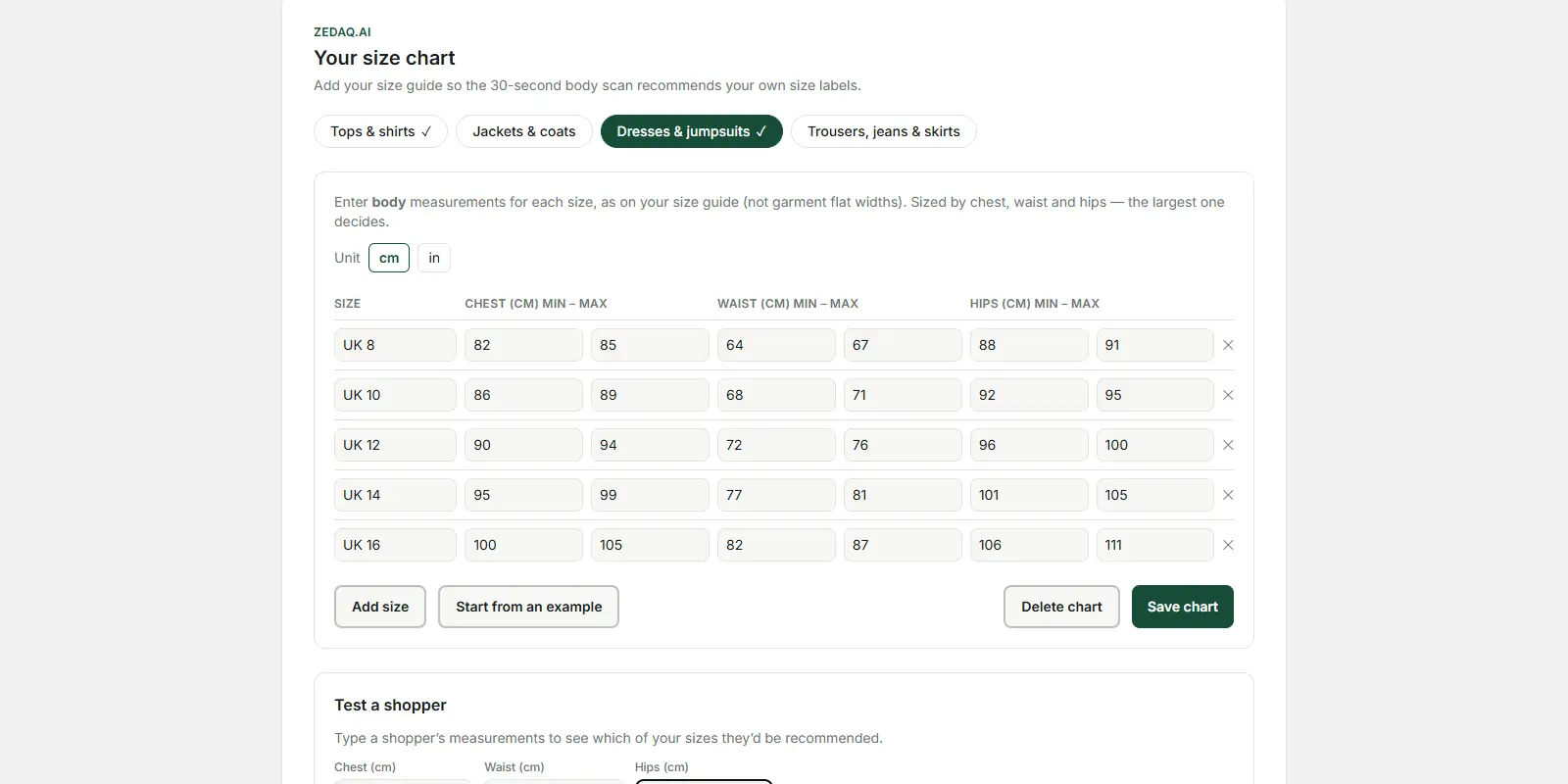
Show waist, hip and inseam in the chart, add fit notes such as "runs small", and offer a size tool. ZeDaq.ai recommends the store's own sizes from a 30-second body scan (one photo plus height), matched to the chart the merchant enters for bottoms.
See a body scan choose a size
Next, read the guide to US women's dress sizes or bra cup sizes. For store owners, fit-related returns shows why clear charts matter.
A quick check before you buy: write your waist, hips and inseam on a note on your phone. Then compare them to the chart for each brand you shop, instead of relying on the size you wore last time.
FAQs
What size is a 28 in women's jeans?
It depends on the brand. A waist size like 28 usually refers to a waist of about that many inches, but check the brand's chart.
Should I size up if I'm between sizes?
For rigid denim, usually yes. For stretch denim, the smaller size may work.
Do jeans shrink?
Some do, especially rigid cotton denim. Check the care label and fabric note.
Why do my jeans gap at the waist?
Your waist is smaller than your hips relative to the cut. Try a curvy fit or have the waist taken in.
Try ZeDaq.ai free
Virtual try-on and Find my size for your store, plus client, order and invoicing tools for tailors, in one subscription.

