Men's Shirt Size Chart: How to Read It
By the ZeDaq.ai team · · 4 min read
On this page
To read a men's shirt size chart, measure your neck and chest, find the row where both fit, and pick that size. Casual shirts use letters (S, M, L), while dress shirts often use a neck size plus a sleeve length.
Charts differ from brand to brand, so always use the one on the product page. Store owners can also let shoppers get a size recommendation from their own chart instead of guessing.
What do S, M, L and neck sizes mean?
Letter sizes group a range of body measurements under one label. A medium at one brand can fit differently from a medium at another.
Dress shirts use a neck number, which is the collar size. A second number may give the sleeve length. Reading both together describes the fit better than a single letter.
How do you measure for a shirt?
You need a soft tape measure and a mirror, or a friend. Wear only a thin layer.
- Neck. Wrap the tape around the base of the neck, where a collar sits. Leave room for one finger.
- Chest. Measure around the fullest part, under the arms, keeping the tape level.
- Sleeve. Measure from the center back of the neck, over the shoulder, to the wrist with the arm slightly bent.
- Waist, for fitted shirts. Measure around the natural waist.
Write down each number and note whether you used inches or centimeters.
How do you read a size chart table?
Here is a sample layout. It is an example chart to show how tables work. Check your brand's own chart before ordering.
| Label | Neck | Chest | Sleeve |
|---|---|---|---|
| S | 14.5 in | 36 in | 32 in |
| M | 15.5 in | 40 in | 33 in |
| L | 16.5 in | 44 in | 34 in |
Follow these steps with any chart:
- Check the unit at the top of the table.
- Find your chest and neck columns.
- Choose the row that covers both measurements.
- If they point to different rows, read the next section.
What if you are between two sizes?
If your neck and chest land in different rows, base the choice on the garment and the fit you want. For a fitted shirt, size to your chest and check the neck. For a dress shirt, the collar often matters most, because it is hard to alter.
A slightly roomy body is usually easier to live with than a tight collar. Many brands add a fit note such as "runs small," so read the product description too.
Also check whether the chart lists body measurements or the measurements of the shirt itself. Shirt measurements include extra room for comfort. If a chart lists garment measurements, choose a shirt that is larger than your body measurement.
What is the difference between slim, regular and relaxed fits?
Many brands sell the same size in several cuts. The label on the chart may be the same, but the shirt will feel different.
- Slim fit is cut closer to the body, with less room at the chest and waist.
- Regular fit has more room and suits most shoppers.
- Relaxed fit is roomier still, often with a longer body.
If your measurements sit between two rows, the cut can help you choose. A person who prefers a closer look may take the regular cut in the smaller size, while someone who wants room may take the relaxed cut.
What mistakes do shoppers make with shirt charts?
A few errors cause most wrong orders:
- Measuring over thick clothes. Measure over a thin layer so the number is honest.
- Pulling the tape too tight. Keep it snug but flat, with room for a finger at the neck.
- Mixing units. Check whether the chart uses inches or centimeters.
- Ignoring the sleeve. A good chest fit with short sleeves still looks wrong.
- Trusting the letter alone. Compare numbers, not labels, across brands.
Keep a note of your own measurements on your phone. Then you can check any new chart in under a minute.
Why does reading the chart matter for stores?
For a store, a confusing chart is a common cause of exchanges. Guidance on where fit-related returns come from shows how to spot the patterns in your own data.
Pair a clear chart with a way to check it. ZeDaq.ai gives a size recommendation from a 30-second body scan, one photo plus height, matched to the store's own size chart. A generic UK/US/EU/AU chart is the fallback.
If you want to compare another garment type, read how to read a men's suit size chart or a women's jeans size chart.
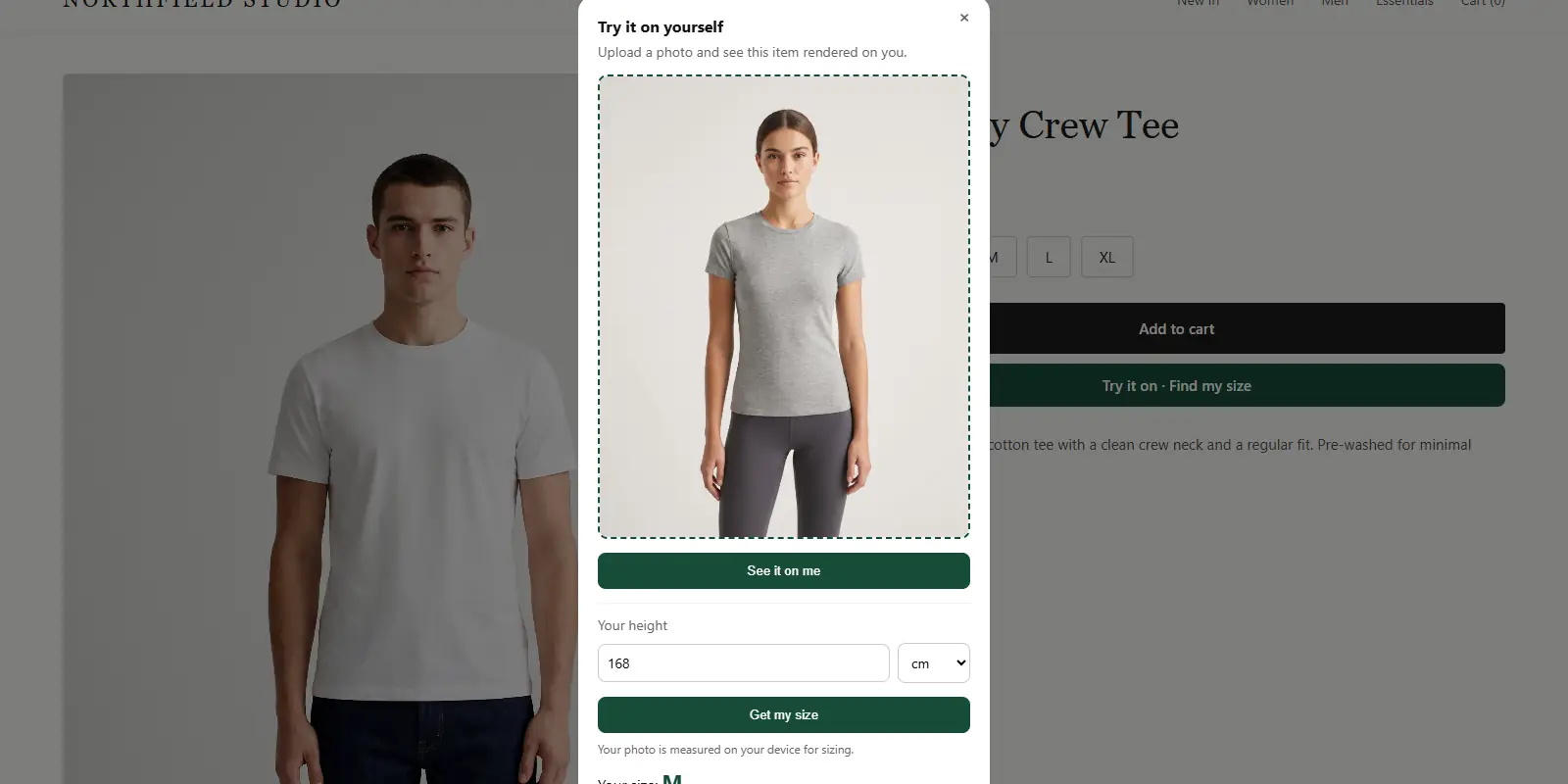
See how a size recommendation looks to a shopper
Try it on yourself
Live renderUpload a photo, pick a piece, see it rendered on you.
Pick something to try on
Try the shopper experience yourself
FAQs
Is neck size the same as collar size?
Yes. Both describe the measurement around the base of the neck, which a dress shirt collar is cut to fit.
Should I size up if I'm between sizes?
For a shirt you plan to wear untucked or layered, the larger size is often safer. For a tailored shirt, check the chest and waist measurements first.
Do all brands use the same sizes?
No. Labels and measurements vary, so use each brand's own chart.
Can I use a tailor to fix a shirt that's too big?
Often yes, because shirts can be taken in at the sides and sleeves. A shirt that is too small is harder to fix.
Try ZeDaq.ai free
Virtual try-on and Find my size for your store, plus client, order and invoicing tools for tailors, in one subscription.

