Unisex Sizing: How to Convert to Women's Sizes
By the ZeDaq.ai team · · 5 min read
On this page
There is no fixed formula to convert unisex sizes to women's sizes. The reliable way is to compare body measurements: find the brand's unisex chart, measure yourself, and pick the row that matches your chest, waist and hips.
This matters for stores too. A shopper who wears a women's medium may not know which unisex size to pick, and a wrong guess leads to a return. An AI size recommendation removes the conversion by matching a shopper's own measurements to your size chart.
Why can't you convert unisex sizes with a simple rule?
Because sizes are set by each brand, not by a shared rule. A "unisex medium" from one brand can be cut very differently from another's.
Three things make a fixed formula unreliable:
- Different cuts. Unisex garments are often cut straighter, with less shaping at the waist and hips.
- Different bases. Some brands grade unisex sizes from a men's pattern, others from a women's one. Brands rarely say which.
- Different fit intent. A relaxed hoodie and a fitted tee both carry the unisex label.
Whenever you see a "convert this size to that size" shortcut, treat it as a rough start and check the chart.
How do you convert unisex to women's sizes step by step?
- Find the brand's unisex size chart. Look for body measurements, not flat garment widths. If the chart lists garment measurements, note that.
- Measure yourself. Use a soft tape on chest, waist and hips, over light clothing. Write the numbers down.
- Match the row that fits your largest relevant measurement. For a top, that is usually the chest. For trousers, it is waist and hips.
- Check the fit note. If the brand says "runs large" or "oversized", decide whether you want that look or a smaller size.
- Compare with a garment you own. Lay a favorite piece flat and measure it. Compare it with the chart's garment dimensions, if given.
- Pick the roomier size if you are between sizes and the fabric does not stretch. It is usually easier to take in a loose garment than to let out a tight one.
For the measuring step itself, see the guide to the unisex hoodie size chart.
What do you compare on each type of garment?
| Garment | Measurements to compare | Common trouble spot |
|---|---|---|
| T-shirt | Chest, shoulder, length | Shoulders sit wide |
| Hoodie or sweatshirt | Chest, sleeve length | Sleeves too long |
| Jacket | Chest, shoulder, sleeve | Shoulders and sleeves |
| Trousers | Waist, hips, inseam | Hips tight, waist loose |
| Shirt | Chest, shoulder, neck, sleeve | Chest and shoulders |
This table is a checklist, not a size chart. Always use the brand's own chart for the actual values.
What goes wrong most often?
The shoulders fit wrong
Unisex garments often have wider shoulders than a shopper expects. If the shoulders sit past your own, the sleeves look long and the top looks boxy. Consider a smaller size if you like a closer fit, and check the shoulder measurement if the brand lists one.
The hips do not match the waist
Straight cuts do not follow a curve. A shopper with a clear waist-to-hip difference may find that the size that fits the hips leaves extra room at the waist. In that case, choose the size for the larger measurement and plan for a simple alteration.
The length is off
Unisex tops can be longer or shorter than a shopper expects. Compare the length with a piece you already own. Shoppers who need extra length can also read the guide to tall sizes for women.
The label is from a different region
A size label can also vary by country. If your chart uses another region's sizes, the guide to EU to US women's clothing size conversion helps with that part. Use it for region conversion, and use measurements for the unisex step.
What should stores do to help?
If you sell unisex items, make the conversion unnecessary.
- Say what the cut is based on. For example, "cut straight, not shaped at the waist".
- List body measurements for every size. Shoppers can then compare their own.
- Show the model's size. Give their height and the size they wear.
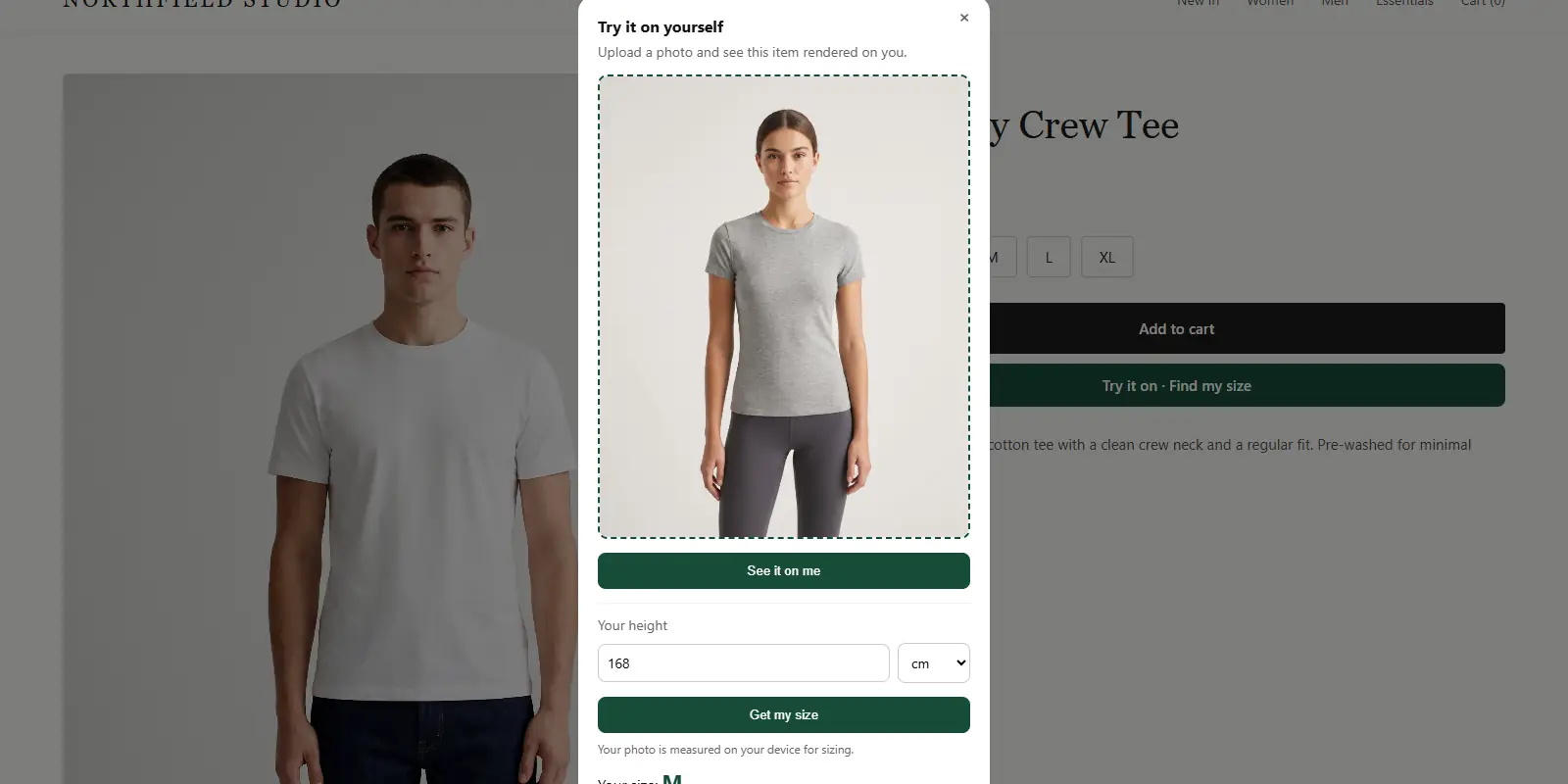
- Offer a size recommendation. With ZeDaq.ai, a shopper uploads one photo and enters their height for a 30-second body scan, and the measurements are matched to your size chart. If you have no chart for that garment type, a generic UK, US, EU or AU chart is the fallback.
The article on virtual try-on versus size charts compares the two approaches.
See how a body scan picks a size
Try it on yourself
Live renderUpload a photo, pick a piece, see it rendered on you.
Pick something to try on
Is unisex always the right choice?
Not always. If a garment is fitted, such as a shaped dress or tailored trousers, a women's cut may follow the body more closely. If the garment is meant to be loose, unisex is often a good option. Decide by the look you want, not by the label.
Let shoppers skip the size conversion
FAQs
Is a unisex medium the same as a women's medium?
Not necessarily. Each brand sets its own chart. Compare your body measurements with the brand's chart instead of the letter.
Should I size down in unisex clothing?
Only if the brand's chart and fit note suggest it, and only if you want a closer fit. Check the shoulder and chest measurements before you decide.
Do unisex sizes include hips?
Some charts list chest and waist only. If the hips are missing, compare a similar garment you own, or ask the brand.
How can a store reduce unisex size returns?
Publish body measurements and fit notes, show the model's size, and offer a size recommendation based on the shopper's own measurements.
Try ZeDaq.ai free
Virtual try-on and Find my size for your store, plus client, order and invoicing tools for tailors, in one subscription.

