Shopify Wholesale for Fashion Brands
By the ZeDaq.ai team · · 4 min read
On this page
- What does Shopify offer for wholesale?
- Who is wholesale for?
- How do you set your wholesale prices?
- How do you organize products for boutique buyers?
- Should you use a separate store or one store?
- What should you prepare before you invite buyers?
- How do you handle returns from boutiques?
- What about the retail experience?
Shopify wholesale lets a fashion brand sell to boutiques from the same store it uses for shoppers, by setting up business buyers as companies with their own pricing and payment options. You run one store and one inventory, and keep trade terms apart from retail prices.
This guide is for fashion brand owners moving into wholesale. It covers what Shopify offers, how to plan pricing, and what to add to the store. It sits alongside our guide to adding virtual try-on to Shopify, which is aimed at the retail side.
What does Shopify offer for wholesale?
Shopify's B2B features let you set up business customers as companies in the admin and tailor what each sees. According to Shopify's B2B help page, you can personalize pricing, currency, products, and payment and shipping methods for each B2B customer (checked November 2026).
The same page says B2B is available on the Basic, Grow, Advanced and Shopify Plus plans, and not on the Starter or Retail plans. Plans and features change, so check that page before you decide.
Who is wholesale for?
It suits brands that:
- already have stock with a steady supply,
- want a second sales channel next to direct-to-consumer,
- can meet minimum order sizes,
- can ship larger boxes to a retailer.
If you sell made-to-order items, wholesale needs a clear lead-time policy.
How do you set your wholesale prices?
Wholesale pricing starts from your costs, not from the retail price alone. Work through these steps:
- Add up the unit cost: fabric, trims, labor, packaging.
- Set the retail price you want shoppers to pay.
- Choose a wholesale price that covers costs and leaves your margin, below retail so the boutique can still earn.
- Add order minimums, by units or by value.
- Decide on case packs, such as a full size run per style.
Keep the numbers in a spreadsheet before you enter them. A boutique expects wholesale prices to be consistent from season to season.
How do you organize products for boutique buyers?
Buyers shop by collection and season, so group your line that way. Use clear names, and put size runs and color options in one product.
Include:
- full size information and fit notes,
- fabric and care details,
- clear photos on a plain background,
- lead times for each delivery window.
Good size data cuts questions. The notes on showing wholesale buyers your line on real bodies explain how fit visuals help a buyer decide.
Should you use a separate store or one store?
You can run wholesale in the same store through B2B companies, or in a separate store.
| Option | Good for | Watch for |
|---|---|---|
| Same store, B2B companies | One inventory, less admin | Needs a plan that includes B2B |
| Separate wholesale store | Fully separate look and rules | Two stores to run and update |
If you are unsure, start small with a few trusted boutiques on one store. Add more as the process works.
What should you prepare before you invite buyers?
Create a short line sheet with your styles, sizes, wholesale prices and delivery windows. Decide your payment terms and shipping costs. Test a sample order yourself as a company account, so you see what a buyer sees.
How do you handle returns from boutiques?
Wholesale returns follow different rules from retail ones. Agree on terms before the first order. A written policy on damaged goods, mistakes and unsold stock avoids arguments, as covered in returns from wholesale customers. For your retail side, the ideas in return policies that protect margins apply too.
What about the retail experience?
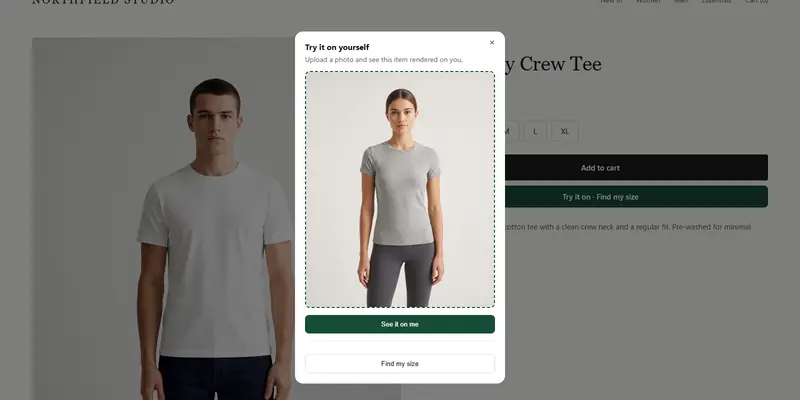
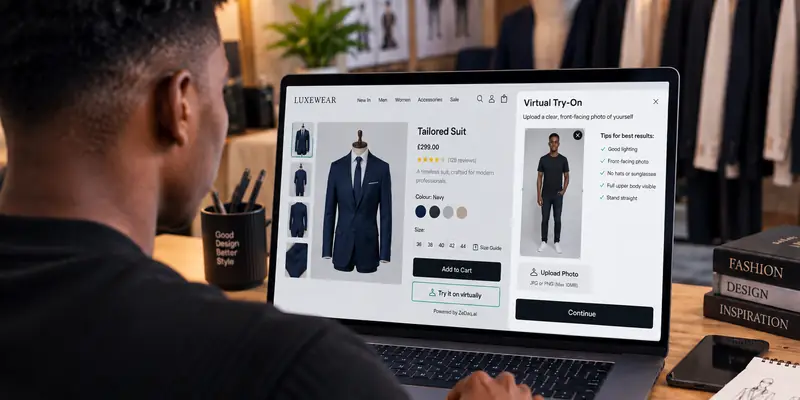
Wholesale and retail share one store. Your retail shoppers still need to know their size. ZeDaq.ai is available as a Shopify app that shows the store's real garment on a shopper's photo and recommends a size from your own size chart.
You can start on the Free plan, which includes 3 try-ons and 3 measurements a month. Paid plans start with Micro at $14 a month, and every paid plan has a 3-day free trial with no card required. The first month of Micro is $1, then $14 a month; first-month prices apply to monthly plans only, once per business, on its first paid plan. Check the live pricing page for current details.
Some brands also use upsell and wishlist tools on the retail side. See the lists of Shopify upsell apps and wishlist apps.
Help your retail shoppers find the right size
FAQs
Can I run wholesale and retail in one Shopify store?
Yes. Shopify's B2B features let you set up business buyers as companies in the same store, on eligible plans.
Which Shopify plans include B2B?
Per Shopify's B2B help page, Basic, Grow, Advanced and Shopify Plus. It is not available on Starter or Retail. Check the page for updates.
Do I need a minimum order size?
It is common, and it protects your margin. Set it by units or value, and state it clearly to buyers.
How do I find boutique buyers?
Start with stores you already know, then use trade shows and direct outreach. Keep a simple line sheet and price list ready.
Try ZeDaq.ai free
Virtual try-on and Find my size for your store, plus client, order and invoicing tools for tailors, in one subscription.