Receipts vs Invoices: What Tailors Should Send
By the ZeDaq.ai team · · 5 min read
On this page
- What is the difference between a receipt and an invoice?
- When should a tailor send an invoice?
- When should a tailor send a receipt?
- What should an invoice include?
- What should a receipt include?
- What do you do with part payments?
- What about clients in other countries?
- How do you set up a simple routine?
- Do you need other tools like Square?
Tailors should send an invoice to ask for payment and a receipt to confirm it. Send an invoice when you agree an order or finish work, and send a receipt each time money arrives, including deposits.
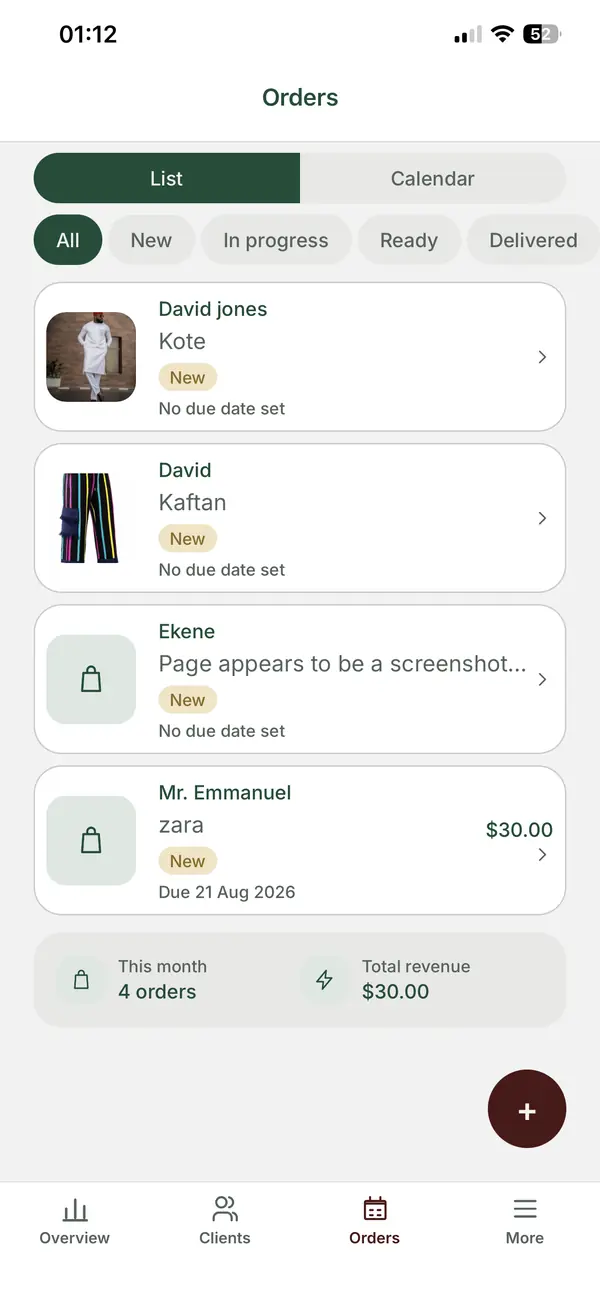
This guide is for tailors and designers who are not sure which document to use. If you want one place to manage clients, orders and invoices, the ZeDaq.ai tailor tools are built for that.
What is the difference between a receipt and an invoice?
The difference is timing. An invoice comes before payment. A receipt comes after.
| Invoice | Receipt | |
|---|---|---|
| Purpose | Requests payment | Confirms payment |
| Sent | Before or when payment is due | After payment is received |
| Shows | Amount owed and due date | Amount paid and date paid |
| Used by client | To pay | As proof of payment |
One order can need both. You invoice for the full price or the deposit, then issue a receipt each time the client pays.
When should a tailor send an invoice?
Send an invoice whenever you want to be paid for something. For a tailor, the common moments are:
- When you accept an order: invoice the deposit.
- When the garment is ready: invoice the balance.
- For alterations or repairs: invoice before you hand the item back.
- For extras: invoice added work, such as a change of fabric.
Put a due date on every invoice. A clear date makes late payment easier to follow up, as in how to chase unpaid tailoring invoices.
When should a tailor send a receipt?
Send a receipt as soon as you receive money. Clients keep it as proof, and so do you.
A receipt is useful when:
- The client pays a deposit.
- The client pays the balance and collects the garment.
- The client pays in cash, where no bank record exists.
- A client asks for proof for a refund, a group order or their own records.
Cash is where receipts matter most. A bank transfer leaves a record. Cash doesn't, so write the receipt on the spot.
What should an invoice include?
Keep it simple and complete:
- Your business name and contact details.
- The client's name.
- An invoice number and the date.
- A description of the work, such as "two-piece suit, made to measure".
- The amount, split into deposit and balance if relevant.
- The currency.
- The due date.
- How to pay.
The full layout is in the invoice template for tailors.
What should a receipt include?
A receipt is shorter. It should show:
- Your business name.
- A receipt number and the date.
- The client's name.
- The amount received and the payment method.
- What the payment was for.
- The balance still owed, if any.
Linking the receipt to the invoice number avoids confusion later. For a deposit, write "balance remaining" so both sides can see where they stand.
What do you do with part payments?
Many tailoring jobs are paid in instalments, so a receipt often records only part of the price. Write the amount received, the date and the balance still owed on every receipt.
Here is a worked example. A client orders a suit for a price you have agreed in writing. You invoice a deposit and receive it, then issue receipt one showing the deposit paid and the balance outstanding. When the suit is ready, you invoice the balance, receive it and issue receipt two marked "paid in full".
At any point, you and the client can read the two receipts and see exactly what has been paid. This also helps if the client later asks for a change or a refund, as the amounts are already recorded.
What about clients in other countries?
If you serve clients abroad, state the currency clearly on both documents. A figure without a currency causes disputes.
ZeDaq.ai supports invoicing in multiple currencies, including NGN, GBP and USD. The guide to multi-currency invoicing for tailors with diaspora clients explains how to quote and record them.
How do you set up a simple routine?
A routine saves time and avoids mistakes. Try this for each order:
- Agree the price and take the order details.
- Send an invoice for the deposit.
- When the deposit arrives, send a receipt.
- When the garment is ready, send an invoice for the balance.
- When the balance arrives, send a final receipt marked "paid in full" and hand over the garment.
Number your documents in order, such as INV-001 and REC-001. Sequential numbers make it easy to see if one is missing.
Do you need other tools like Square?
Other invoicing tools can work for an alteration shop, and some suit a shop counter better than a workshop. If you take card payments in person, see Square invoices for tailors and alteration shops for how it fits.
Whatever tool you use, keep copies of every invoice and receipt. They are your record if there is a dispute. Tax and record-keeping rules differ by country, so check your local tax authority. This is general information, not legal or tax advice.
Manage clients, orders and invoices in one app
FAQs
Is a receipt a legal requirement?
Rules vary by country and by type of business. Check your tax authority's guidance. This is general information, not legal or tax advice.
Can I use an invoice as a receipt?
Not really. An invoice asks for money, so it doesn't prove payment. Mark it "paid" or issue a separate receipt.
Do I send a receipt for a deposit?
Yes. A receipt for the deposit proves what the client has paid and shows what remains.
Should I send a receipt for cash payments?
Yes. Cash leaves no bank record, so a written receipt protects both of you.
Try ZeDaq.ai free
Virtual try-on and Find my size for your store, plus client, order and invoicing tools for tailors, in one subscription.