Labeling Sizes Clearly in Your Stockroom
By the ZeDaq.ai team · · 4 min read
On this page
To label sizes clearly in a stockroom, use one set of size names that matches your website, put the label on the shelf or bin as well as the garment, and relabel anything that arrives with a supplier's different size tag. Then keep sizes in the same order everywhere, from smallest to largest.
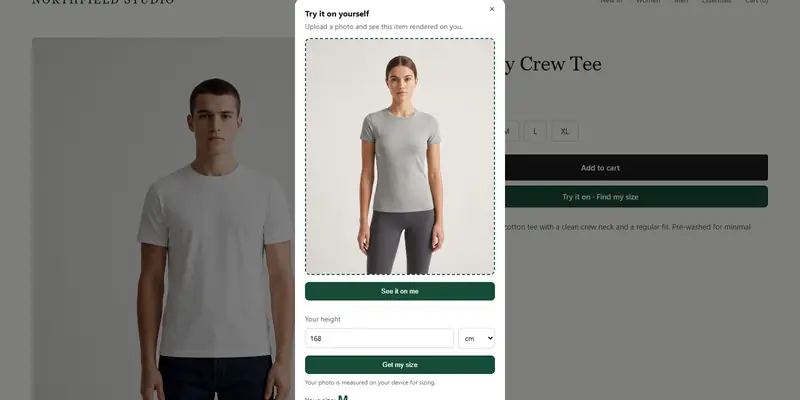
This matters for returns because a shipped wrong size is a store mistake, not a customer one. If your site uses AI size recommendation for fashion stores, the size it suggests is one of your own labels, so your stockroom needs to use those same labels.
Why do stockroom size labels cause wrong-size orders?
Pickers work fast. If a bin says "M" but the garments inside carry a "UK 12" tag, someone will eventually pick the wrong one.
Wrong-size shipments look like fit complaints but are not. The shopper chose correctly and received something else. Sorting those out is hard unless your labels are consistent.
What should one size label system look like?
Pick one naming system and use it in your product options, size chart, stock system and on the shelf. Do not mix.
- Choose the labels first. Letters, numbers, or both, such as "M (UK 12)".
- Write them down. A one-page list of approved labels, kept where staff can see it.
- Ban shortcuts. If the list says "XL", no one writes "Ex-L" or "X-large".
If you sell in several countries, include the conversion on the label when it helps. Keep the primary label the same as the one shoppers see on the product page.
How do you label shelves and bins?
Label the place, not just the item. Garments get moved, refolded and re-bagged, but a shelf label stays put.
- Give every location a code. For example aisle, shelf and bin.
- Put the style, color and size on the bin label. Use large print and the same order each time.
- Use color bands for size groups. A colored strip for small, medium and large helps a picker see a mistake from a distance.
- Place labels at eye level on the shelf edge. Do not hide them behind stock.
- Keep sizes in order. Smallest on the left, largest on the right, on every shelf.
A consistent order is the most powerful habit. People stop reading labels when they trust the layout, so it must never vary.
What about supplier tags that use different sizes?
Suppliers often label in their own system. A garment may arrive tagged with a number size, while your store sells it as a letter size.
Deal with this at receiving, before stock reaches a shelf:
- Check each delivery against your size list.
- Relabel with your own size label, or attach a tag beside the supplier tag.
- Record any garments that do not match the supplier's stated spec.
If a supplier's sizes are often off, the guide on holding factories to spec explains how to document and raise the problem.
How do you set up a label check at packing?
A second check catches what the first one missed. It takes seconds per order.
- The packer scans or reads the size on the order.
- They compare it with the label on the garment.
- If they differ, the order stops and goes to a supervisor.
Keep returned stock out of the main shelves until it is checked and relabeled. A returned garment put back in the wrong bin is a common source of future mistakes.
How does label data help planning?
When labels are consistent, counts are reliable. You can see which sizes sell out and which sit unsold, and that feeds your buying decisions. The article on forecasting demand by size shows how to turn those counts into a reorder plan.
Reliable labels also make your returns data useful. If you track which sizes come back and why, you can fix the real cause, whether that is a chart problem or a picking problem.
What is a quick checklist?
- One approved list of size labels, used on the site and in the stockroom.
- Shelf and bin labels with style, color and size.
- Sizes in the same order on every shelf.
- Supplier tags checked and relabeled at receiving.
- A size check at packing.
- A separate area for returns until they are checked.
Before you change anything, compare your site's product page against what is on the shelf. The product page checklist for fashion stores covers the page side of the same match.
Keep your size labels consistent from chart to shelf
FAQs
Should I label the garment or the shelf?
Both, but the shelf label is the more reliable one. Garment labels can be removed or unreadable. A shelf label tells the picker where to look.
What if my supplier uses different sizes from my website?
Relabel at receiving so that your stockroom and website match. Keep the supplier's size in your records in case you need to raise a question.
Do small stores need a labeling system?
Yes, a simple one. Even a few shelves benefit from clear labels and a fixed order, because mistakes grow as you add products.
How do I stop returned items going into the wrong bin?
Keep returns in a separate holding area. Check the size, relabel if needed, then move the item to its correct location.
Try ZeDaq.ai free
Virtual try-on and Find my size for your store, plus client, order and invoicing tools for tailors, in one subscription.