Jumia vs Your Own Website for a Nigerian Fashion Brand
By the ZeDaq.ai team · · 7 min read
On this page
- What do you get from selling on a marketplace?
- What do you give up on a marketplace?
- What does your own website give you?
- How do the two compare side by side?
- Which kind of fashion brand suits each option?
- How do returns and fit differ between the two?
- Can you use both without confusing customers?
- What should your own site get right first?
- How can your website answer the sizing question?
Selling fashion on Jumia gives a Nigerian brand access to shoppers who already browse a large marketplace, while your own website gives you control of your brand, prices and customer relationships. Many brands use Jumia to reach new buyers and their own website to build repeat customers and sell to the diaspora.
The right mix depends on what you sell, how strong your Instagram following is and how much margin you can share. This guide walks through the trade-offs for a clothing brand. For the fit and photo side of selling online, see our main guide to virtual try-on for African fashion brands.
A note on sources: marketplace terms, commissions and seller rules change often. When we checked in November 2026, Jumia's seller pages did not load for our checker, so this guide does not quote Jumia's fees or rules. Confirm current terms on Jumia Nigeria before you sign up.
What do you get from selling on a marketplace?
A marketplace brings the shoppers. You bring the products. That is the main deal, and it has real benefits for a young brand.
- Built-in traffic. Shoppers already search the marketplace for dresses, shirts and shoes. You do not have to pay for every visit.
- Trust from first-time buyers. Some shoppers feel safer buying from a large platform than from a brand they found on Instagram yesterday.
- Less setup. You list products in a seller dashboard instead of building and running a site.
- Platform-run services. Depending on the platform's current programs, it may help with payments, delivery or customer service. Check exactly what is included.
For a brand with good products and no audience yet, those benefits can be worth a lot.
What do you give up on a marketplace?
The same features that make a marketplace easy also limit you.
- Your margin. Marketplaces charge commission and may add other fees. Price your items so you still make money after every fee.
- Your brand. Your products sit in a standard layout next to competitors. A buyer may remember "I bought it on Jumia" rather than your brand name.
- Your customer data. You usually cannot build your own email or WhatsApp list from marketplace buyers the way you can from your own store.
- Your rules. The platform sets policies on returns, listing quality and payouts. Those can change.
- Price comparison. Shoppers can compare your Ankara gown with cheaper ones in one scroll, which pushes prices down.
For brands built on a distinct look, such as hand-dyed adire, bridal Aso-ebi or tailored native wear, the brand loss can hurt more than the fees.
What does your own website give you?
Your own website is a shop you control. It takes more work, but it builds something that grows with you.
- Full control of how your brand looks, from photos to fonts to the story behind each collection
- Your own prices and offers, without a platform deciding what is allowed
- Your customer list, so you can tell past buyers about new drops by email or WhatsApp, with their permission
- Diaspora selling, with prices in pounds or dollars and shipping options you choose
- Fit tools, such as size charts, fit notes and virtual try-on, on every product page
The cost is that you must bring the visitors yourself, through Instagram, TikTok, WhatsApp Status, influencers and search.
How do the two compare side by side?
| Question | Marketplace such as Jumia | Your own website |
|---|---|---|
| Who brings the shoppers? | The marketplace | You, through social media, search and word of mouth |
| Who sets the look of your page? | The platform's template | You |
| Who owns the customer relationship? | Mostly the platform | You |
| Costs | Commission and fees (check current terms) | Subscription, domain, apps and payment fees |
| Selling to the diaspora | Depends on the platform's reach | Yes, with local-currency pricing on most store builders |
| Returns policy | Set by the platform | Set by you |
| Speed to first sale | Often fast | Depends on your audience |
Which kind of fashion brand suits each option?
A marketplace often suits
- Brands selling everyday basics, such as T-shirts, joggers or simple Ankara tops
- Brands with stock ready to ship, not made-to-order pieces
- New brands without a strong social following yet
- Brands that want to test which products sell before investing in a website
Your own website often suits
- Brands with a strong Instagram or TikTok audience
- Made-to-order, bridal and Aso-ebi work, where buyers need to ask questions and share sizes
- Premium labels where price comparison would hurt
- Brands with many diaspora buyers in the UK and US
If you have no website yet and need something quick, our comparison of Paystack Storefront and Shopify looks at a fast way to start.
How do returns and fit differ between the two?
Returns cost money on any channel, and fashion is hit hard because so many returns come down to fit. On a marketplace, the platform's return policy decides much of what happens. On your own site, you decide, and you can do more to prevent wrong sizes in the first place.
Ways to cut fit problems on your own site:
- Write your size chart in body measurements, not garment widths.
- Add a one-line fit note to each product, such as "relaxed through the hips."
- Show the model's height and size in every photo caption.
- Offer a size recommendation from a quick body scan.
- Ask buyers why they returned an item, and fix the chart if a pattern appears.
Our guide to where fit-related returns come from goes deeper on reading return reasons and fixing them.
Can you use both without confusing customers?
Yes. Many brands run both, with a clear role for each.
- Use the marketplace for reach. List a few best sellers and basics there.
- Keep new drops and premium pieces on your website. Give buyers a reason to come to you.
- Put your brand name on everything. Packaging, labels and a small thank-you card help a marketplace buyer remember you.
- Keep prices consistent. If your website is much more expensive, buyers will notice. If it is much cheaper, the platform may have rules about that, so check.
- Keep stock in sync. Update both the same day, or reserve separate stock for each channel, so you do not sell the same dress twice.
Over time, aim to move loyal buyers to your website, where you can serve them better.
What should your own site get right first?
If you build your own site, focus first on the basics most of your buyers will notice. Many Nigerian shoppers browse on their phones, often on mobile data. So:
- Keep pages light, with compressed images
- Make the size selector large and easy to tap
- Put delivery times and fees near the price
- Keep checkout short, with the payment methods your buyers expect
- Add a WhatsApp button for quick questions
Our guide to designing for Nigerian mobile shoppers covers layout, images and checkout in detail.
How can your website answer the sizing question?
The question every online clothes buyer asks is "will this fit me?" Your own site is the place to answer it properly.
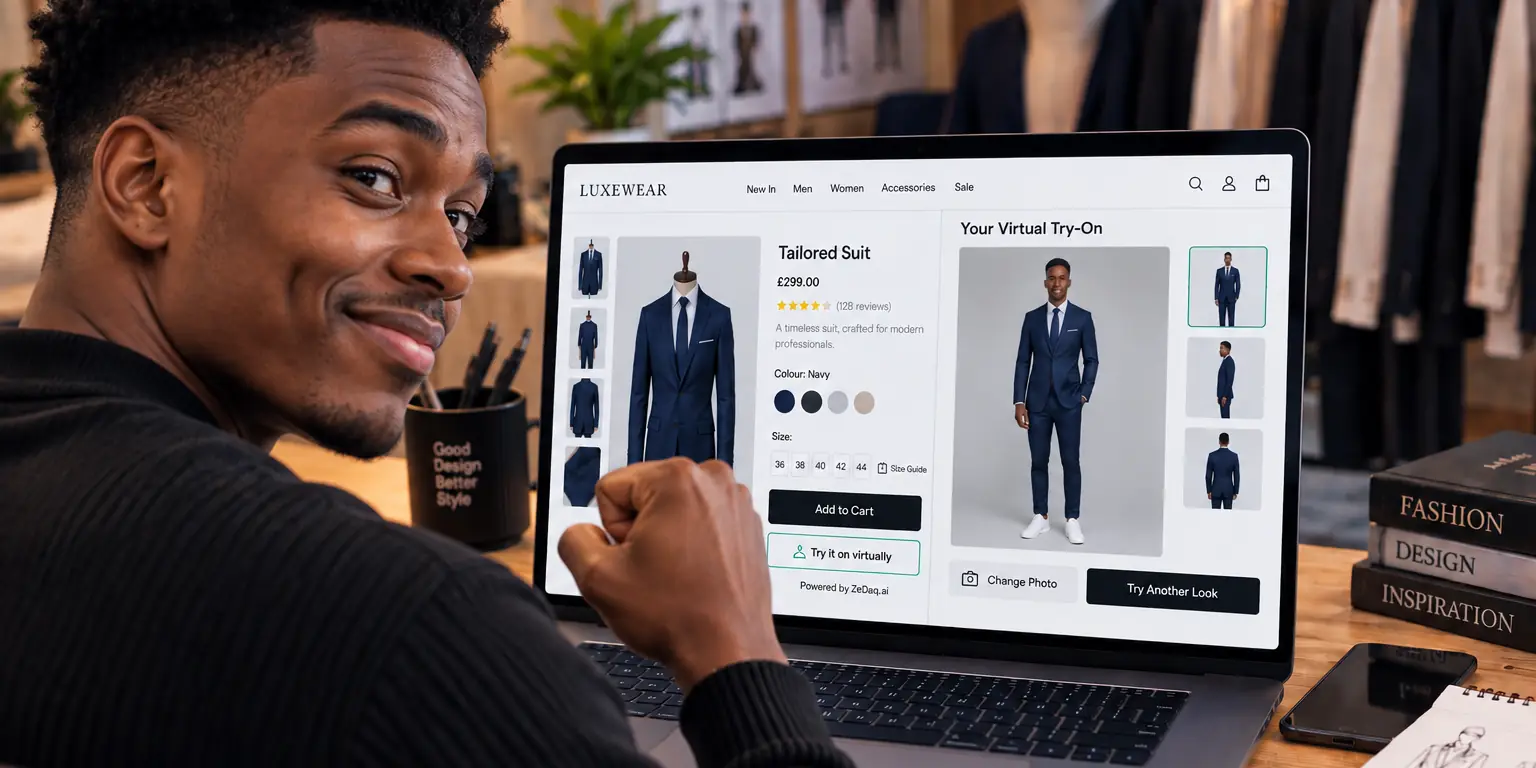
ZeDaq.ai adds virtual try-on to your store: the shopper uploads one photo and sees your real garment on their body. A 30-second body scan (one photo plus height) recommends a size from your own size chart. It works as a Shopify app, and as a script-tag widget for WooCommerce, Wix and custom sites.
There is a Free plan with 3 try-ons a month to test it. Paid plans start at $14 a month, and every paid plan has a 3-day free trial with no card required.
Answer the fit question on your own store
FAQs
Is it cheaper to sell on Jumia than on my own website?
It depends on your sales. A marketplace has low setup costs but takes a share of each sale. Your own site has fixed monthly costs, so it gets cheaper per order as you grow.
Can I sell made-to-order clothes on a marketplace?
Check the marketplace's current seller rules on delivery times and stock. Made-to-order pieces often work better on your own site, where you can explain timelines and collect measurements.
Will selling on Jumia hurt my brand?
Not if you manage it. Keep your best and newest pieces on your own site, brand your packaging, and treat the marketplace as a way for new buyers to find you.
Should I start with a marketplace or a website?
If you have products but no audience, a marketplace can bring early sales. If you already have an engaged Instagram following, a website lets you keep more of each sale and build a customer list.
Try ZeDaq.ai free
Virtual try-on and Find my size for your store, plus client, order and invoicing tools for tailors, in one subscription.

