How to Write Shopify Product Descriptions for Clothing
By the ZeDaq.ai team · · 4 min read
On this page
- What should a clothing description include?
- How do you structure the description?
- How do you write about fit without guessing?
- How should you write for search and for shoppers?
- How do you add sizing details to the page?
- How do you write about fabric and care clearly?
- How do you keep descriptions consistent across a catalog?
- How do you edit your own copy?
- What mistakes should you avoid?
To write a good clothing product description on Shopify, open with one sentence on what the garment is and who it's for, then give the fit, fabric, care and sizing details in a short list. Shoppers can't touch the item, so the description has to answer what they would ask in a fitting room.
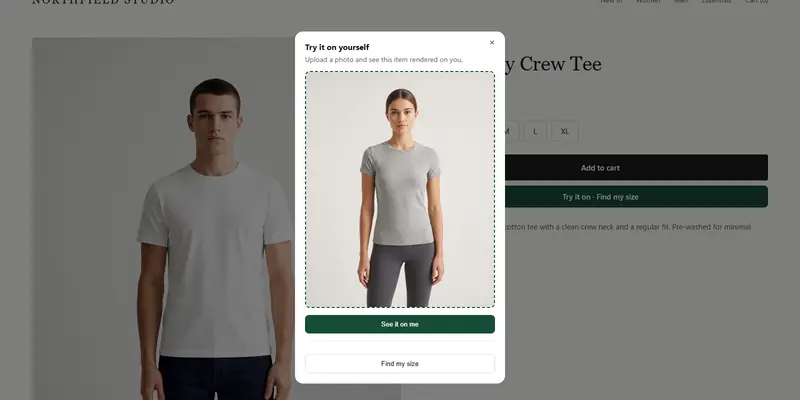
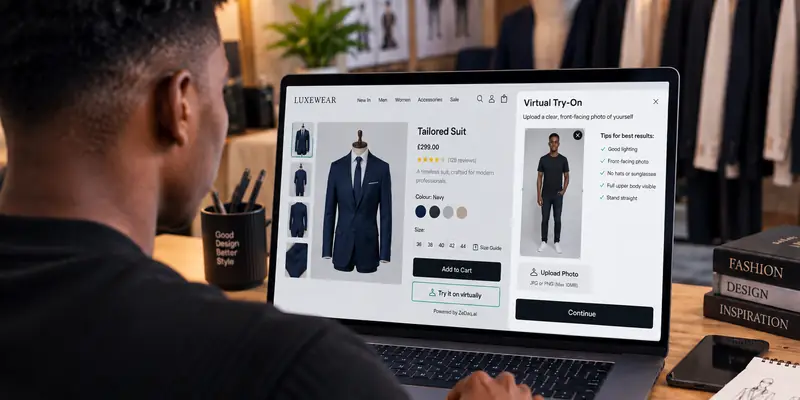
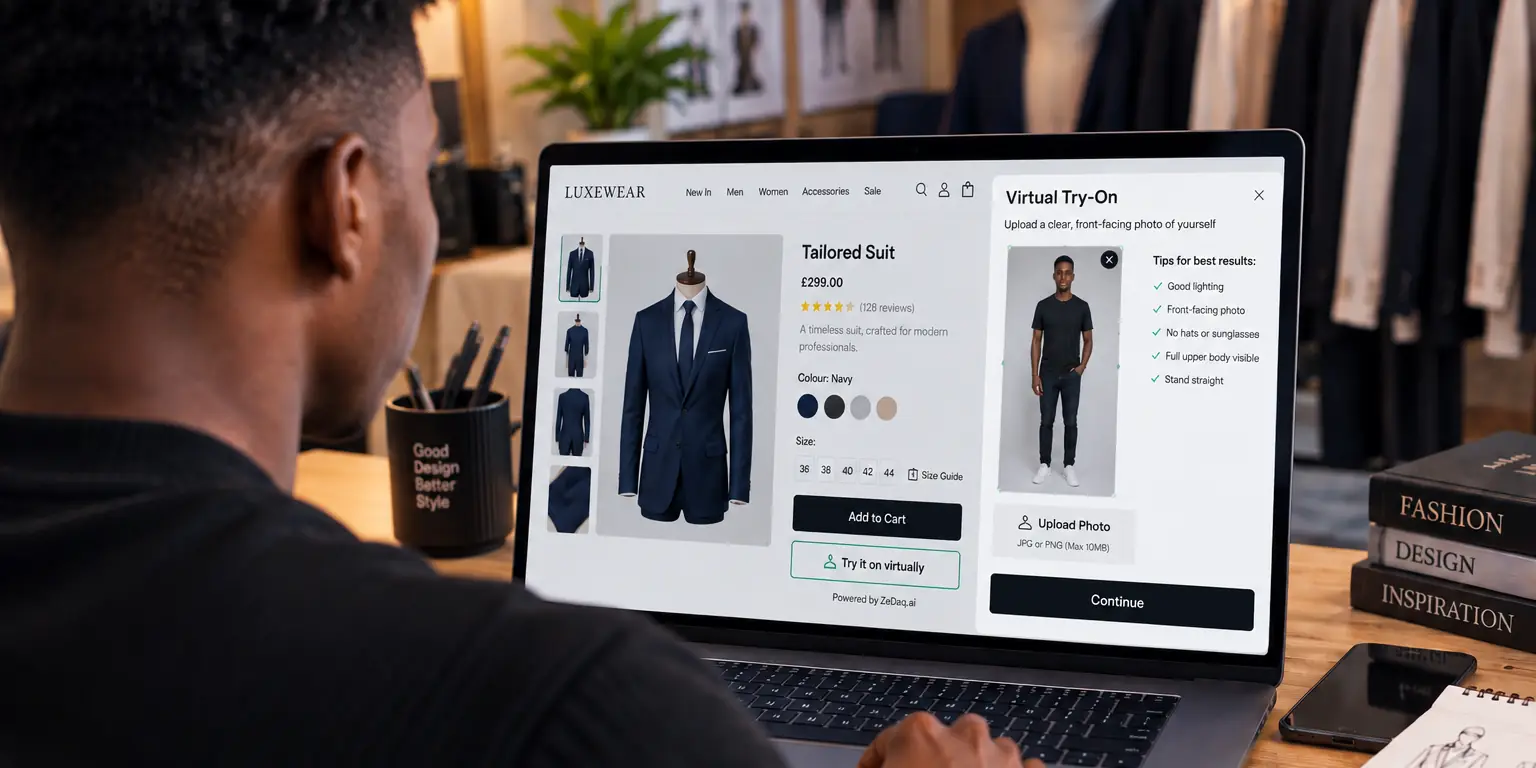
Good copy works alongside fit tools. Once the text is clear, the setup in how to add virtual try-on to Shopify lets shoppers see the garment on themselves too.
What should a clothing description include?
Cover the same points every time so shoppers learn where to look:
- What it is. Garment type, cut and key feature.
- Fit. Relaxed, fitted, cropped, long. Say what size the model wears and their height.
- Fabric. Material, weight, stretch and feel.
- Care. Wash and dry instructions.
- Sizing. A link or table with body measurements.
- Origin or details. Pockets, lining, closures and where it is made, if true.
Only state facts you can stand behind. Don't claim a certification or a material blend that you haven't checked with your supplier.
How do you structure the description?
Use this template:
- One-line summary. "A relaxed linen shirt with a boxy cut and a button front."
- Two or three short sentences on how it looks and when to wear it.
- A bullet list of fit, fabric and care.
- A fit note. "Runs small, size up if between sizes."
- A size reference. The model's height and size worn.
Keep paragraphs short and sentences plain. Most shoppers read on a phone.
Example description
"The Harbor Shirt is a boxy linen shirt with a button front and a soft collar. Wear it open over a tee or buttoned up alone.
- Fit: relaxed, with room through the chest
- Fabric: linen, lightweight, slightly textured
- Care: machine wash cold, line dry
Runs small: size up if you're between sizes. The model is 180 cm tall and wears a medium."
How do you write about fit without guessing?
Fit is the leading reason shoppers hesitate. Describe fit with concrete words (boxy, fitted, tapered) and a reference point, such as the model's height and size.
Be honest about what you don't know. If the garment runs small, say so. This also builds trust and saves support time. For more fit-related reasons for returns, see returns policy ideas for fashion stores.
How should you write for search and for shoppers?
Use the words shoppers type: "linen shirt", "wide-leg trousers", "maxi dress". Put the garment type in the product title and the first sentence. Avoid stuffing keywords.
Shopify lets you edit the page title and meta description for each product in the search engine listing section. Write them for people first.
How do you add sizing details to the page?
Link to a size chart with body measurements, and add a short note on how to measure. If you use a size tool, place it near the size selector. The fit-and-photos list in the product page checklist is a good companion.
Pair copy with proof from real customers, such as reviews. The roundup of Shopify review apps for clothing brands covers options, and Shopify product filter apps help shoppers narrow by attributes you have described.
How do you write about fabric and care clearly?
Say what the fabric feels like and how it behaves. Words like "lightweight", "stretchy" or "structured" help more than "premium". Then list care instructions in plain language, such as "machine wash cold, line dry".
If a garment wrinkles easily, shrinks or needs special washing, say so. It prevents disappointment and avoids avoidable complaints.
How do you describe a garment for different shoppers?
Think about the questions each shopper asks. A shopper buying a gift wants to know the size range and returns. A shopper with a specific fit concern wants measurements. Short sections with clear labels let both find what they need.
How do you keep descriptions consistent across a catalog?
Write a template once and reuse it. A shared structure also makes it easier to spot gaps. Create a checklist for each new product:
- Summary sentence written
- Fit and model details added
- Fabric and care listed
- Size chart linked
- Photos match the description
Review your best-selling products first, since improvements there matter most.
How do you edit your own copy?
Read the description aloud. If you run out of breath, split the sentence. Then check each line: does it help a shopper decide? If not, cut it.
Ask someone who doesn't know the product to read it and tell you what they think the garment looks like. Their answer shows what is missing.
What mistakes should you avoid?
- Hype words and exclamation marks.
- Copying the supplier's text, which others use too.
- Leaving out the model's size.
- Long paragraphs on mobile.
- Different formats across products.
Back up your copy with a size recommendation
FAQs
How long should a clothing description be?
Long enough to answer the shopper's questions, usually a short intro plus a list. Stop when the details are covered.
Should I use the supplier's description?
Rewrite it. Copied text is not unique and may not match your fit.
Do I need a different description for each color?
Usually one description works across colors. Mention color-specific details only if they differ.
Can I include a size chart in the description?
Yes. Use body measurements and say which unit you use.
Try ZeDaq.ai free
Virtual try-on and Find my size for your store, plus client, order and invoicing tools for tailors, in one subscription.