How to Read Your Fashion Store's Sales Funnel
By the ZeDaq.ai team · · 4 min read
On this page
To read your fashion store's sales funnel, list each step from visit to order, find the step where the most shoppers leave, and fix that step first. The funnel tells you where to look, not what is wrong, so pair each drop with a likely cause.
This guide uses plain steps you can follow in any analytics tool. If your drop-off happens on the product page because shoppers cannot judge fit, see how to add virtual try-on to Shopify.
What is a sales funnel in a clothing store?
A funnel is the path shoppers take from first visit to paid order. Each step loses some people, so the funnel gets narrower.
For a fashion store, the steps are usually:
- Sessions. People who visit your store.
- Product views. Sessions that open a product page.
- Add to cart. Shoppers who add an item.
- Checkout started. Shoppers who begin to pay.
- Orders. Shoppers who complete payment.
Shopify's admin includes reports on store behavior; start from the Shopify reports and analytics help to see what your plan offers.
How do you find the biggest drop?
Write the count for each step in a table, then work out the share that moves to the next step. The step with the lowest share is your first target.
| Step | What to record | Question to ask |
|---|---|---|
| Sessions to product views | Share of visits that open a product | Can shoppers find products fast? |
| Product views to add to cart | Share of product views with an add | Do shoppers trust the size and fit? |
| Add to cart to checkout | Share of carts that start checkout | Are shipping and total clear? |
| Checkout to order | Share of checkouts that pay | Does payment work smoothly? |
Fill in your own figures. We do not give benchmark numbers here, because they vary by store, product price and traffic source.
What does each drop usually mean?
Treat these as hypotheses to test, not facts.
Low product views
Shoppers leave before opening a product. Check the homepage, menu names, collection layout and page speed on a phone.
Low add-to-cart
Shoppers view products but do not commit. For clothing, the usual suspects are unclear sizing, weak photos and missing fit notes. The guide on getting your first 100 sales covers the basics of a product page that earns trust.
Low checkout starts
Shoppers add items, then leave. Look at shipping cost surprises, slow cart pages and unclear delivery times.
Low completed orders
Shoppers begin checkout but stop. Check payment options, discount-code confusion and required account creation.
How do you segment your funnel?
An overall funnel hides the problem. Split it by:
- Device. Mobile shoppers often behave differently from desktop.
- Traffic source. Social, search and email shoppers have different intent.
- Country. International shoppers may face different shipping and currency issues. The guide to setting up Shopify Markets helps here.
- New versus returning shoppers.
Compare the same period each time, so seasonal changes do not mislead you.
What mistakes make a funnel misleading?
A few common errors lead store owners to fix the wrong thing.
- Reading too short a period. A single weekend can swing the numbers. Use several weeks where you can.
- Mixing sources. A big social post can bring many casual visitors and make every step look worse.
- Ignoring returns. A step that looks strong may hide orders that later come back for the wrong size.
- Changing many things at once. You cannot tell which change moved the result.
Keep a simple log with the date of each change, so you can match a shift in the funnel to its likely cause.
How do you act on what you find?
Change one thing at a time, so you know what worked.
- Pick the step with the biggest drop.
- Write one hypothesis, such as "Shoppers are unsure of their size."
- Make one change that tests it.
- Wait for enough visits to compare fairly.
- Keep the change or undo it.
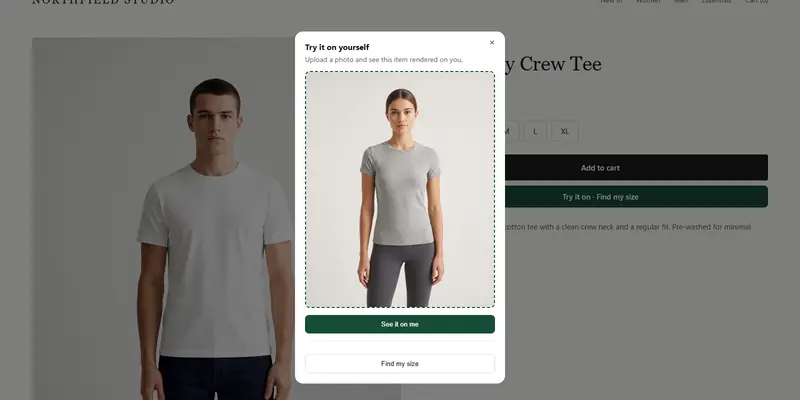
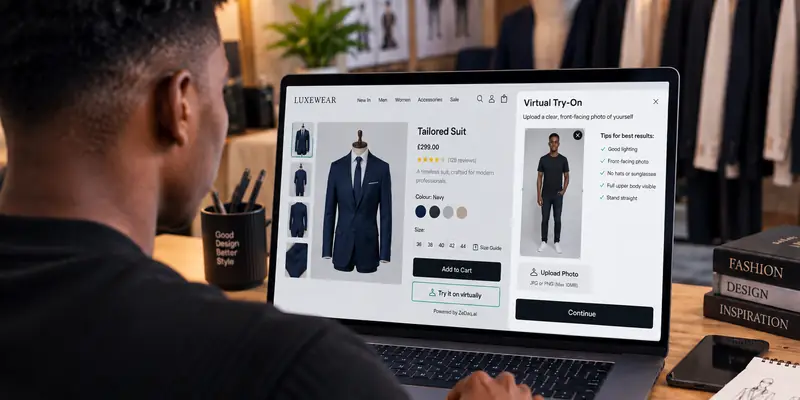
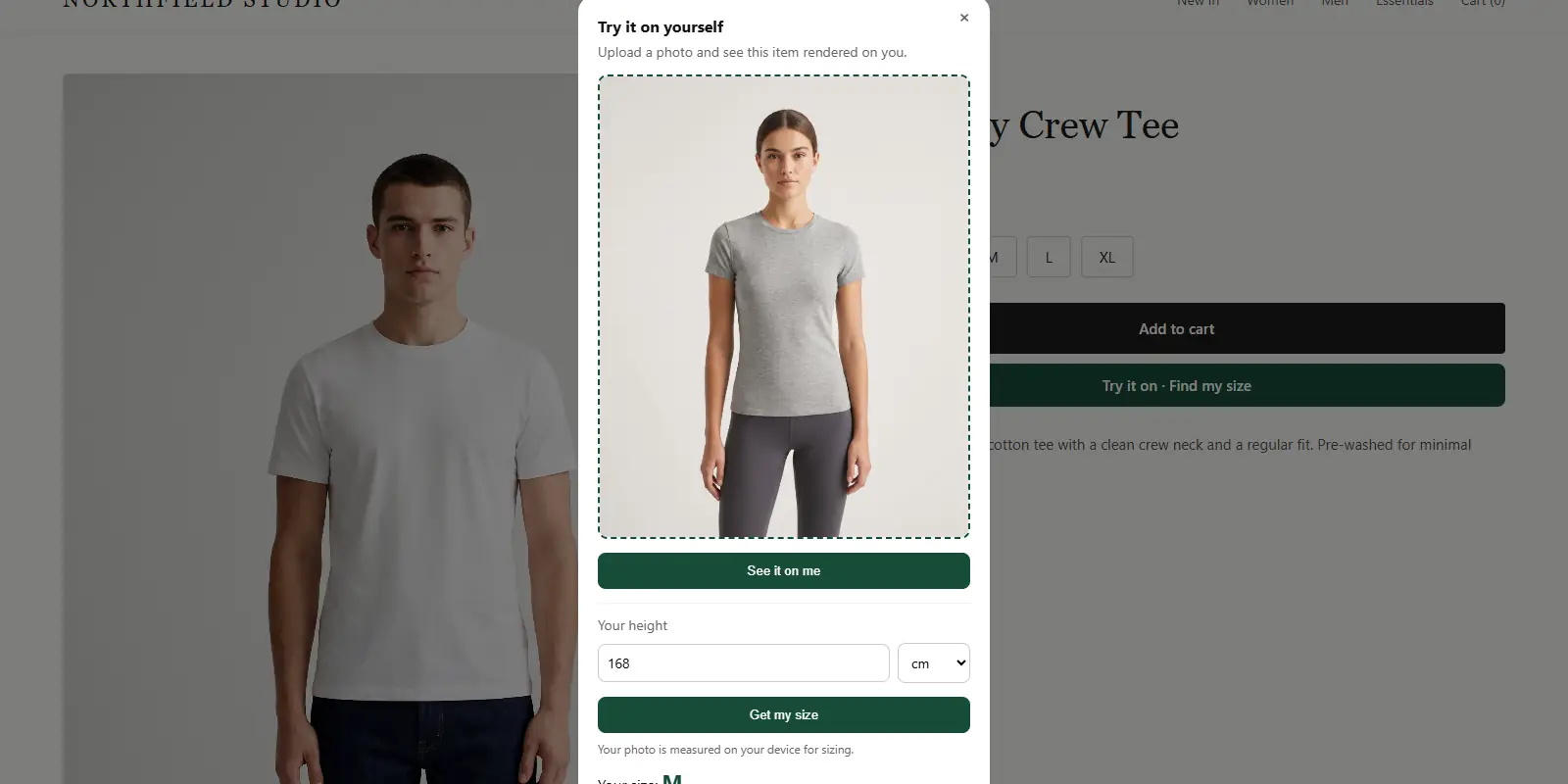
If the hypothesis is about fit, a size recommendation or try-on tool is one test. Compare options in the best AI virtual try-on apps for Shopify. ZeDaq.ai is a Shopify app: shoppers upload one photo and see your real garment on their body, or get a size from your own chart.
Once a month, write down your three biggest drops and what you tried. After a few months this note becomes a record of what works for your customers, and it stops you from repeating tests that already failed.
Test a fit fix on your product pages
FAQs
What is a good conversion rate for a fashion store?
It varies too much by store and traffic to give one number. Compare your own funnel month to month instead.
How often should I review my funnel?
Monthly works for most small stores. Review sooner after a big change or campaign.
Why is my add-to-cart rate low?
Common causes are unclear sizing, weak photos and price surprises. Test one cause at a time.
Do I need extra tools beyond Shopify?
Not to start. Shopify's own reports cover the basic steps, and you can add tools later if you need more detail.
Try ZeDaq.ai free
Virtual try-on and Find my size for your store, plus client, order and invoicing tools for tailors, in one subscription.