How to Price Clothing for an Online Store
By the ZeDaq.ai team · · 5 min read
On this page
- What costs go into one garment?
- How do you calculate a retail price?
- What is the difference between markup and margin?
- How do you check your price against the market?
- How do discounts, shipping and returns change your price?
- What price should you set for a sale or wholesale?
- How often should you review your prices?
To price clothing for an online store, add up every cost to make and sell one item, apply a markup that leaves room for discounts and overhead, then compare the result with similar brands. This guide gives you a formula and a worked example you can copy into a spreadsheet.
Pricing is one part of running a store that sells. If you are also planning your product pages, the guide to adding virtual try-on to Shopify covers a tool that helps shoppers choose the right size.
What costs go into one garment?
Start with the true cost of one finished item. Missing a cost is the most common pricing mistake.
- Materials. Fabric, thread, zippers, buttons, labels and trims.
- Labor. Your own time or a factory or tailor's fee per piece.
- Packaging. Bags, boxes, tissue and hang tags.
- Shipping to you. Freight and import costs on fabric or finished stock.
- Payment fees. Card processing charges. Shopify lists its online card rates on its pricing page (checked November 2026).
- Platform cost. Your monthly store plan and apps.
Add these into a "cost per unit". Divide monthly costs, such as your store plan, by the number of items you expect to sell.
How do you calculate a retail price?
Use a markup, which means multiplying your cost to get your selling price.
- Find your cost per unit. Add all costs from the list above.
- Choose a markup multiplier. A multiplier of 2 doubles the cost. Many brands go higher when the item is made in small batches.
- Calculate the price. Cost times multiplier.
- Round to a clean price point. Choose a price shoppers find easy to read.
Worked example
These numbers are made up to show the method. Use your own.
| Item | Amount |
|---|---|
| Fabric and trims | $11.00 |
| Labor | $9.00 |
| Packaging | $1.50 |
| Payment fee and other costs | $2.50 |
| Cost per unit | $24.00 |
| Multiplier | 2.5 |
| Retail price | $60.00 |
At $60 you keep $36 before overhead such as photography, marketing and your own pay. That margin has to cover discounts and returns too.
What is the difference between markup and margin?
They sound alike but measure different things.
- Markup is how much you add to cost. Cost $24, price $60: markup is $36.
- Margin is the part of the price you keep. Margin is $36 out of $60, which is 60 percent.
Mixing them up leads to underpricing. If you want to keep a given share of each sale, divide cost by one minus that share. For a 60 percent margin on a $24 cost, divide $24 by 0.4 to get $60.
How do you check your price against the market?
A formula gives a floor. The market tells you the ceiling.
- Find five to ten brands with similar quality, fabric and audience.
- Note their prices for comparable items.
- Compare their photos, fit and shipping with yours.
- Decide whether you sit below, level with or above them, and be able to explain why.
Premium pricing needs proof: better fabric, a clear story, good photos and honest size information. Clear fit information helps too, and a returns policy that protects margins keeps a good price from being eaten by refunds.
How do discounts, shipping and returns change your price?
Build them into the price before you launch, not afterward.
- Discounts. If you plan a sale, make sure the sale price still covers cost plus a small profit.
- Free shipping. Add the average shipping cost to the product price, or set a minimum order for free shipping.
- Returns. Each return costs shipping, handling and sometimes a lost sale. Include a small allowance in your margin.
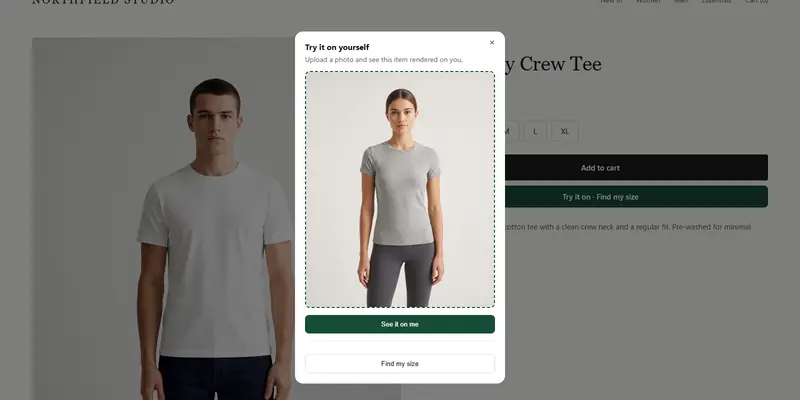
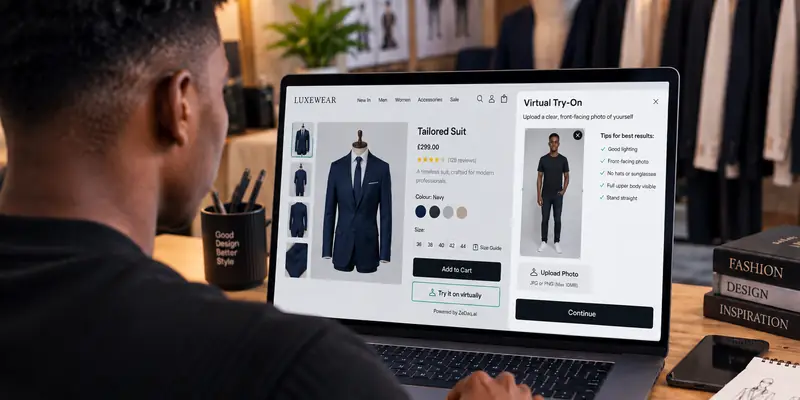
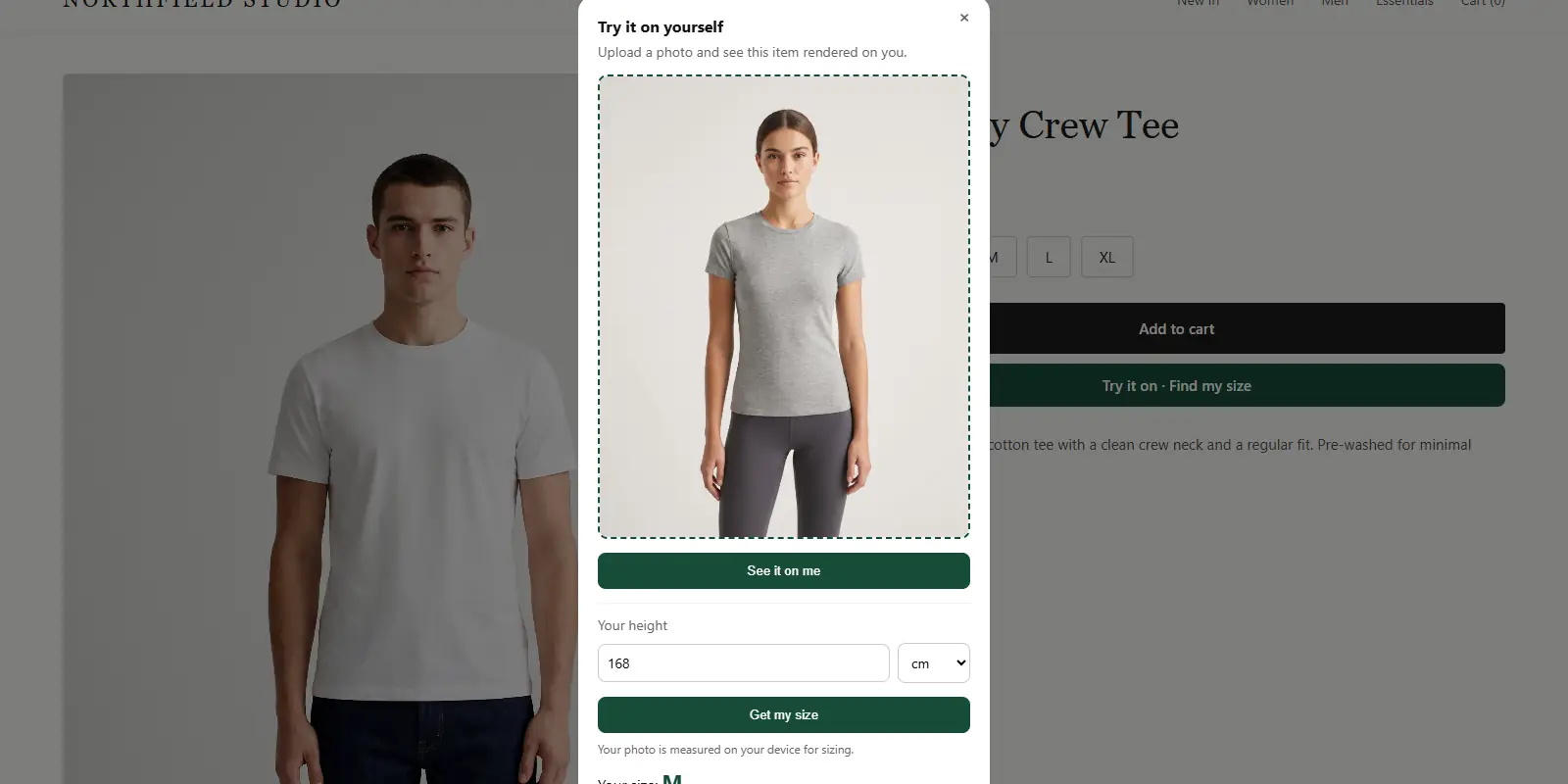
Size mistakes are a common cause of returns in fashion. A size recommendation on the product page can help shoppers pick a size, and ZeDaq.ai does this with a 30-second scan matched to your own size chart. You can place the try-on button using app blocks in your theme.
What price should you set for a sale or wholesale?
Plan these prices at the same time as your retail price, using the same cost per unit.
- Sale price. Take your cost per unit and check what is left. In the example above, a $48 sale price still leaves $24 before overhead.
- Wholesale price. If a shop buys from you, they will add their own markup, so your wholesale price must still cover your costs and leave you a profit.
- Bundles. A set of two items can have a lower unit price, as long as the total covers both costs.
Write the lowest price you will ever accept for each item. If a discount code takes you below it, do not run the code.
How often should you review your prices?
Review prices every season, or sooner if costs change. Check three things:
- Has fabric, labor or shipping gone up?
- Are best sellers selling out? That can mean you can raise the price.
- Are items stuck in stock? Consider fixing photos or sizing before cutting the price.
Keep your theme and layout in mind too. The list of Shopify themes for boutiques can help your store look worth the price.
Help shoppers pick the right size
FAQs
What markup do clothing brands use?
It varies by brand and production method, so there is no single correct number. Work backward from your costs and the margin you need.
Should I price low to win customers?
Not by default. Low prices leave no room for discounts, returns or growth, and are hard to raise later.
Do I include my own time in the price?
Yes. Pay yourself a fair rate for your labor. If you leave it out, the business only looks profitable.
Should prices end in .99?
Test it. Some stores prefer round numbers for a premium feel, others like .99. Pick one style and use it across the store.
Try ZeDaq.ai free
Virtual try-on and Find my size for your store, plus client, order and invoicing tools for tailors, in one subscription.