How to Name a Clothing Brand
By the ZeDaq.ai team · · 4 min read
On this page
To name a clothing brand, decide what the brand stands for, brainstorm short names that fit it, then check each one for existing trademarks, a free domain and available social handles. Only then buy the domain and build the store.
This guide is for founders about to open an online fashion shop. Once you have a name, the next step is a store, and the walkthrough on adding virtual try-on to Shopify shows one thing you can add after launch. This is general information, not legal advice.
What should a clothing brand name do?
A good name is easy to say, easy to spell and easy to remember. It should also leave room to grow. A name tied to one product, like "Hoodie House", is hard to stretch if you later sell dresses.
Aim for a name that:
- can be said aloud after hearing it once,
- is spelled the way it sounds,
- works on a label, a hang tag and a small social avatar,
- does not describe only one product,
- is not confusingly close to another fashion brand.
How do you brainstorm brand name ideas?
Start with the brand, not the name. Write three words for the customer, three for the style and one for the feeling you want.
Then try these methods:
- Meaning-first. Use a word from a language, place or craft that matters to you. Check the meaning in every market you plan to sell in.
- Founder-led. A surname or initials can carry a brand a long way. It is also personal, so think about whether you may sell the business later.
- Invented words. Blend or alter words to make something new. These are often easier to protect, but they need more marketing to be understood.
- Evocative words. A common word with a fresh link to clothing, such as a landscape or an object, can feel distinctive.
- Name generators. Use them for sparks, not answers. Many return names others have already used.
Write 20 to 30 options without judging. Then cut down to a shortlist of five.
How do you test a shortlist?
Run each name through a quick filter before you fall in love with it.
- Say it. Read it aloud to three people and ask them to write it down. If they spell it differently, it may cost you sales through search.
- Search it. Look at the first results page. If another fashion label dominates, move on.
- Check meaning. Look the word up in other languages and slang.
- Picture it. Mock up a neck label and a shipping box.
How do you check a name is free to use?
Check this before you print anything. A trademark is a legal right in a name or logo for certain goods, and you should search for similar marks, not only identical ones.
- Trademark search. In the US, the USPTO's trademark search page links to guides on clearance searches and likelihood of confusion. In other countries, use the national trademark office's search tool.
- Company register. Check your country's business registry for the same or a similar name.
- Domain. Search for the exact
.comand for the local extension you sell in. - Social handles. Check Instagram, TikTok and others for the same handle.
If a similar name exists in clothing, drop yours or talk to an intellectual property lawyer. Do not rely on a quick online search for a final decision.
Which should you pick: a domain or a trademark first?
Check the trademark first. A domain costs little and you can change it. A trademark conflict can force a rebrand after you have printed labels and built an audience.
When a name passes both checks, buy the domain and handles on the same day, before you tell anyone.
What happens after you pick a name?
Once the name is cleared, move quickly to a test store. The guide to using a Shopify free trial to test a store idea shows how to try the idea cheaply. If you already sell on a marketplace, see moving from Etsy to Shopify, since a new name on your own store means telling existing buyers.
Next, set up the pieces that make the store feel real:
- a logo and color set that matches the name,
- a consistent voice for product pages,
- a size chart that uses your labels,
- trust cues such as a clear returns page.
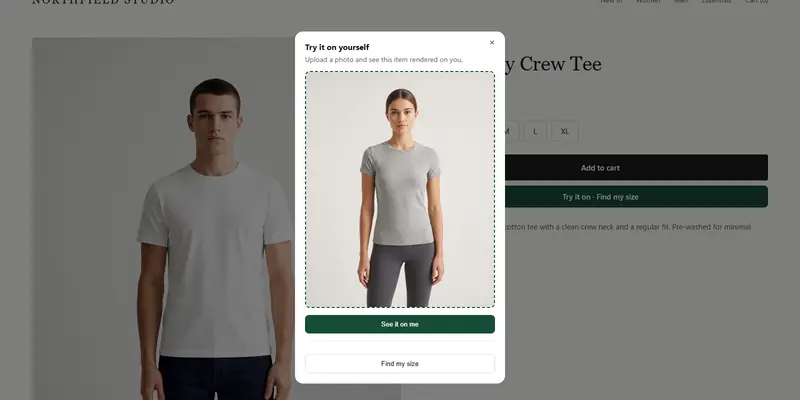
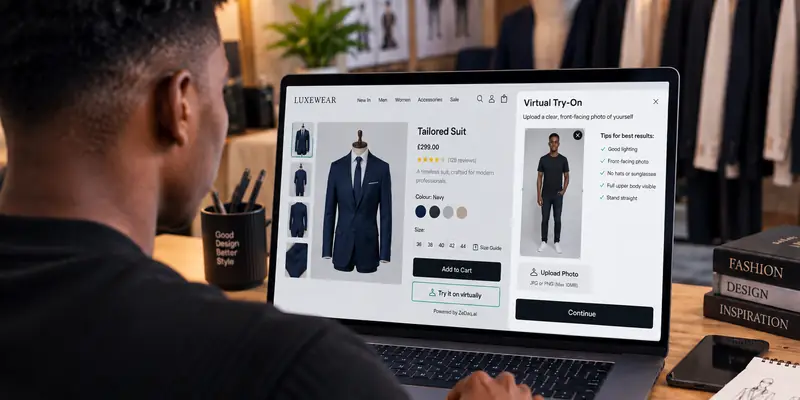
For the last point, a virtual fitting room for clothing websites is one way to help new shoppers feel sure about fit when they do not yet know your brand. ZeDaq.ai is available as a Shopify app and shows the store's real garment on a shopper's own photo.
Launch your new store with try-on from day one
FAQs
Should a clothing brand name include "clothing" or "apparel"?
Usually not. Generic words make the name harder to protect and harder to search for. A distinctive name stands out more.
Can I use my own name as a brand?
Yes, many designers do. Still run a trademark search, since another business may use the same name for clothing.
Do I need a trademark before I start selling?
Not always, but a search before you start is wise. Registration rules and costs vary by country, so check with your national trademark office.
What if the .com is taken?
Look at the owner and whether the site is active, or pick a close variation. If you plan to sell mainly in one country, a local domain extension can work.
Try ZeDaq.ai free
Virtual try-on and Find my size for your store, plus client, order and invoicing tools for tailors, in one subscription.