How to Measure Jean Rise
By the ZeDaq.ai team · · 5 min read
On this page
To measure jean rise, lay the jeans flat and measure the front rise in a straight line from the crotch seam up to the top of the waistband. The same method works for back rise, and it tells you whether a pair sits at your hip, your navel or your natural waist.
Rise is one of the measurements a good size guide should list, next to waist and inseam. If you sell or shop for jeans, it is worth knowing how it works, and how it connects to AI size recommendation for fashion stores.
What is jean rise?
Rise is the distance from the crotch seam to the top edge of the waistband. It decides where the jeans sit on your body.
There are two rise measurements:
- Front rise: the length from the crotch seam up the front to the top of the waistband.
- Back rise: the same measurement along the back. It is longer than the front rise on most jeans, so the waistband sits higher at the back and covers the lower back when you sit.
Most brand charts list only the front rise, so check which one a chart means.
How do you measure rise on a pair of jeans?
Measure a pair you already own that fits well. This is the easiest way to get a number you can trust.
- Button and zip the jeans, then lay them flat on a table. Smooth out any wrinkles.
- Find the crotch seam, where the inner leg seams meet.
- Place the end of a soft tape measure at that seam.
- Run the tape straight up the front, following the center seam, to the top of the waistband.
- Write down the number, and note whether you used centimeters or inches.
- Turn the jeans over and repeat along the back seam for back rise.
Do not pull the tape tight, and do not follow the curve of the zip. A flat, straight line gives a repeatable number.
How do you measure your own body rise?
Body rise is the distance you want your jeans to cover. It helps you pick a style that sits where you like it.
You can do this on your own with a chair and a tape:
- Sit on a hard chair, with your back straight and feet on the floor.
- Put the end of the tape on the chair seat, under you.
- Run the tape up the side of your body to the point where you want the waistband.
- Read the number at that point.
This method is often called the sitting rise or seat-to-waist method. It is only a guide, because stretch, fabric and cut change how a pair feels. Compare your body rise with the front rise of jeans you like.
What is the difference between high, mid and low rise?
The names describe where the waistband sits on your body. There is no single legal standard, so brands use the words differently.
| Rise name | Where the waistband sits (general guide) |
|---|---|
| High rise | At or above the navel, close to the natural waist |
| Mid rise | Between the hip bones and the navel |
| Low rise | Below the navel, on or near the hip bones |
This table is a general guide, not a standard. Check your brand's own chart, because one brand's mid rise can be another's high rise. Our guide on how jeans should fit shows how rise affects the gap at the back of the waist.
Why does rise change how jeans fit?
The same waist size can feel very different with a different rise. A short rise on a long torso feels tight and low. A long rise on a short torso bunches at the waist.
Rise also changes how the seat and thighs fit. Pay attention to these signs:
- Gaping at the back: the rise or waist is too big for your shape.
- Pulling at the crotch: the rise is too short.
- Fabric pooling at the crotch: the rise is too long.
When rise looks wrong, another size will not always fix it. You may need a different cut.
How should a store list rise on its size guide?
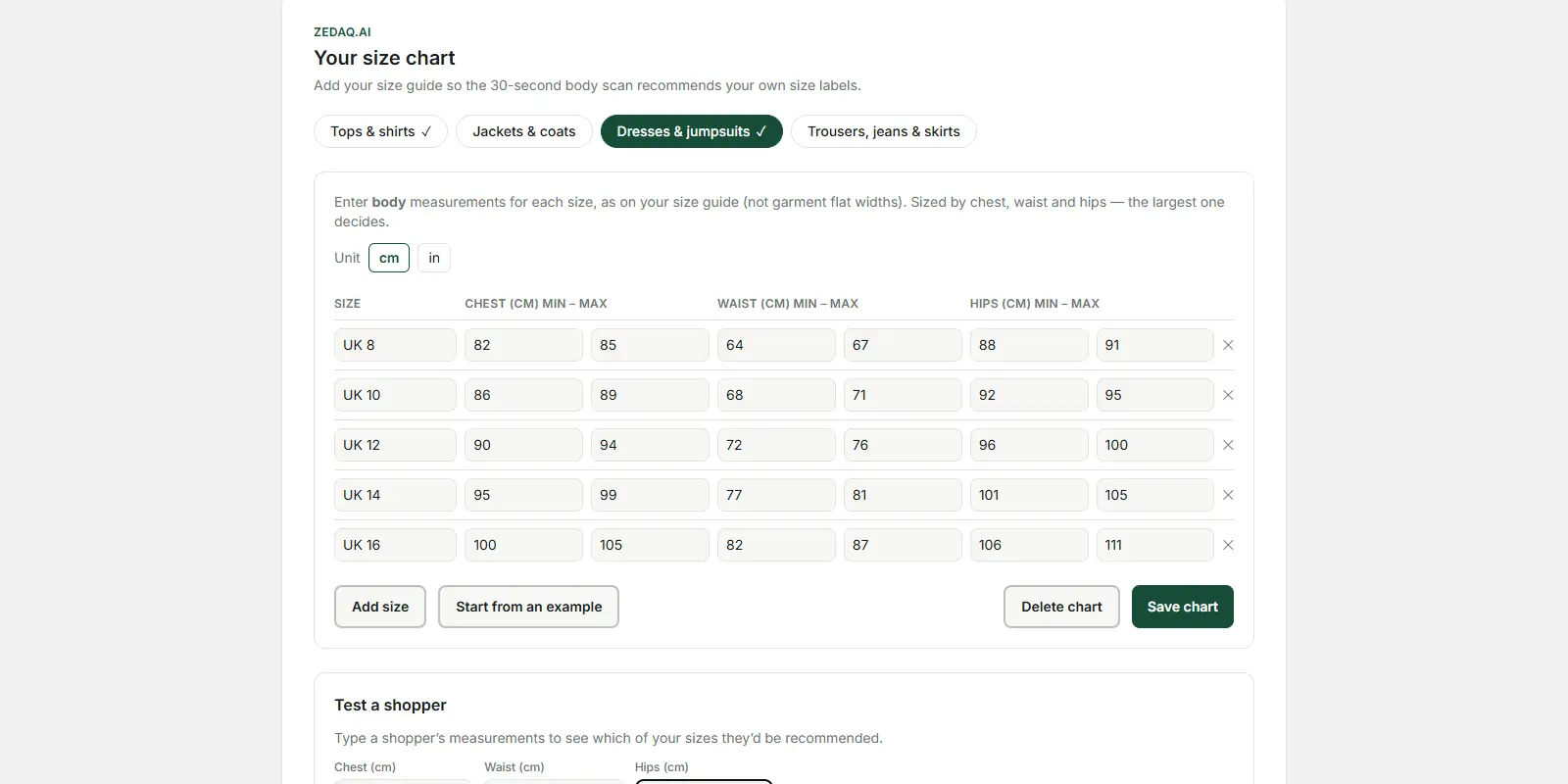
If you run a store, add rise as a column in your jeans chart, next to waist, hip and inseam. State clearly that it is the front rise, and say whether it was measured flat on the garment.
Add a short fit note too, such as "mid rise, sits just below the navel". It helps shoppers who do not know their own rise. The same principle applies to other garments, as in the guides to measuring for an agbada and an abaya, where length and cut matter.
ZeDaq.ai can recommend a size from a 30-second body scan (one photo plus height), matched to the store's own size chart. Merchants enter their own bottoms chart in the dashboard. For a comparison of approaches, read virtual try-on vs size charts.
Try the scan on yourself
Try it on yourself
Live renderUpload a photo, pick a piece, see it rendered on you.
Pick something to try on
See size recommendation on a real product
FAQs
Is rise the same as inseam?
No. Rise runs from the crotch seam up to the waistband. Inseam runs from the crotch seam down to the hem.
Should I measure rise with the jeans zipped?
Yes. Zip and button the jeans, then lay them flat so the fabric is not twisted. This gives a more repeatable number.
Does stretch denim change the rise measurement?
It can. Stretch fabric gives under tension, so measure without pulling the jeans. Compare the number with how the pair feels on your body.
Which rise is best for a long torso?
A longer rise tends to sit comfortably on a long torso, while a short rise can feel low. Try on a few styles and compare them with a pair that fits well.
Try ZeDaq.ai free
Virtual try-on and Find my size for your store, plus client, order and invoicing tools for tailors, in one subscription.

