How to Measure for an Agbada
By the ZeDaq.ai team · · 5 min read
On this page
- What pieces make up an agbada outfit?
- What do you need before you measure?
- How do you measure for the buba?
- How do you measure for the agbada robe?
- How do you measure for the sokoto?
- What is a quick checklist of agbada measurements?
- How should you tell the tailor what you want?
- Can you measure remotely or online?
To measure for an agbada, you take body measurements for three pieces: the wide outer robe (the agbada), the tunic worn under it (the buba) and the trousers (the sokoto). The key measurements are neck, shoulder, chest, sleeve, waist, hip, robe length and trouser length.
This guide is for men ordering a custom agbada, and for tailors who want a clear checklist. If you sell agbada online, an AI size recommendation for fashion stores can help shoppers choose a size. For bespoke orders, a tailor's own tape measure is always the best method.
What pieces make up an agbada outfit?
A full set usually has these parts:
- Agbada. The large, flowing outer robe with wide sleeves.
- Buba. A loose top or tunic worn under the agbada.
- Sokoto. Trousers, often loose or tapered at the ankle.
- Fila. An optional cap.
Each piece needs its own measurements. Styles vary by region and by tailor, so confirm with your tailor which cut they use.
What do you need before you measure?
Gather these items first:
- A soft tape measure, not a metal one.
- A pen and paper, or a notes app.
- A friend or a mirror, because some measurements are hard alone.
- Light, fitted clothing, such as a thin t-shirt.
Stand straight and relaxed. Breathe normally. Keep the tape snug but not tight.
How do you measure for the buba?
The buba sits close to the body compared with the robe, so take these carefully:
- Neck. Wrap the tape around the base of the neck, where a collar would sit.
- Shoulder. Measure from one shoulder point to the other across the back.
- Chest. Wrap the tape around the fullest part of the chest, under the arms.
- Sleeve. Measure from the shoulder point to the wrist with the arm slightly bent.
- Length. Measure from the base of the neck at the back down to where you want the buba to end.
A fitting guide for jackets and shirts, such as how to measure yourself for a suit, covers similar upper-body points in more detail.
How do you measure for the agbada robe?
The robe is cut generously, so the measurements decide how it hangs, not how tight it is.
- Length. Measure from the base of the neck at the back to the point where the hem should fall. Many people choose below the knee or toward the ankle. Choose by style and occasion.
- Sleeve length. Measure from the shoulder point to where you want the sleeve to end. Wide sleeves are often folded over the arms, so tell your tailor how you will wear them.
- Width. Decide how full you want the robe. This is a style choice. Ask your tailor how much fabric the chosen style uses.
- Neck opening. Match this to your neck and the buba collar so both sit well together.
Because the robe is loose, the shoulders are the most important fit point. If the shoulders fit, the rest hangs correctly.
How do you measure for the sokoto?
Trousers need these measurements:
- Waist. Wrap the tape around your natural waist, where you will wear the trousers.
- Hip. Measure around the fullest part of the hips and seat.
- Thigh. Wrap around the widest part of one thigh.
- Inseam. Measure from the crotch to the ankle bone along the inside of the leg.
- Full length. Measure from the waist to the ankle on the outside of the leg.
- Ankle opening. Decide whether you want a loose or narrow opening.
What is a quick checklist of agbada measurements?
| Piece | Measurements to take |
|---|---|
| Buba | Neck, shoulder, chest, sleeve, length |
| Agbada | Length, sleeve length, fullness, neck opening |
| Sokoto | Waist, hip, thigh, inseam, full length, ankle opening |
| Fila | Head circumference |
Record each value with its unit, and take each measurement twice. If both readings differ, measure a third time.
How should you tell the tailor what you want?
Measurements alone don't describe the style. Add short notes:
- The occasion, such as a wedding or a naming ceremony.
- Whether you prefer a fitted or relaxed buba.
- How you will wear the sleeves.
- The fabric you plan to use, since heavier fabrics hang differently.
A tailor can also tell you how much ease to add for movement. This is a matter of cut and preference, so ask for it on the order.
For the business side, a tailor can read how to price agbada orders. To get a better sense of how the finished outfit should look on you, see how an agbada should fit.
Can you measure remotely or online?
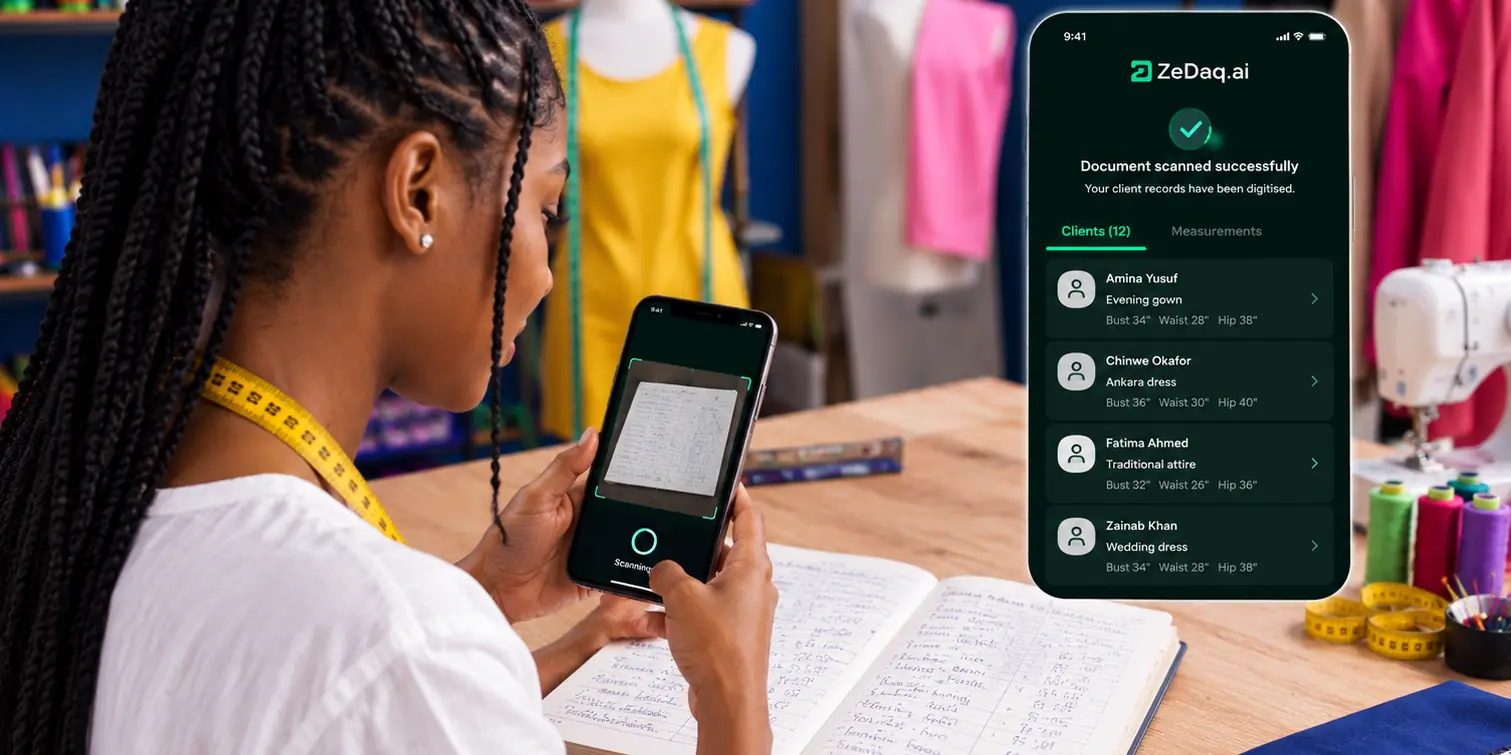
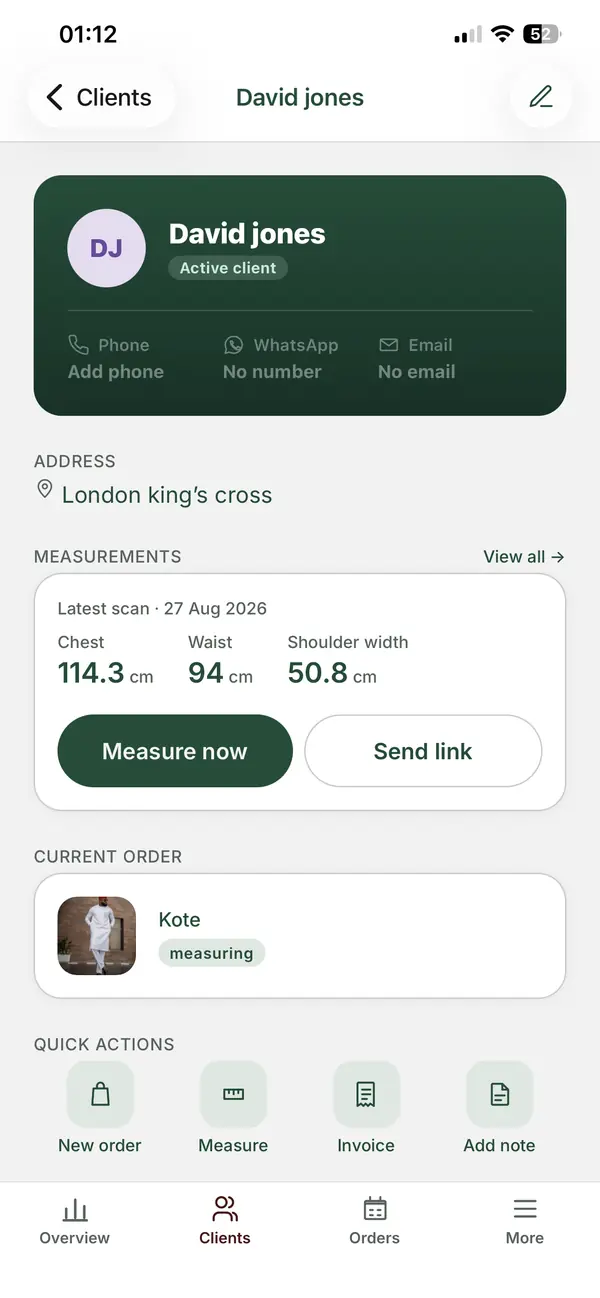
Yes. A client can take measurements at home using this guide and send them to the tailor. ZeDaq.ai's tailor tools let a client open a link on their phone to submit measurements, which saves time on back-and-forth messages.
For stores, ZeDaq.ai offers a size recommendation from a 30-second body scan, one photo plus height, matched to the store's own size chart.
See how a photo-based size scan works
FAQs
Do I need to measure differently for a wedding agbada?
The body measurements are the same. What changes is the style, fabric and fullness, so discuss these with your tailor.
Should I measure over clothes?
Measure over thin, fitted clothing, or none. Thick layers add false inches and make the outfit too large.
How often should I update my measurements?
Update them before every new order if your weight or build has changed. Otherwise, check at least once a year.
Can I use my suit measurements for an agbada?
Some points, such as neck, shoulder and sleeve, are similar. The robe and trousers use different cuts, so confirm with your tailor.
Try ZeDaq.ai free
Virtual try-on and Find my size for your store, plus client, order and invoicing tools for tailors, in one subscription.

