Fashion Fulfillment: In-House vs a 3PL
By the ZeDaq.ai team · · 7 min read
On this page
- What does in-house fulfillment mean?
- What does a 3PL do?
- How do the two options compare?
- When does in-house make sense?
- When does a 3PL make sense?
- What are the hidden costs?
- How do you work out the cost of each option?
- How should you handle returns in fashion?
- How do size and color variants affect fulfillment?
- What should you check when choosing a 3PL?
- How do you move to a 3PL without disrupting orders?
- What questions should you ask yourself first?
- Can you use both?
- What should your product pages include either way?
In-house fulfillment suits small fashion brands that want control over packing, quality checks and returns. A 3PL (third-party logistics provider) suits brands whose order volume, locations or seasonal peaks have outgrown a spare room or a small unit. Neither is better for every brand.
The right choice depends on volume, product type, returns and cash. Fashion adds its own problems, such as sizes, colors and a high return volume. Sizing choices upstream, such as AI size recommendation for fashion stores, change what comes back through your warehouse door.
What does in-house fulfillment mean?
In-house means you or your team store stock, pick orders, pack them and hand parcels to a carrier. The space can be a spare room, a unit or a small warehouse.
You control every step. You can add a handwritten note, steam a garment or check a seam before it ships. You also carry the cost of space, supplies, staff and mistakes.
What does a 3PL do?
A 3PL is a company that stores your stock and ships orders for you. Most connect to your store, receive orders automatically and send tracking back.
Typical services include:
- Receiving and checking stock.
- Storage by SKU (a code for each size and color).
- Picking and packing.
- Shipping with carrier accounts.
- Returns processing.
Services and fees differ widely between providers, so always read the rate card and contract before you sign.
How do the two options compare?
| Factor | In-house | 3PL |
|---|---|---|
| Control | Full | Shared, set by contract |
| Setup effort | Low at first | Onboarding and integration |
| Cost structure | Mostly fixed (space, time) | Mostly variable (per order, storage) |
| Branding and packaging | Easy to customize | Possible, but may cost extra |
| Seasonal peaks | Hard to scale | Easier to scale |
| Returns | You inspect each item | Provider inspects to your rules |
| Locations | One | Can add more, if the provider has them |
| Cash needs | Low at the start | Often minimums and fees |
This table is a general planning aid. Fees and terms vary by provider.
When does in-house make sense?
In-house works well when:
- You ship a small number of orders each day.
- Your products need careful handling, such as tailored pieces or fragile fabrics.
- Packaging is part of your brand.
- You make to order, so stock is limited.
- You are still testing your range and change it often.
Many small brands start here. Early on, handling orders yourself teaches you where problems happen. The guide to inventory management for small fashion brands covers the stock tracking you will need either way.
When does a 3PL make sense?
A 3PL becomes attractive when:
- Packing takes up so much of your time that it stops you growing.
- Peak seasons cause late shipments.
- You want to ship from a location nearer your customers.
- You hold lots of SKUs and need better storage.
- Your team has no space left.
Think about what your time is worth. If you spend most days packing instead of designing or marketing, outsourcing may pay for itself.
What are the hidden costs?
Both options have costs that are easy to miss. Make a list before you decide.
In-house hidden costs
- Packing supplies, tape, labels and printers.
- Your own time, or a part-time worker's wages.
- Insurance for stock.
- Mistakes, such as the wrong size shipped.
- Space that could be used for other things.
3PL hidden costs
- Onboarding or integration fees.
- Storage fees that grow with slow stock.
- Fees for returns processing and special packaging.
- Minimum monthly charges.
- Fees for stock you did not label properly.
Ask each provider for a full sample invoice for an order like yours. Then compare it with the cost of doing the job yourself.
How do you work out the cost of each option?
Use a simple model, with your own numbers.
- Count the orders you ship in a normal month and in a peak month.
- For in-house, add space, supplies, labor and insurance, then divide by orders to get a cost per order.
- For the 3PL, add all fees from the sample invoice and divide by the same orders.
- Repeat for the peak month. Check how each option copes.
- Add the cost of returns in both cases.
If the 3PL is close to your in-house cost per order, the time you free up may tip the decision.
How should you handle returns in fashion?
Returns are the main difference between fashion and other products. Garments come back worn, stained, wrong size or without tags. Someone has to inspect each item and decide whether to restock it.
Ask a 3PL how it handles these steps:
- Does it grade items as resale, repair or discard?
- Can it re-tag and refold to your standards?
- How fast does restocked inventory appear in your store?
- What does it charge for each stage?
For in-house returns, set a clear process and a place for each outcome. A messy return shelf leads to stock you cannot sell.
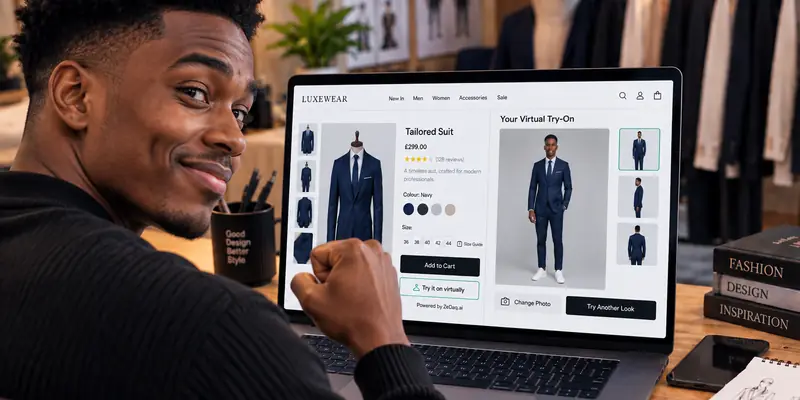
Many returns are about fit. The guide to fit-related returns explains where they start, and better size information on the product page helps. ZeDaq.ai offers a 30-second body scan that matches a shopper's measurements to your own size chart.
How do size and color variants affect fulfillment?
Each size and color is its own SKU. A fashion brand with a few styles can end up with a large number of SKUs, and every one needs a location and a count.
Poor planning leads to broken size runs, which is where dead stock starts. Read size curve planning to decide how many of each size to order before stock reaches your fulfillment center.
What should you check when choosing a 3PL?
Use this checklist when you compare providers:
- Experience with apparel, not just general goods.
- Integration with your store platform.
- Clear pricing for storage, picking, packing and returns.
- Receiving times for new stock.
- Accuracy and how errors are handled.
- Branded packaging options.
- Locations that match your customers.
- Contract length and how to exit.
- Insurance for lost or damaged goods.
- Reporting on stock and orders.
Ask for references from brands of your size, and test with a small batch before you move everything.
How do you move to a 3PL without disrupting orders?
Treat the move as a project with dates, not a single day. A careful handover limits lost stock and late parcels.
- Clean your SKU list. Give every size and color a unique code before the provider sees it.
- Count your stock. Do a full count and keep a copy, so you can compare it with the provider's receiving report.
- Ship a small first batch. Send your best sellers first and test real orders.
- Run both for a short time. Keep some stock at home until the first orders arrive correctly.
- Review after the first month. Check errors, speed and total fees against your plan.
Tell customers if delivery times or packaging will change. Update your shipping page so what you promise matches what the provider can do.
What questions should you ask yourself first?
Answer these honestly before you contact any provider:
- How many hours a week do I spend packing, and what else could I do with them?
- Which part of fulfillment do customers notice most: speed, packaging or returns?
- Could one bad peak season cost me more than a month of fees?
Can you use both?
Yes. Some brands keep limited editions and gifted packages in-house and send everyday items to a 3PL. Others move to a 3PL only for busy periods.
A hybrid is more complex to manage, so only use it if the benefit is clear. Track stock across both locations carefully.
What should your product pages include either way?
Fulfillment mistakes often start on the product page. A clear size chart, accurate colors and fit notes mean fewer wrong orders. The product page checklist for fashion stores covers photos, fit notes and try-on.
Cut wrong-size guesses at the product page
FAQs
What does 3PL stand for?
It stands for third-party logistics. A 3PL stores your stock and ships your orders for a fee.
When should a small fashion brand move to a 3PL?
Consider it when packing takes up the time you need for growth, or when peaks cause late shipments. There is no fixed order number that suits every brand.
Does a 3PL handle returns?
Many do, often for an extra fee. Ask exactly how it inspects, grades and restocks fashion items before you sign.
Is in-house cheaper than a 3PL?
At low volume it often looks cheaper because your time is not counted. Add your own time and space to compare properly.
Can I switch back to in-house later?
Yes, but plan the move. Check the contract for exit terms and stock transfer fees.
Try ZeDaq.ai free
Virtual try-on and Find my size for your store, plus client, order and invoicing tools for tailors, in one subscription.