Building a Plus-Size Fashion Brand in Nigeria
By the ZeDaq.ai team · · 4 min read
On this page
- Why is plus-size fashion its own business, not just bigger sizes?
- How do you plan your size range?
- How do you grade and fit-test plus-size patterns?
- What should a plus-size size chart include?
- How do you photograph and market plus-size clothing?
- Where should you sell?
- How can ZeDaq.ai help plus-size shoppers find their size?
Building a plus-size fashion brand in Nigeria starts with patterns graded for curvy bodies, not just made bigger, and with fit-testing on real plus-size women before you launch. Get fit right, then show it honestly in your size guide and photos, and you earn shoppers who have been let down by brands that stop at size 16.
This guide covers range planning, pattern grading, fit models, size charts, photos and selling online from Lagos, Abuja or anywhere else. For the wider view on fit and try-on in African fashion, see our guide to virtual try-on for African fashion brands.
Why is plus-size fashion its own business, not just bigger sizes?
Plus-size bodies don't scale up evenly. As sizes grow, bust, stomach, hips and upper arms change at different rates, and shape varies more between women of the same size.
A pattern that fits a size 10 and is simply enlarged often goes wrong in predictable places:
- Armholes too tight, with sleeves that pull across the upper arm.
- Bust darts in the wrong place, so the dress sits badly at the chest.
- Not enough stomach room, causing fabric to pull at the front.
- Too little hip room in fitted skirts and trousers.
- Hems that rise at the front because the fabric is pulled forward.
Plus-size shoppers notice these faults fast. A brand that solves them builds loyalty.
How do you plan your size range?
Decide your range before you design. Many Nigerian brands start a plus range from size 16 or 18 and go up from there, but your own customers should guide the choice.
- Look at your past orders and DMs. Which sizes do people ask for most?
- Pick a starting range you can produce and photograph well.
- Grade at least three to four sizes in the range, so shoppers can find a fit.
- Add sizes once your first range is selling and fitting well.
Be clear about your range on every page. "Available in sizes 16 to 26" saves shoppers time.
How do you grade and fit-test plus-size patterns?
Grading means adjusting a pattern from one size to the next. For plus sizes, ask your pattern cutter to grade from a plus-size base pattern rather than from a straight size.
Fit-test on real people:
- Find two or three fit models in your core sizes, with different body shapes.
- Sew a sample in the real fabric, not a cheaper test cloth.
- Check the fit sitting, standing, raising arms and walking.
- Note every change, update the pattern and sew again.
- Record final body measurements for each size. These become your size chart.
Pay your fit models and treat their time with respect. Their feedback is the base of your whole brand.
What should a plus-size size chart include?
Give body measurements for each size, in centimeters and inches. Include at least bust, waist, stomach and hip, plus upper arm for fitted sleeves.
Write fit notes that help shoppers between shapes, not just sizes:
- "Cut with extra room at the stomach."
- "Choose by your hip measurement for this skirt."
- "Sleeves fit an upper arm up to the measurement shown."
Some shoppers prefer modest styles with fuller coverage. Our guide to modest fashion from Kano and Abuja covers length and coverage sizing.
How do you photograph and market plus-size clothing?
Show every size where you can, not just the smallest one in the range. A shopper wants to see the dress on a body like hers.
- Use plus-size models, and list each model's height and size.
- Show front, side and back views, and a short movement video.
- Show the same dress on two models of different sizes.
- Repost customer photos on Instagram with their permission.
Avoid language that treats size as a problem to hide. Words like "flattering" can be fine, but "slimming" or "hides your tummy" turn many shoppers away. Talk about fit, comfort and style.
If you plan to add a menswear line later, our guide to building a men's native wear label covers men's fit points.
Where should you sell?
Most Nigerian brands begin on Instagram and WhatsApp. That works for building a community, but it makes sizing harder, because every shopper asks the same fit questions in DMs.
A website lets you show your full size chart, filter by size and take payment at checkout. You can still use Instagram for discovery and WhatsApp for follow-up. Diaspora shoppers in the UK and US often prefer a website, since they can check sizes and pay without a long chat.
How can ZeDaq.ai help plus-size shoppers find their size?
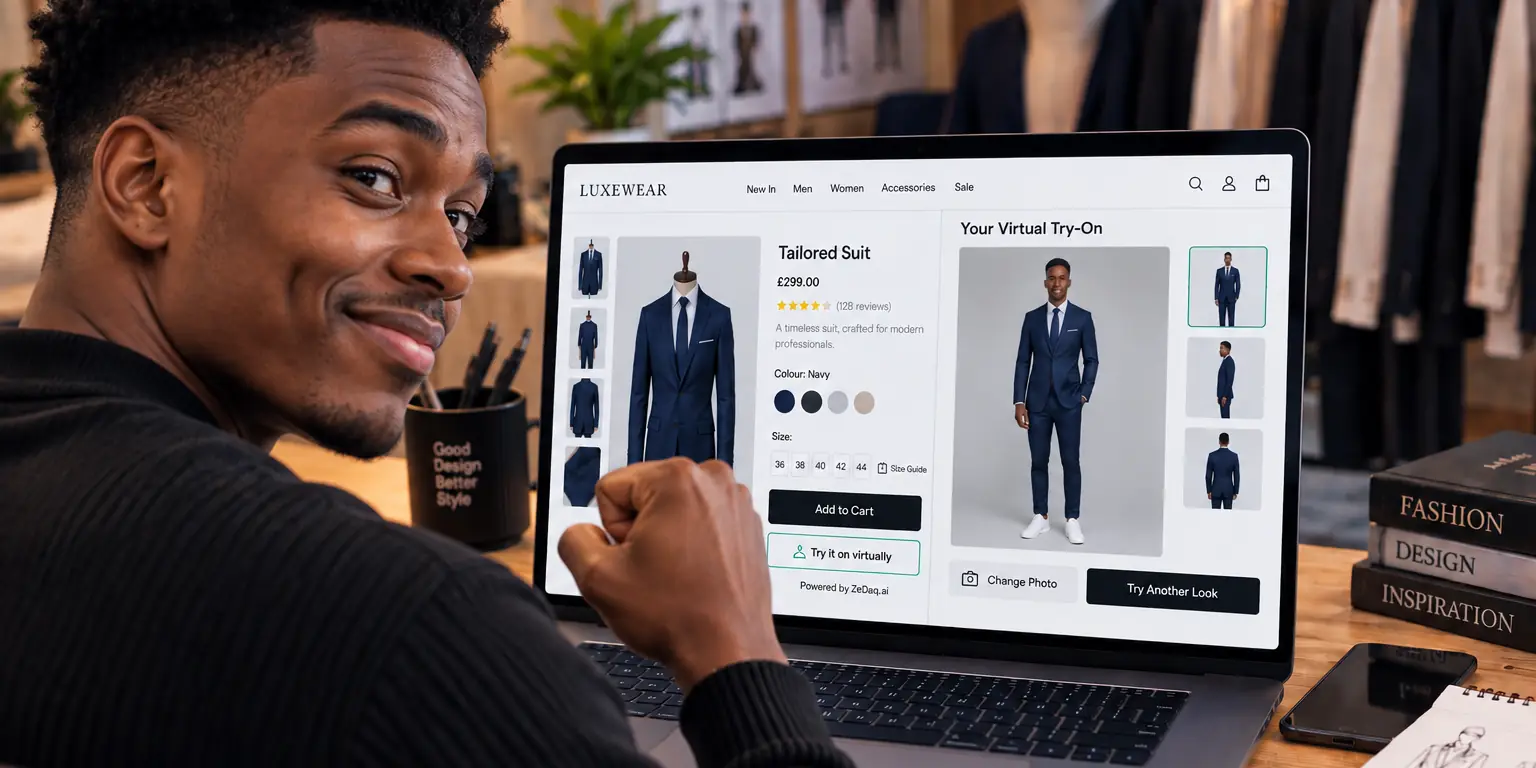
ZeDaq.ai adds a "Find my size" button and virtual try-on to your product pages. The shopper uploads one photo and types her height. A 30-second body scan matches her measurements to the size chart you enter, and sizes up to the largest relevant measurement, which suits curvy shoppers whose hips and bust fall in different sizes. Our guide to size recommendation for plus-size stores explains the details.
Try ZeDaq.ai free for 3 days
FAQs
What size should a Nigerian plus-size range start at?
There is no fixed rule. Look at your orders and DMs, then start where demand is strongest and expand later.
Can I use my straight-size patterns for plus sizes?
It is better to grade from a plus-size base pattern. Straight-size patterns enlarged without changes often fit badly at the arms, bust and stomach.
How many fit models do I need?
Start with two or three in your core sizes, with different body shapes. Add more as your range grows.
Should my size chart include upper arm?
Yes, for any fitted sleeve. Tight upper arms are one of the most common plus-size fit complaints.
Try ZeDaq.ai free
Virtual try-on and Find my size for your store, plus client, order and invoicing tools for tailors, in one subscription.

