Why Bridal Sizes Run Small
By the ZeDaq.ai team · · 4 min read
On this page
Bridal sizes run small because many gowns are cut to the designer's own size chart, which often does not match the sizes you wear in everyday clothes. The fix is to ignore your usual label and order by your measurements against that designer's chart.
This matters for store owners too. A shopper who picks a gown by street size can end up with the wrong fit, which is why an accurate AI size recommendation for fashion stores can help on bridal pages. We don't cite figures here, because we could not find a reliable public source for how much bridal sizes differ.
Do bridal gowns really use different sizes?
Often, yes. Many bridal designers publish a size chart based on body measurements, and the chart numbers do not line up with everyday sizing. A brand's "size 10" can fit a body that wears a different size elsewhere.
There is no single bridal standard that every brand follows. That is why the same shopper can be a different size in two gowns.
Why does this happen?
These are the usual reasons. Treat them as common patterns, not rules for every brand.
- Separate pattern blocks. Bridal designers draft on their own blocks, not on the blocks of everyday brands.
- Structure inside the gown. Boning, corsets and linings take up room and leave less ease.
- Made-to-order production. Many gowns are cut to a chart, then altered to the bride.
- Label differences. Everyday brands may use looser labels, so a bride's usual size can feel more generous than her measurements.
The result is the same: the label on the tag tells you little until you check the chart.
How should you choose a size instead?
Use your measurements, not your usual label.
- Measure three points. Take your bust, waist and hips with a soft tape. The guide to how to measure for a wedding dress walks through each step.
- Find the designer's chart. Use the one for the exact gown, not a generic chart.
- Match each measurement. Find the size that fits each point.
- Order for the largest point. If you land in two sizes, a gown is easier to take in than to let out.
- Plan for alterations. Most gowns need a fitting, so leave time for it.
See how a size recommendation works
Try it on yourself
Live renderUpload a photo, pick a piece, see it rendered on you.
Pick something to try on
What about shoppers between two bridal sizes?
Sizing up is the usual advice, because fabric can be removed but not easily added. Bridal alterations commonly take in a bodice or hem a skirt, so a slightly larger size gives your seamstress room to work.
If your bust and hips sit in different sizes, order for the larger one and ask a seamstress to adjust the rest. For more on this decision, see what to do when you are between sizes.
Does the same thing happen with other fitted garments?
Yes, to a degree. Any garment sized by its own chart can surprise shoppers who rely on their usual label. Bras are a good example, because band and cup sizes interact. The guide to bra sister sizes shows how two different labels can describe a similar fit.
The lesson carries over to bridal wear. Treat the label as a code that only the brand's chart can decode, and check the chart each time you buy from a new designer.
You can also ask the store directly. A good bridal shop will tell you which size to order for your measurements, and will say so if you fall between sizes.
What should bridal stores show on the product page?
Shoppers are less likely to guess wrong if the page tells them how the gown is sized. Add these to each bridal listing:
- A size chart in body measurements. Bust, waist and hips for each size.
- A plain note. For example, "Sizes follow our bridal chart, not everyday sizes. Order by measurements."
- Fit notes. Say whether the bodice is structured or has give.
- Alteration guidance. Say that most gowns need a fitting.
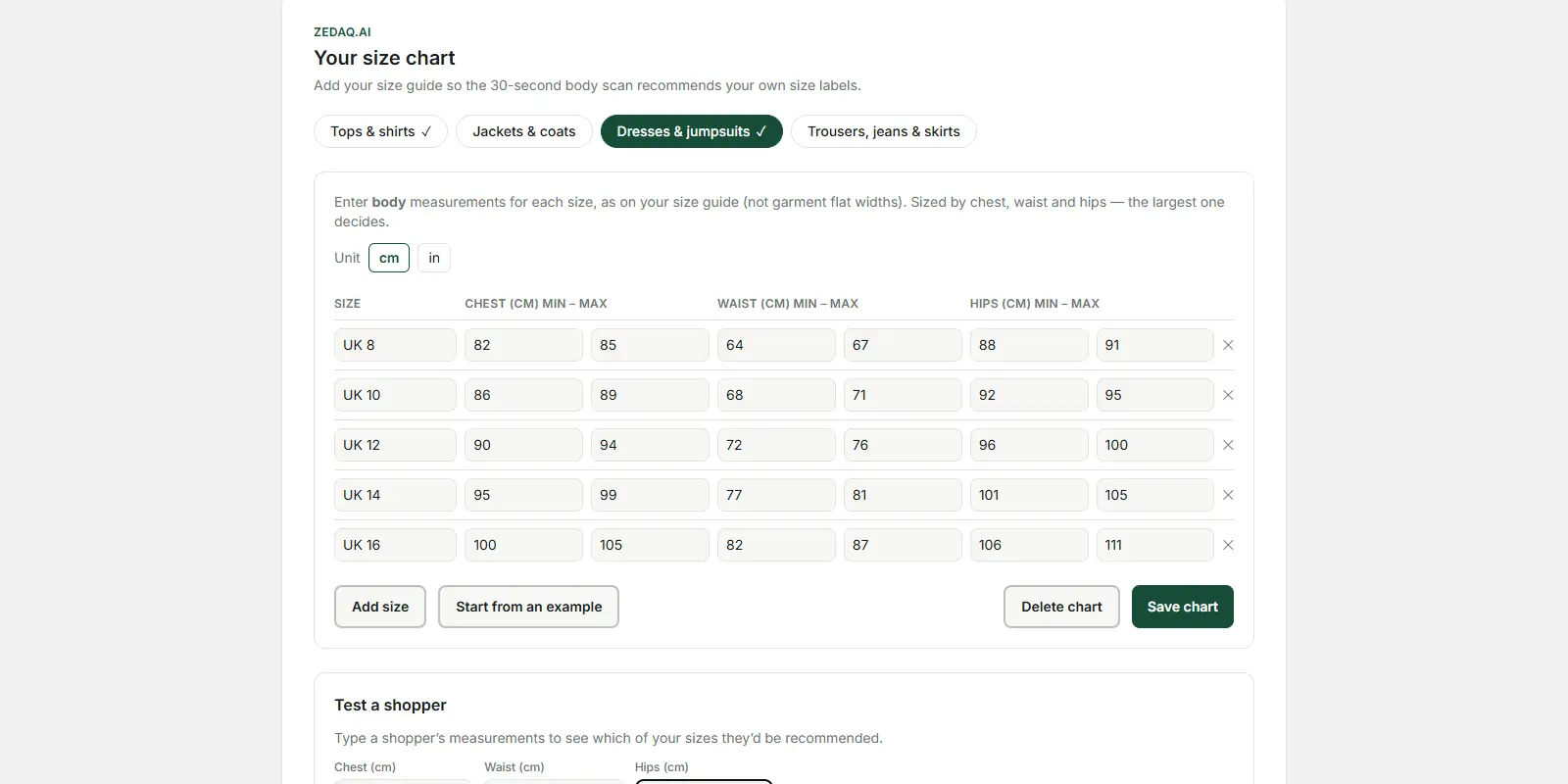
Stores that sell by size recommendation can match a shopper's measurements to the store's own chart. In ZeDaq.ai, merchants enter their own size guide per garment type, and the scan recommends the store's own labels. A store with a mixed catalog can also compare options in virtual try-on versus size charts.
Whatever tool you use, tell shoppers plainly that bridal sizing is its own system. A single honest sentence near the size picker prevents many wrong orders and awkward exchanges.
It also helps to train your support team on the same message. When a bride asks "what size am I?", the answer should always start with her measurements and the chart, never with her usual label. Consistent answers build trust, and they save time for both the shopper and your staff.
Help brides pick the right gown size
FAQs
Should I order a bridal gown one size up?
Not by habit. Order by your measurements against the designer's chart, and size up only if you fall between two sizes.
Is it easier to take a gown in than let it out?
Usually, yes. Taking fabric in is a routine alteration, while letting out depends on the seam allowance that is left.
Do all bridal designers use the same chart?
No. Each designer publishes their own chart, so check it for the exact gown you plan to buy.
When should I order a wedding dress?
Order early enough to allow for production, delivery and fittings. Ask the designer or store for their current lead times.
Try ZeDaq.ai free
Virtual try-on and Find my size for your store, plus client, order and invoicing tools for tailors, in one subscription.

