
UK Import Duty on Clothing Shipped From Nigeria
By the ZeDaq.ai team · · 5 min read
On this page
- What charges can a UK customer face?
- How does the £135 line work?
- How is the duty rate for clothing worked out?
- How do you label parcels so customs goes smoothly?
- How should you warn diaspora customers about charges?
- Can a UK hub help with charges?
- What should you keep on file for each UK order?
- How do you avoid paying charges twice on returns?
UK import duty on clothing shipped from Nigeria depends mostly on the value of the parcel: under UK government guidance, customs duty in Great Britain applies to non-excise goods worth more than £135, and VAT is charged in different ways above and below that line. Your customer usually pays any charges to Royal Mail, Parcelforce or the courier before the parcel is handed over.
For Nigerian brands selling to diaspora customers in London, Manchester or Birmingham, surprise charges at the door are a common reason for unhappy buyers. This guide explains the rules in plain words and how to warn customers. If you sell to diaspora shoppers who can't try clothes on, see our guide to virtual try-on for African fashion brands.
This is general information, not legal or tax advice. Rules change, so always check the official UK government pages linked below.
What charges can a UK customer face?
According to the UK government's page on tax and duty for goods sent from abroad, a parcel arriving in the UK can attract:
- VAT on the goods
- Customs duty, depending on the value and type of goods
- Possible courier or handling charges
The delivery company bills the customer, and the customer pays before the goods are delivered or when they collect them, as the same GOV.UK guidance explains.
How does the £135 line work?
The value of the parcel decides a lot. Here is a summary of the GOV.UK guidance for Great Britain (England, Scotland and Wales). Northern Ireland has different rules.
| Parcel | VAT | Customs duty (Great Britain) |
|---|---|---|
| Bought goods, £135 or less | Usually charged by the seller at the point of sale | No charge on non-excise goods |
| Bought goods, over £135 | Paid to the delivery company | Can apply |
| Gift, £39 or less | Not charged | No charge if £135 or less |
| Gift, over £39 | Paid to the delivery company | Can apply above £135 |
Source: GOV.UK, tax and customs for goods sent from abroad. Check the page before quoting a customer, because thresholds can change.
Note the first row. For goods of £135 or less, the UK expects the seller to have included VAT at the point of sale. That can affect overseas sellers directly, so read the official guidance or speak to a UK tax adviser before you sell regularly into the UK.
How is the duty rate for clothing worked out?
Customs duty rates depend on the exact type of garment, the material and where it was made. The UK publishes rates in its online Trade Tariff, where you can look up each commodity code.
Don't guess the rate for a customer. Look up your main products, such as a cotton dress or a men's kaftan, and keep a note of the codes you use.
How do you label parcels so customs goes smoothly?
Clear paperwork prevents delays. Your courier will ask for a customs declaration. Fill it in honestly and fully:
- Describe each item clearly. "Women's cotton dress" is better than "clothes".
- State the real value. Don't mark sales as gifts or lower the value. That is misdeclaration and can cause problems for you and the customer.
- Include the invoice. Add a copy of the invoice inside or attached to the parcel.
- Use the customer's full UK address and phone number. The courier may contact them about charges.
How should you warn diaspora customers about charges?
Customers get angry when charges come as a surprise, not when they are told upfront. Add a short note to your product pages, checkout and WhatsApp replies for UK orders:
UK orders may be subject to VAT, customs duty and courier fees, depending on the order value. These are collected by the delivery company. See GOV.UK for current rules.
Repeat it on the order confirmation. Some brands also send the GOV.UK link in the WhatsApp chat before payment.
Unexpected charges also cause refused parcels. Our guide to reducing failed deliveries covers how to confirm orders and avoid wasted trips.
Can a UK hub help with charges?
Some Nigerian brands send stock to the UK in bulk, then post orders locally. That changes who deals with import charges and when. Our guide to using UK fulfilment hubs compares that approach with shipping each order from Nigeria.
You will also want your store to show prices in pounds and make the delivery terms clear. Our guide on multi-currency store setup covers what to set up first.
What should you keep on file for each UK order?
Good records help you answer customer questions and deal with customs queries. For each UK order, keep:
- The invoice you sent with the parcel
- The customs declaration and tracking number
- The description and value you declared
- Any messages where you told the customer about possible charges
Store these by order number. If a customer in the UK says they were charged unfairly, you can show exactly what you declared and what you told them.
How do you avoid paying charges twice on returns?
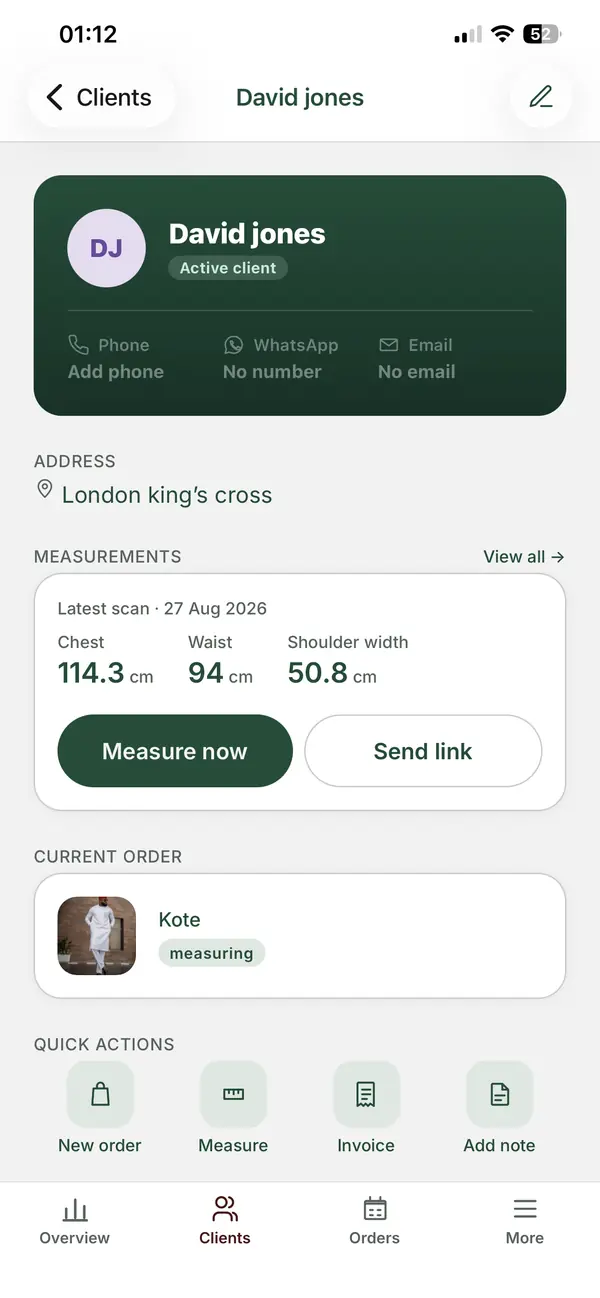
A return from the UK to Nigeria can create its own costs, and a resend can attract charges again. The best fix is to reduce wrong-size orders. Publish real measurements, add fit notes, and offer size help on product pages. ZeDaq.ai's "Find my size" recommends a size from your own chart after a 30-second body scan, which helps diaspora shoppers who think in UK sizes.
Help UK shoppers choose the right size first time
FAQs
Who pays UK import charges, the brand or the customer?
By default, the delivery company bills the customer before handing over the parcel. Some sellers set up ways to collect charges at checkout, but get UK tax advice before doing that.
Can I mark a sale as a gift to avoid charges?
No. Declare the real contents and value. Misdeclaring goods can lead to delays, penalties and seized parcels.
Does Northern Ireland follow the same rules?
No. Northern Ireland has its own rules, which are set out on the same GOV.UK page.
Where can I find the duty rate for a specific garment?
Use the UK Trade Tariff on GOV.UK. Search by product type and material to find its commodity code and rate.
Try ZeDaq.ai free
Virtual try-on and Find my size for your store, plus client, order and invoicing tools for tailors, in one subscription.

