Size Recommendation for Bridal Boutiques
By the ZeDaq.ai team · · 6 min read
On this page
Bridal size recommendation gives each bride a suggested gown size from your own size chart, based on her measured bust, waist and hips. For a bridal boutique, it works best as a first step before the fitting appointment, so the bride orders or tries the closest size from the start.
This guide explains how it fits a bridal business, how to set up a gown chart, and where human fittings still matter. For the general method behind photo-based sizing, see the guide to AI size recommendation.
Why is sizing harder for wedding dresses?
Wedding dress sizing is harder because the stakes are higher and the fit is closer. A gown has to fit the bust, waist and hips at the same time, often with boning or a fitted bodice.
Bridal labels also tend to use their own charts. A bride who wears one size in everyday clothes may need a different size in a gown, which is why "what size am I?" is such a common question in boutiques.
There is a second issue. Many brides start browsing online, often weeks before they visit. If your site can't help them choose a size, they may book with a boutique that can.
How does a bridal sizing tool work for the bride?
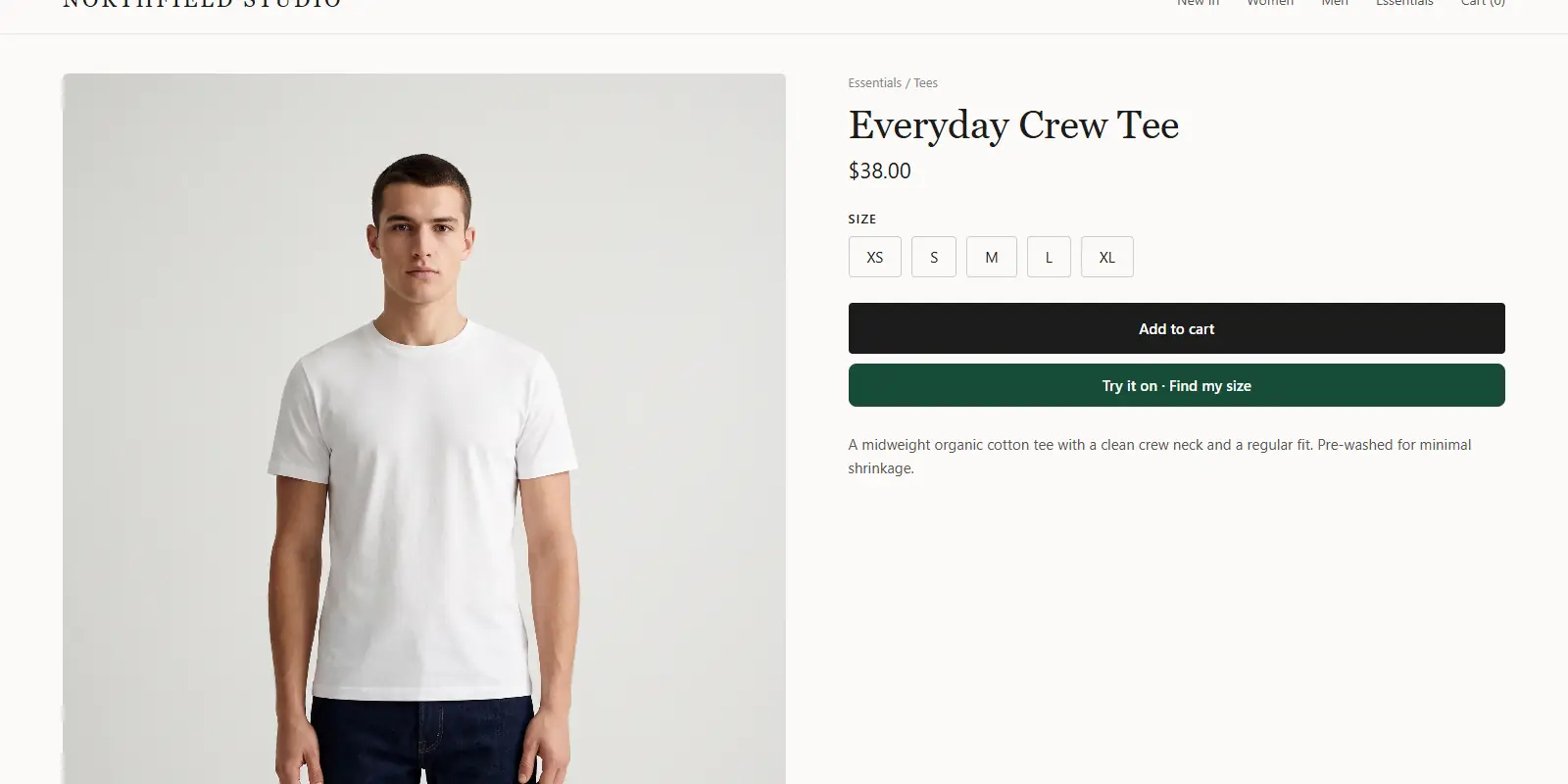
With ZeDaq.ai, the bride taps Find my size on a gown's product page. She uploads one photo and enters her height.
The measurement runs on her own device. Her measurements are then matched to your dresses chart, and she sees one size label from your range, such as "UK 12" or "Size 8".
She can also tap Try it on and see your real gown on her own photo. That helps her judge neckline, silhouette and length on her body before she books.
Upload a photo and see a gown on you
Try it on yourself
Live renderUpload a photo, pick a piece, see it rendered on you.
Pick something to try on
Why does sizing up suit bridal gowns?
When a bride falls between two sizes, ZeDaq.ai suggests the larger one and says so. For gowns, that choice matches how alterations usually work.
A seamstress can usually take a gown in at the side seams or bodice. Letting it out is often limited by the seam allowance, and some fabrics show old stitch lines. Ordering slightly large keeps more options open for the final fitting.
Explain this to brides in a short fit note, such as "If you are between sizes, choose the larger size. We tailor it to you at your fittings."
How do you set up a gown size chart?
Use the dresses chart type. It matches on chest, waist and hips, which are the three measurements that matter most for a fitted gown.
Here is an example of how a bridal chart might look:
| Size | Bust (cm) | Waist (cm) | Hips (cm) |
|---|---|---|---|
| 8 | 86–89 | 68–71 | 93–96 |
| 10 | 89–92 | 71–74 | 96–99 |
| 12 | 92–96 | 74–78 | 99–103 |
| 14 | 96–100 | 78–82 | 103–107 |
Example chart only. Use each designer's own bridal chart.
Follow these steps:
- Collect each designer's chart. If you stock several bridal labels, their charts may differ.
- Convert to body measurements. Use the bride's body size for each label, not the finished gown size.
- Close the gaps. Each range should start where the last one ends.
- Build around your main label. There is one dresses chart, so base it on the label you sell most. Add a fit note on gowns that run small or large.
- Test a few brides. Ask staff to run the scan and check that the size matches what your fitters would choose.
What chart mistakes should you avoid?
- Entering gown measurements. Many bridal charts list the finished dress. The scan measures the bride, so your chart needs body measurements.
- Mixing labels without notes. If a second designer runs small or large, add a fit note to those gowns so brides know to adjust.
- Leaving gaps between sizes. A bride whose measurement falls in a gap gets a less useful match. Make each range start where the last one ends.
- Never rechecking. When a designer updates its chart for a new season, update yours on the same day.
- Skipping staff tests. Your fitters know how each label really fits. Ask them to compare a few scan results with the size they would choose.
Where do fittings still matter?
A size recommendation chooses the starting size. It doesn't replace the fitting appointments that every bridal gown needs.
Use the scan for:
- Online browsing. The bride gets a size before she visits.
- Ordering stock. Your team sees which size to order for her trunk show or sample appointment.
- Remote brides. A bride who lives far away can get a starting size without traveling.
Keep human fittings for:
- Hem length. That depends on her shoes and the gown's style.
- Bodice shaping. Final fit at the bust and waist needs a fitter.
- Bustles and straps. These are adjusted on her body.
Can boutiques use this for bridesmaids and guests?
Yes, and this is often where sizing saves the most back-and-forth. Bridesmaid orders bring many different bodies at once, often from people in different cities.
Each bridesmaid can run Find my size from her own phone and choose her size from your chart. Your team then checks one list instead of chasing several sets of tape measurements.
The same thinking applies across other categories. The menswear sizing guide helps if you also dress grooms and groomsmen.
If you serve curvier brides, the guide for plus-size stores covers extended charts.
For boutiques that sell aso ebi or other occasion styles for weddings, see the article on sizing for African fashion brands.
How much does it cost to add bridal sizing?
Each size scan counts as one measurement on your plan. The Free plan includes 3 measurements a month, which is enough to test with your team.
Paid plans are Micro at $14/mo, Starter at $49/mo, Growth at $129/mo and Scale at $299/mo. Every paid plan has a 3-day free trial with no card required, and the current details are on the ZeDaq.ai pricing page.
You can add ZeDaq.ai through the Shopify app, or with a script tag on WooCommerce, Wix, Squarespace and custom sites.
Give brides a starting size before they visit
FAQs
Does the bride need to create an account?
No. She uses Find my size on your product page. There is nothing to download and no sign-up.
Can I use a different chart for each bridal designer?
You get one chart per garment type, and gowns use the dresses chart. If designers size very differently, base the chart on your main label and add fit notes on the others.
Will the scan choose the hem length?
No. The scan matches bust, waist and hips. Hem length still depends on the bride's shoes and is set at her fitting.
What if the bride wears loose clothes in her photo?
Loose clothing can make body measurements less precise. Ask brides to wear fitted clothing and stand straight for the photo.
Can a bride use Find my size on her phone?
Yes. She opens your product page in her phone's browser, uploads one full-length photo and enters her height.
Should a bride scan again closer to the wedding?
It can help if her measurements have changed since she ordered. A fresh scan before her first fitting gives your fitter an updated starting point.
Try ZeDaq.ai free
Virtual try-on and Find my size for your store, plus client, order and invoicing tools for tailors, in one subscription.

