Shopify SEO for Clothing Stores: Where to Start
By the ZeDaq.ai team · · 5 min read
On this page
- What should you fix first in Shopify SEO?
- How do you write page titles and descriptions for clothing pages?
- How should you organize collections for search?
- What makes a clothing product page rank and convert?
- Should you add structured data?
- How does site speed affect clothing store SEO?
- What does a worked example look like?
- How do you check your progress?
- What can you ignore at the start?
- How do apps fit into your SEO plan?
Shopify SEO for a clothing store starts with four things: unique page titles and descriptions, well-named collections, useful product pages, and a fast site. Do those in that order before you try anything advanced.
This guide gives you a practical sequence. Search is only one source of visitors, and fit questions often decide whether they buy, so it also helps to know how to add virtual try-on to Shopify once your traffic starts to grow.
What should you fix first in Shopify SEO?
Fix the pages that already get visits and the ones that earn money: your home page, your main collections and your best-selling products. Search engines read titles, headings and descriptions first, so these basics have the biggest effect for the least work.
A simple order:
- Page titles and meta descriptions
- Collection structure and names
- Product page copy and images
- Site speed
- Structured data and reviews
How do you write page titles and descriptions for clothing pages?
Shopify's own guidance says each title should be unique and descriptive, with important keywords near the start. Keep titles to 60 characters or fewer, because longer ones may be shortened in results (Shopify Help Center).
For descriptions, write plain sentences for each page rather than lists of keywords. The same page recommends about 160 characters.
Here is a template for a clothing store:
| Page | Title pattern |
|---|---|
| Collection | Women's linen dresses, brand name |
| Product | Product name, fabric or fit, brand name |
| Blog post | The question the post answers |
These are example patterns, not required formats. Use the words your shoppers actually search.
How should you organize collections for search?
Collections are your category pages, and they often match the searches people make, such as "linen shirts for men". Give each one a clear name, a short intro and a unique title.
Avoid near-duplicate collections that list the same products under slightly different names. Merge them or make them genuinely different. For a full approach, read how to organize Shopify collections.
What makes a clothing product page rank and convert?
Describe the garment the way a shopper would ask about it: fabric, fit, length, care and the model's height and size. Shopify advises product and collection descriptions of at least 250 words, and at least 500 for informational pages and blog posts (Shopify Help Center). Treat that as a guide, not a target. Cut filler.
Add alt text to every product image. Shopify says to describe the image clearly, using words from the page. Good alt text helps search engines and people using screen readers.
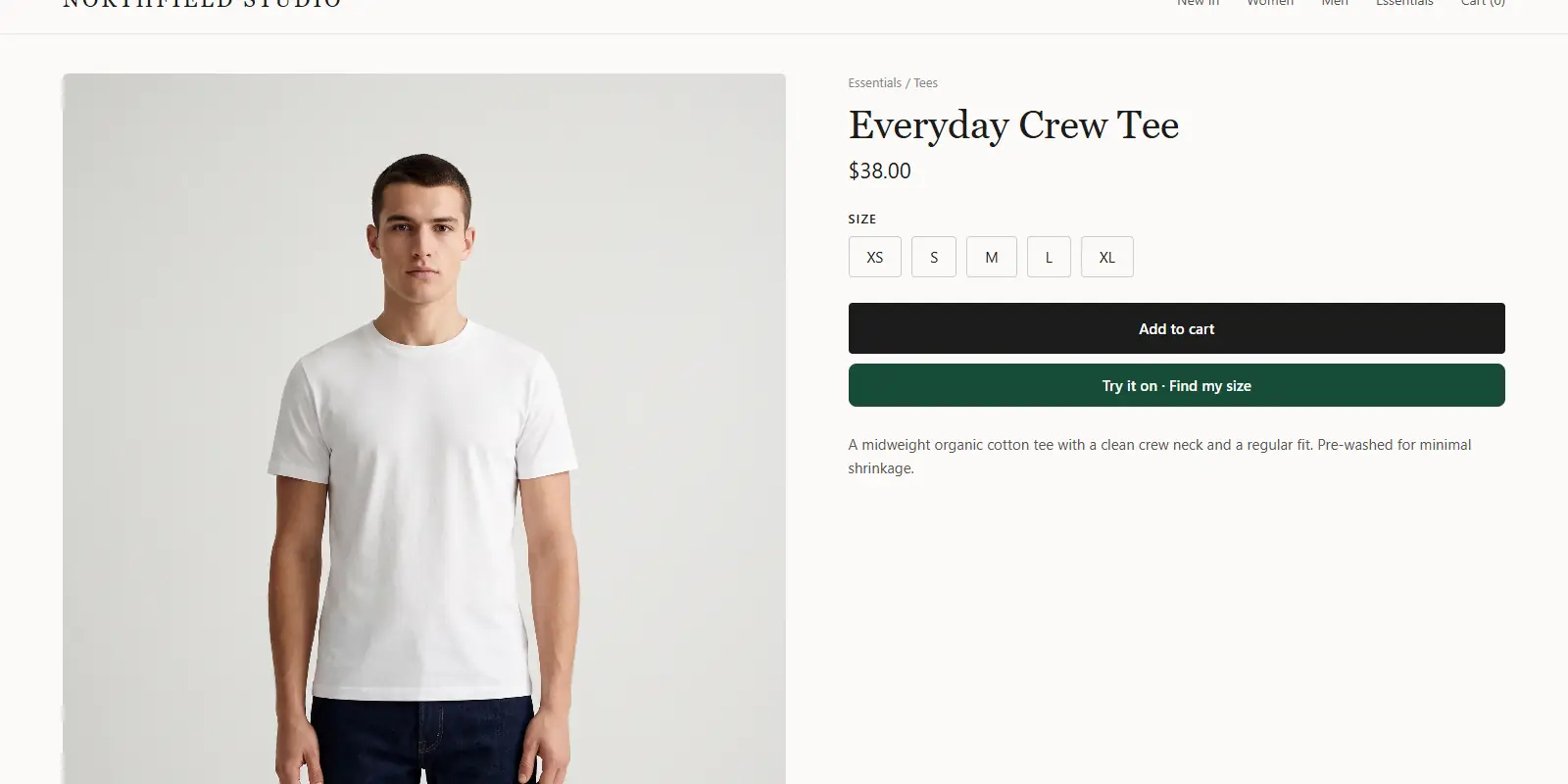
Put your size chart on the page in plain text, not only as an image. A shopper who can't find their size leaves, and search engines can't read text inside a picture.
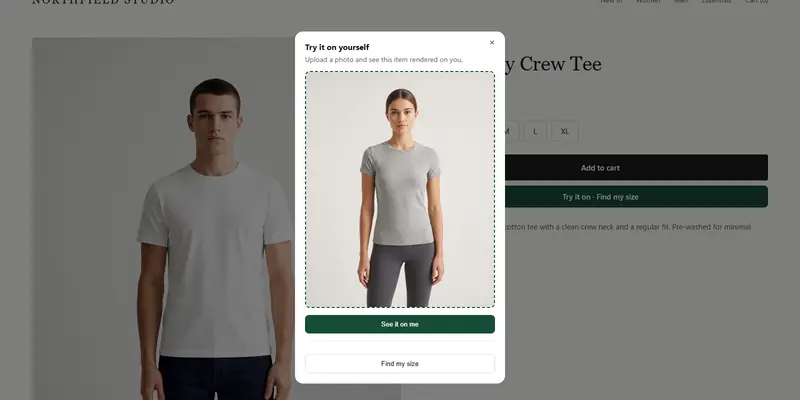
See how shoppers check fit on a product page
Try it on yourself
Live renderUpload a photo, pick a piece, see it rendered on you.
Pick something to try on
Should you add structured data?
Yes, if your theme doesn't already. Google explains that product structured data can make your pages eligible for richer results, and that merchant listings can include details such as apparel sizing, shipping and return policies (Google Search Central). Many Shopify themes add the basics, so test a product URL with Google's tools before changing code.
How does site speed affect clothing store SEO?
Slow pages frustrate shoppers on phones. Fashion stores are image-heavy, so large photos and many apps are common causes of slow pages. Our guide to speeding up a Shopify fashion store covers the fixes in order.
What does a worked example look like?
Say you sell linen clothing and your best collection is called "New in". That name tells a shopper little and tells a search engine nothing.
Rename it "Women's linen dresses". Give the page title the same words, then add a two-sentence intro about fabric, fit and care. Rename the products inside it, so "Dress 04" becomes "Linen wrap dress, midi length".
Each change is small, and together they tell search engines and shoppers what the page is about. Repeat for your next three collections.
How do you check your progress?
Use Google Search Console, which is free, to see which searches show your pages and which pages get clicks. Look at it monthly, not daily.
Note which collections get impressions without clicks. Those usually need a better title or description.
What can you ignore at the start?
You can skip these until the basics are done:
- Buying links or using automated link schemes
- Rewriting every product description at once
- Chasing hundreds of long keywords
Pick one collection and one product at a time, finish it, then move to the next.
How do apps fit into your SEO plan?
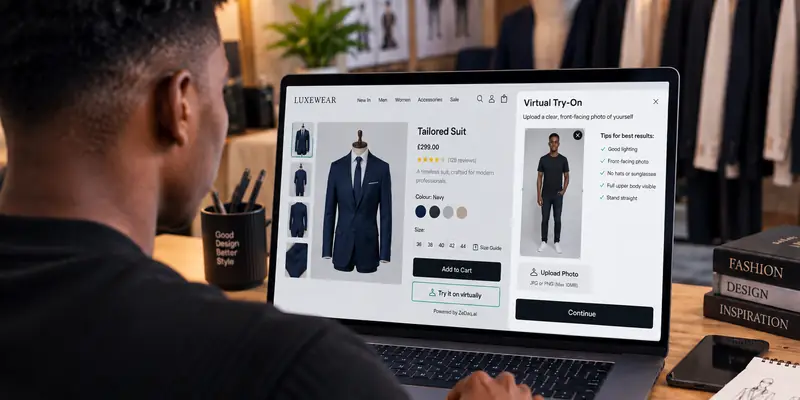
Every app you add can load scripts on your pages. Before you install one, check what it loads and test your speed afterward. If shoppers ask about fit, a try-on or sizing app can answer on the page. Compare the options in best AI virtual try-on apps for Shopify, and install ZeDaq.ai from the Shopify App Store if it fits your store.
Help shoppers find their size on your product pages
FAQs
How long does Shopify SEO take to work?
It varies by store and competition, and nobody can promise a timeline. Make the basic changes, then check search performance over several weeks.
Do I need an SEO app for Shopify?
Not to start. Shopify lets you edit titles, descriptions, alt text and URL handles in the admin.
Should I write long product descriptions?
Write what a shopper needs to decide: fabric, fit, sizing and care. Length follows from that. Don't pad.
Is a blog worth it for a clothing store?
It can be, if posts answer real questions such as sizing, styling or care. A few useful posts beat many thin ones.
Try ZeDaq.ai free
Virtual try-on and Find my size for your store, plus client, order and invoicing tools for tailors, in one subscription.