Selling Agbada to Diaspora Customers: Measurements and Timelines
By the ZeDaq.ai team · · 5 min read
On this page
- Why is agbada harder to sell abroad than ready-to-wear?
- Which measurements do you need for a full agbada set?
- How do you collect measurements from a client abroad?
- How do you build a timeline that works backward from the event?
- How should you price and invoice diaspora orders?
- What keeps diaspora clients coming back?
Selling agbada to diaspora customers in the UK and US comes down to two things: measurements you can trust without meeting the client, and a timeline that works backward from their event date. Get both right and a client in London or Houston can order a full three-piece agbada from your Lagos or Ibadan workshop with confidence.
This guide covers what to measure, how to collect it from abroad, and how to plan dates so the outfit lands before the wedding, naming ceremony or Owambe. For the wider picture of selling African fashion to shoppers who can't visit your shop, see our guide to virtual try-on for African fashion brands.
Why is agbada harder to sell abroad than ready-to-wear?
An agbada is three garments in one: the flowing outer robe, the inner tunic (often called the buba or dansiki) and the sokoto trousers. Each piece has its own fit points. The outer robe is forgiving across the body but not in length or shoulder drop. The inner tunic and trousers need closer measurements.
Diaspora clients also order for big moments. A groom, a father of the bride or a celebrant can't accept a late or badly fitting outfit. You can't fix it with a quick visit to your shop, so the order has to be right the first time.
If you also sell kaftans in fixed sizes, our article on building a men's kaftan size range explains how ready-to-wear sizing differs from made-to-measure.
Which measurements do you need for a full agbada set?
Ask for body measurements, not garment measurements. Your pattern cutter adds ease and style allowance in the workshop. Here is a working list:
| Piece | Measurements to collect | Why it matters |
|---|---|---|
| Outer robe | Full length (shoulder to ankle), shoulder width, arm span | Sets the drape and where the hem falls |
| Inner tunic | Chest, stomach, tunic length, sleeve length, neck, round arm | Controls comfort under the robe |
| Sokoto | Waist, hip, trouser length, thigh, knee, ankle opening | Sets how the trousers sit and stack |
| Cap (fila) | Head circumference | Matching cap is often part of the order |
Also ask for height and the shoe the client plans to wear. A heeled shoe or a flat sandal changes the ideal robe and trouser length.
How do you collect measurements from a client abroad?
Most Nigerian tailors start on WhatsApp, with a voice note explaining how to measure and a reply full of numbers. That works for repeat clients. For new clients, it often leads to mixed inches and centimeters, or a chest measured over a thick jumper.
A better routine:
- Send one clear guide. Use a short video or picture guide that shows where the tape goes for each point.
- Ask for help. Measurements taken by a friend or family member are more reliable than self-measuring.
- Fix the unit. Tell the client to use inches or centimeters, and only one.
- Ask for a reference garment. A favorite kaftan or trouser laid flat and measured gives you a useful check.
- Confirm back. Send the full list back and ask the client to reply "confirmed" before you cut.
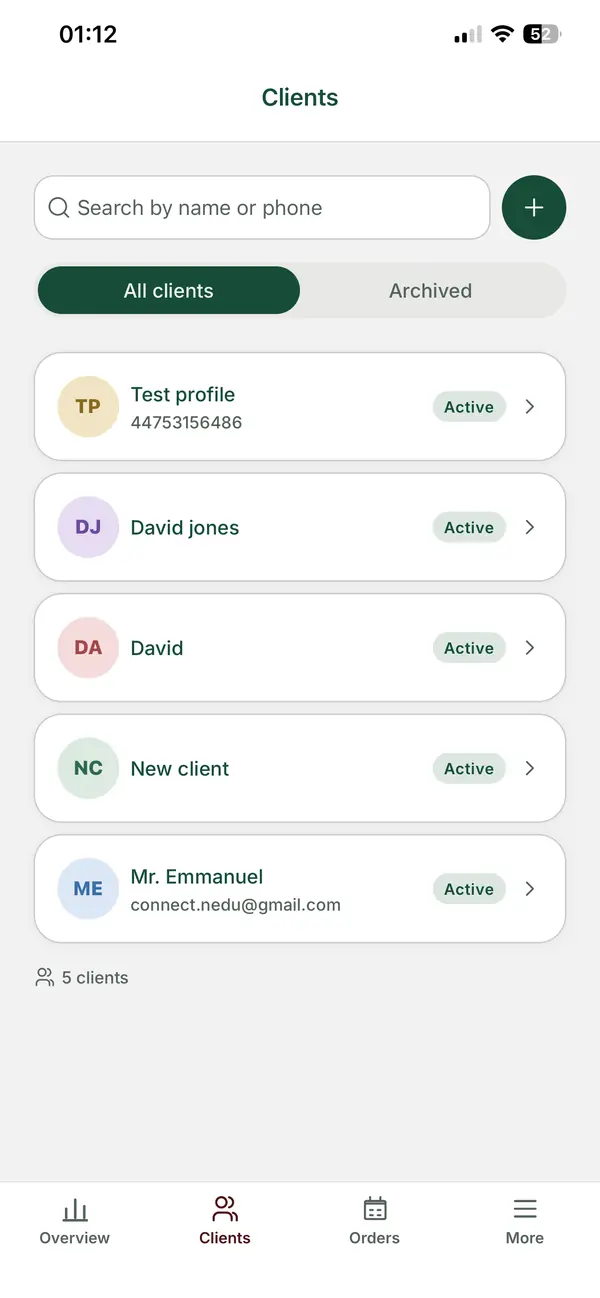
ZeDaq.ai's tailor tools include a measurement link the client opens on their phone, so their numbers arrive in your client record instead of scattered across chats. Our guide to handling sizing for made-to-measure clothing has more on remote measuring.
How do you build a timeline that works backward from the event?
Start with the event date and count backward. Write each stage down and share it with the client so expectations are clear from day one.
- Event date. The fixed point everything else depends on.
- Buffer before the event. Leave time for a small alteration by a tailor near the client.
- Courier delivery. Check the current transit time with your courier for the destination city, and add time for customs.
- Final finishing and pressing. Embroidery touch-ups, buttons and packing.
- Sewing. Your own production time, based on how many orders you have in the queue.
- Fabric sourcing. Aso-oke, damask or guinea brocade may take time to find in the right color.
- Measurement confirmation and deposit. Nothing moves until both are done.
Peak periods such as December weddings and Owambe season fill workshops fast. Tell diaspora clients your latest order date for each season, and hold to it.
How should you price and invoice diaspora orders?
Quote clearly, in the currency the client expects. A UK client usually thinks in pounds and a US client in dollars, while your fabric and labor costs are in naira. Decide your exchange buffer before you quote, so currency swings don't eat your margin.
Split the payment into a deposit before fabric is bought and a balance before dispatch. Put the measurements, fabric choice, delivery address and agreed date on the invoice. ZeDaq.ai invoicing supports multiple currencies, including NGN, GBP and USD, so one client record can carry both the naira cost side and the pound or dollar invoice.
If the client wants a matching senator outfit for the day after the wedding, our notes on senator suit fit details cover what men look for in that style.
What keeps diaspora clients coming back?
Repeat diaspora clients are valuable because their measurements and preferences are already on file. Keep a clean record for each one: measurements with dates, fabric and embroidery choices, and photos of the finished outfit.
Small habits help:
- Send a photo or short video of the finished agbada before dispatch.
- Share the tracking number as soon as you have it.
- Message a week after delivery to ask about fit, and note any changes for next time.
- Remind clients before the next festive season, with your order cut-off date.
ZeDaq.ai gives tailors a client CRM, orders and a delivery calendar, and the ZeDaq Business mobile app for iOS and Android, so you can see every diaspora order and its due date in one place.
Run diaspora agbada orders from one place
FAQs
Can a client measure themselves for an agbada?
They can, but results are better when someone else holds the tape. Ask for a reference garment measured flat as a second check.
Should I ask for inches or centimeters?
Either works, as long as the client uses one unit for every measurement. State the unit clearly in your measuring guide.
What if the agbada arrives and the trousers are too long?
Trouser length is the easiest fix for a local tailor near the client. Build a buffer before the event so there is time for small alterations.
How do I stop late orders before festive seasons?
Publish a clear last order date for each season and share it on Instagram, WhatsApp status and your website. Take deposits only for orders you can finish in time.
Try ZeDaq.ai free
Virtual try-on and Find my size for your store, plus client, order and invoicing tools for tailors, in one subscription.

