Plus-Size African Print Fashion Online
By the ZeDaq.ai team · · 4 min read
On this page
- What should plus-size shoppers look for in an African print brand?
- Why is sizing African print harder than sizing plain fabric?
- How do you choose the right size when ordering online?
- What can brands do to serve plus-size customers better?
- How can size recommendation help?
- What does a plus-size friendly checklist look like?
Plus-size African print fashion online works best when a brand offers genuinely extended sizes, publishes body measurements for every size, and explains how each style fits. Shoppers should look for those three things before buying, and brands should provide them if they want curvy customers to order with confidence.
Ankara and other African prints are bold, and the cut matters as much as the fabric. This guide covers what plus-size shoppers should check, and what brands can do about it. For the wider picture of fit and try-on in this niche, see virtual try-on for African fashion brands.
What should plus-size shoppers look for in an African print brand?
A few signals tell you whether a brand has really designed for larger bodies.
- A published size range with measurements. Look for chest, waist and hip numbers for every size, not just letters.
- Extended sizes that were graded, not just enlarged. Grading means the pattern is reworked for each size, so proportions stay right.
- Fit notes per style. A good listing says whether a dress is fitted, relaxed or stretchy.
- Photos on different bodies. Seeing the same style on more than one body size is a good sign.
- A clear returns or exchange policy, in case the size is wrong.
If a page only says "one size fits most" for a fitted style, ask questions before ordering.
Why is sizing African print harder than sizing plain fabric?
Several things combine here.
- Many fabrics have no stretch. Wax print cotton and similar fabrics don't give, so a small error in measurement matters.
- Prints hide fit problems in photos. A busy pattern can make tightness hard to see.
- Made-to-order is common. Many brands sew to order, so the size label may mean less than the measurements you send.
- Styles vary. A wrap dress and a fitted sheath ask for different measurements.
Our guide to sizing stretch and non-stretch fabrics explains why fabric behavior changes the size you should pick.
How do you choose the right size when ordering online?
- Measure yourself. Use a soft tape over light clothing: bust at the fullest point, waist at the narrowest, hips at the widest.
- Compare with the brand's chart. Match your numbers to their body measurements, not their garment measurements.
- Use the largest measurement. If your bust and hips fall in different sizes, many shoppers pick the larger one, then adjust.
- Check the fabric. Non-stretch fabric needs more room than stretch.
- Read the fit note. If it says "runs small", follow it.
- Ask for help. Message the brand with your measurements before ordering.
If you are between sizes in a non-stretch fabric, a roomier size is usually easier to alter than a tight one.
What can brands do to serve plus-size customers better?
Brands can fix most problems with honest information.
- Publish body measurements for every size and say which units they use.
- Offer extended sizes with proper grading, not just a stretched pattern.
- Show a range of bodies on product pages.
- Write fit notes in plain language, such as "cut full through the hip".
- Offer made-to-measure for styles that need it, with a clear lead time.
Our guide on product photos for African print clothing covers how to show both the print and the fit.
How can size recommendation help?
A size recommendation takes the guesswork out of matching a body to a chart. With ZeDaq.ai, the shopper uploads one photo and types their height. A 30-second body scan produces measurements, and these are matched to the store's own size chart.
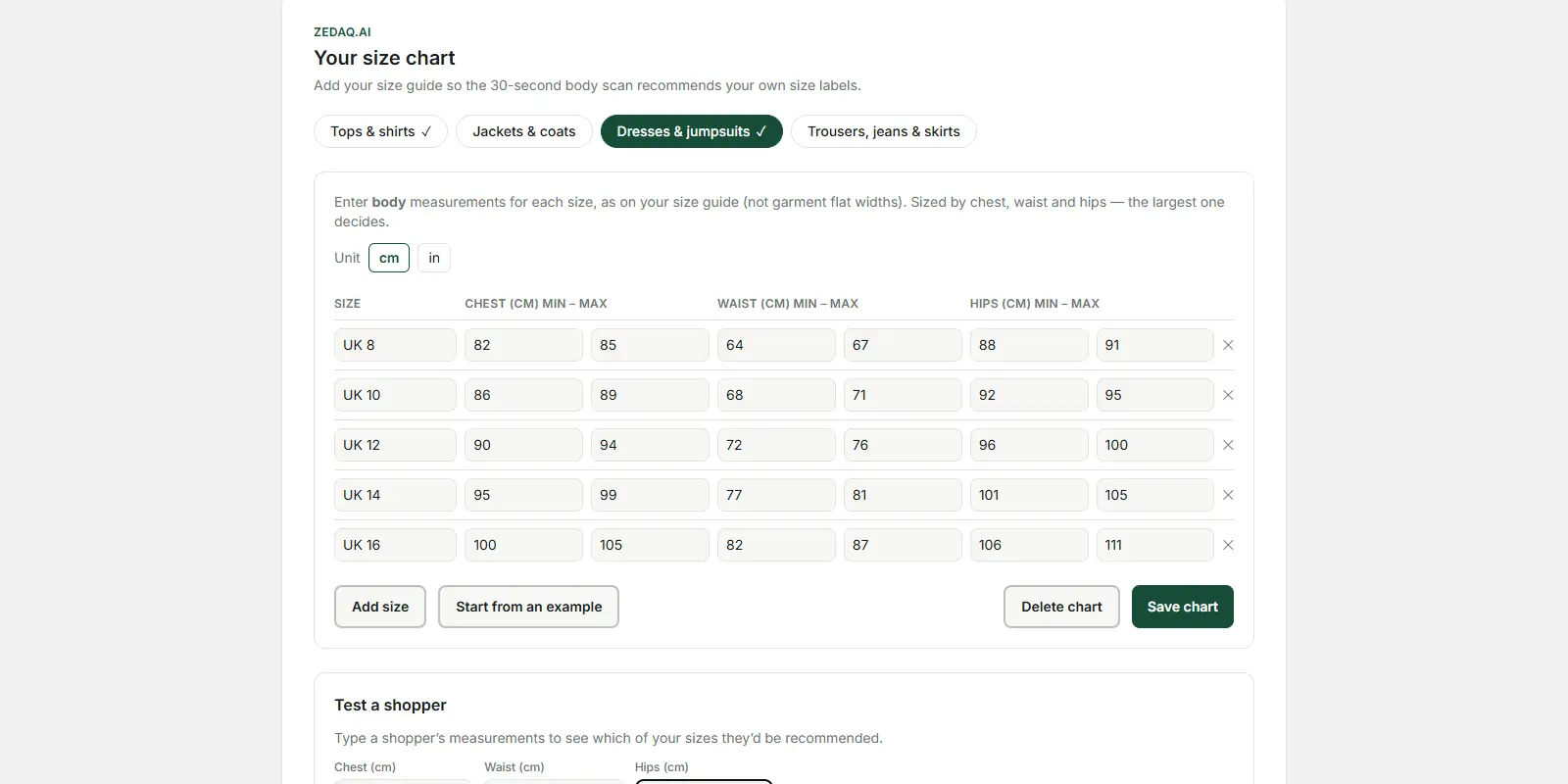
The store enters its own chart, including larger sizes, one chart per garment type. When measurements fall between sizes, the scan recommends the larger relevant size rather than the smaller. That works as a safe default for non-stretch fabric. Read size recommendation for African fashion brands for the setup details.
It is only as good as the chart behind it. If a brand's largest size is too small for the shopper, no tool can fix that, and the brand should extend its range.
What does a plus-size friendly checklist look like?
Use this as a quick audit, whether you are shopping or selling.
- Measurements for every size are published.
- Grading is proper, not a scaled-up pattern.
- Fit notes explain stretch and ease.
- Product photos show more than one body.
- The size range goes as high as customers actually ask for.
- Returns or exchanges are clear.
For a broader look at this topic, see size recommendation for plus-size stores.
Help every shopper find a size that fits
FAQs
What does "plus-size" mean in African print fashion?
It has no single definition, and brands set their own ranges. Always check the body measurements for each size rather than the label.
Is Ankara stretchy?
Typically not. Most wax print cotton has no stretch, so it needs enough ease. Check the listing for fabric details.
Should I size up in African print dresses?
If you are between sizes in a non-stretch fabric, choose the larger one. A larger size is usually easier to alter than a smaller one.
Can brands make plus-size pieces to order?
Many do. Ask about measurements, lead time and whether a deposit is required.
Try ZeDaq.ai free
Virtual try-on and Find my size for your store, plus client, order and invoicing tools for tailors, in one subscription.

