Petite vs Short: Is There a Difference in Clothing?
By the ZeDaq.ai team · · 4 min read
On this page
Yes. Petite clothing is cut in proportion for a smaller frame, while "short" usually means only the length is reduced, such as a shorter trouser leg. A petite garment changes more than length, so it can fit differently through the shoulders, torso and rise.
This guide explains both labels and how to choose. For a shopper's view on getting size right online, see how AI size recommendation works for fashion stores. Brands define these labels differently, so always check the brand's own chart.
What does petite mean in clothing?
Petite is a proportion label for people with a shorter height and a smaller frame. Brands usually adjust several things, not only length.
Common changes include:
- shoulder width and sleeve length,
- the point where the waist sits on the torso,
- the rise on trousers,
- the placement of darts and pockets,
- hem and inseam length.
Our guide to who petite sizing is for goes deeper on the audience. The point here is that petite is a different cut, not a shortened standard cut.
What does short mean in clothing?
Short, sometimes labeled "S" for length or "short inseam", describes length. A short trouser has a shorter leg, and a short dress hits higher.
That is all the label promises. The shoulder, waist and rise stay the same as the regular size. So a short length can suit someone with a standard torso and shorter legs.
Brands use the word in many ways, which is why the chart matters more than the word.
What is the real difference, side by side?
| Petite | Short | |
|---|---|---|
| What changes | Whole garment proportions | Mostly length |
| Torso and waist point | Adjusted | Usually unchanged |
| Rise (trousers) | Often shorter | Usually unchanged |
| Best for | Smaller frame overall | Standard torso, shorter legs |
| Where to check | Brand's petite chart | Brand's inseam or length |
This table is a general guide, not a standard. Brands do not all follow one definition, so treat it as a starting point and read the brand's chart.
How do you know which one you need?
Test where the problem is, not your height.
- Try your usual size. Note what feels wrong.
- If only the length is wrong, the trouser hem drags or the sleeve covers your hand, then short or hemming may be enough.
- If the shoulders, rise or waist point are off too, try petite.
- Check the brand chart. Compare your measurements to its numbers, not to the label.
A tailor can fix length easily. Proportions like shoulder width and torso length are harder and more costly to change, which is why petite can be a better start for some people.
Does height decide it?
Not by itself. Two people with the same height can have different torso and leg lengths. Brands that sell petite ranges often state a height guide on their size chart, so check the guide on the page rather than assuming.
If you are unsure, the explanation of how to read a petite women's size chart walks through the columns.
How can stores help shoppers choose?
Stores can reduce guesswork by showing the full measurements behind each label and saying how each range is cut. A clear fit note helps, such as "petite range: shorter rise and sleeve".
Fit-related returns are a known cost for stores, and unclear labels like these are one source. Our guide to where fit-related returns come from covers the others.
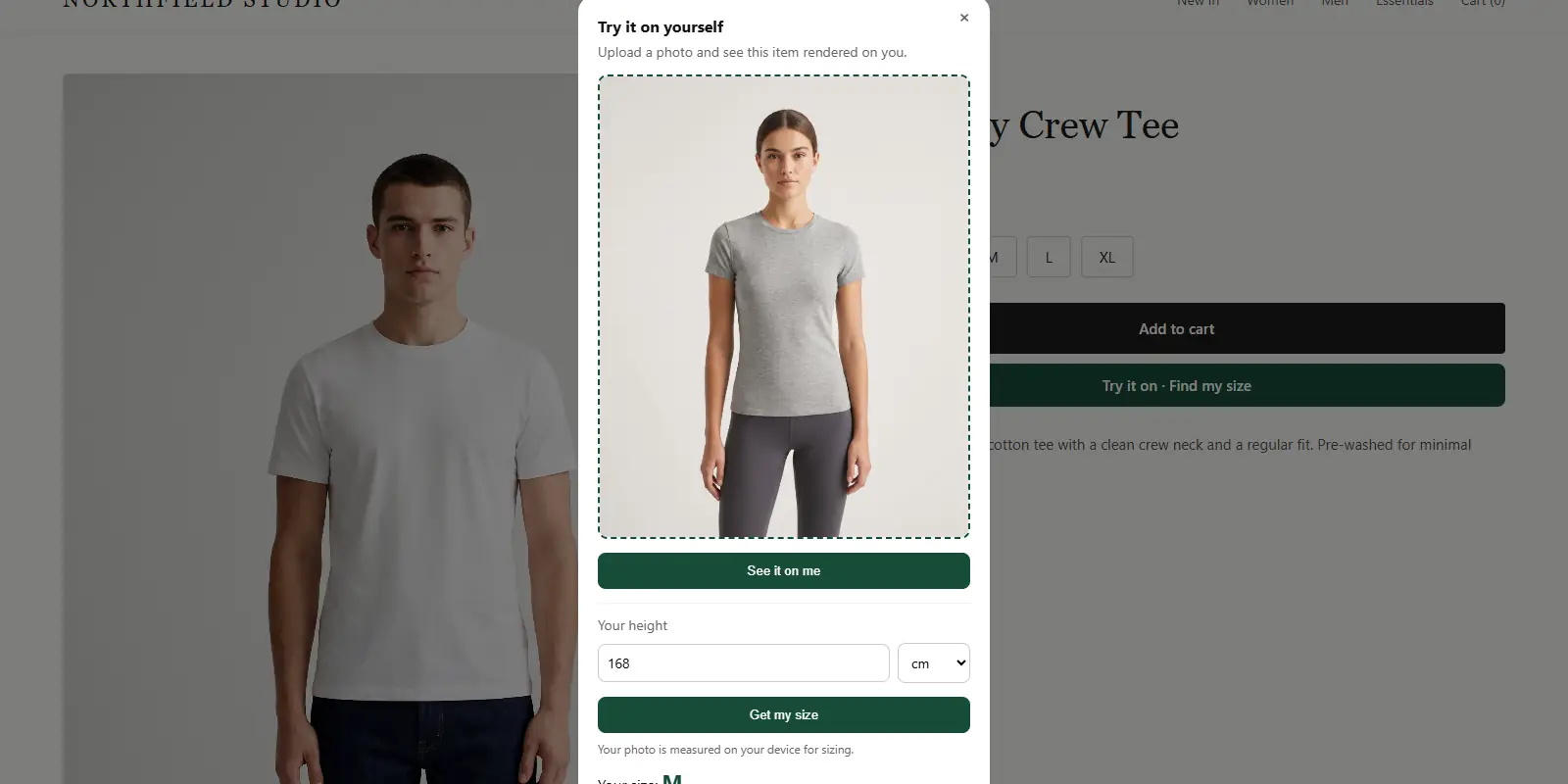
A body scan can also help. With ZeDaq.ai, the shopper uploads one photo and types their height, and the measurements are matched to the store's own size chart. A store with a petite chart gets recommendations in its own petite labels. You can try the shopper side in the live demo.
Try the shopper side: find a size from one photo
Try it on yourself
Live renderUpload a photo, pick a piece, see it rendered on you.
Pick something to try on
What does a worked example look like?
Say you wear a regular trouser size, and the waist fits well but the hems pool on the floor. The rise sits right and the thighs are comfortable.
That points to length only. A short inseam, or a hem by a tailor, solves it, and petite is not needed.
Now say the same trousers fit at the waist, but the rise feels too long and the pockets sit too low. The problem is proportion, not just length. A petite cut is the better test, because the pattern itself is adjusted.
Write down what felt wrong before you shop. It makes the chart much easier to read.
What should you check on any product page?
Before buying, look for:
- a chart with body measurements, not only labels,
- the model's height and the size they wear,
- fabric stretch and cut notes,
- the return policy for fit.
If these are missing, ask the store before you order.
See a size recommendation from your own photo
FAQs
Is petite the same as short?
No. Petite is a cut for a smaller frame, and short usually means a reduced length only.
Can I hem petite clothes?
Yes, tailors can shorten hems and sleeves on any garment. Petite clothing already has adjusted proportions, so it may need less alteration.
Do all brands define petite the same way?
No. Definitions differ, so check each brand's chart and fit notes instead of relying on the word.
Should I buy short or petite trousers?
If only the leg is long, try short or hem a regular size. If the rise or waist also feels off, try petite.
Try ZeDaq.ai free
Virtual try-on and Find my size for your store, plus client, order and invoicing tools for tailors, in one subscription.

