Petite Sizing Explained: Who It's For
By the ZeDaq.ai team · · 4 min read
On this page
- Who is petite sizing for?
- What changes in a petite garment?
- How is petite different from short?
- How do you check whether a brand's petite range fits you?
- What does a petite size chart look like?
- Which garments benefit most from petite cuts?
- What if you are between petite and regular?
- What should store owners do for petite customers?
- What about men's and tall sizes?
Petite sizing is for shorter people whose proportions need shorter lengths, not just a smaller size. A petite garment keeps the same width as the matching regular size but shortens the sleeves, torso, rise and hem.
Brands define "petite" differently, so there is no single height cutoff. This guide explains what changes and how to check it, and it ties into AI size recommendation for fashion stores.
Who is petite sizing for?
Petite sizing is for shoppers who are shorter than the height a regular size was designed for. Their issue is usually length, not width.
A shopper can be petite and wear any width size. Petite describes height and proportion, not weight.
What changes in a petite garment?
Petite patterns are shortened in the places where shorter bodies differ. Common changes include:
- Sleeves are shorter so cuffs don't cover the hands.
- Torso length is shorter so waist seams sit at the waist.
- Rise on trousers is shorter so the crotch sits correctly.
- Inseam and hem are shorter so trousers and skirts end in the right place.
- Knee and elbow placement is moved up.
- Shoulder and neckline may be adjusted to prevent drooping.
A good petite pattern is not simply a regular one cut shorter. The shape is checked on a fit model of the right height.
How is petite different from short?
"Short" often just means a regular size hemmed shorter. Petite is a shape adjustment, not a hem change.
If you hem regular trousers, the knees may still sit too low and the rise may still be too long. Our article on petite vs short in clothing covers the difference in more detail.
How do you check whether a brand's petite range fits you?
Use this method before you buy.
- Find the brand's own petite definition. Look for a height range on its size guide.
- Measure your height, torso length and inseam. Our guide to measuring torso length shows how.
- Compare them with the petite chart, not the regular chart.
- Pick the width size from bust, waist and hips.
- Read the garment's finished length, and compare it with a piece you own that fits.
What does a petite size chart look like?
Petite charts usually list the same width measurements as regular sizes plus shorter length measurements. For a worked example, read how to read a petite women's size chart.
Treat any example you find as an illustration only. Always use the brand's own chart, because definitions and fits vary.
Which garments benefit most from petite cuts?
Some garments show length problems more than others. Look at these first:
- Trousers and jeans. Rise, knee placement and inseam all affect how they sit.
- Dresses and skirts. Waist seams and hemlines need to land in the right place.
- Jackets and blazers. Sleeve length, shoulder point and button position matter.
- Jumpsuits. Torso length is the make-or-break measurement.
- Knitwear. Long sleeves bunch at the wrist if they're too long.
T-shirts and loose tops are more forgiving, because a little extra length is easy to wear.
What if you are between petite and regular?
Shoppers close to a brand's height cutoff often sit between the two ranges. Decide which problem you would rather solve: a hem you can shorten or a rise you cannot.
Length at the hem is easy to alter. Torso length, rise and sleeve cap are harder. If those are what bother you, lean toward petite.
A tailor can adjust many regular garments, but the cost may outweigh the savings. Weigh it against the price of the garment.
What should store owners do for petite customers?
If you sell petite sizes, make that clear on the product page.
- State the height range your petite line is designed for.
- List finished lengths for sleeve, inseam and torso.
- Add fit notes such as "sleeves run short" where true.
- Keep a separate chart for petite and regular.
If shoppers can't tell which range suits them, they may order two sizes and return one.
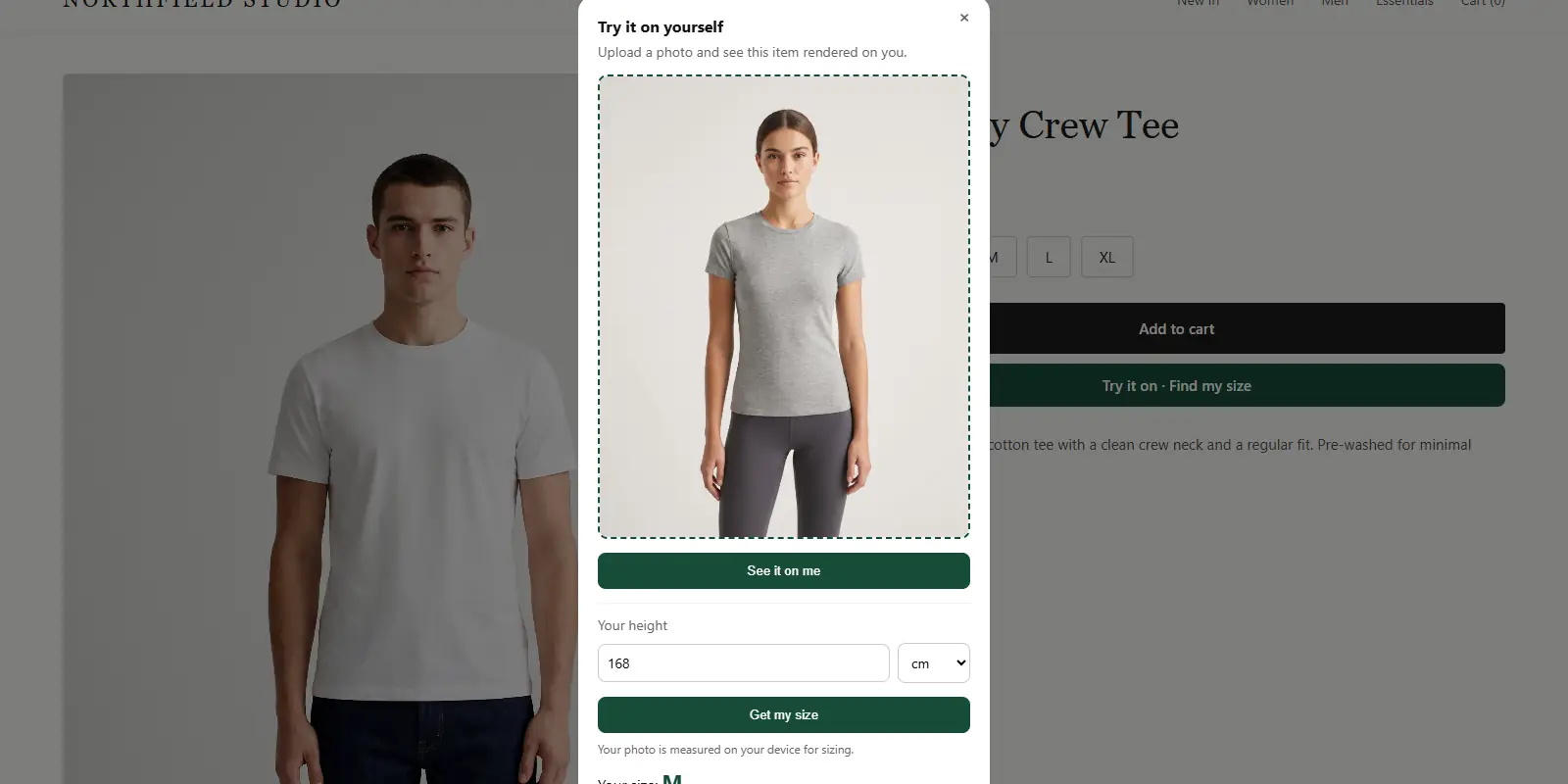
ZeDaq.ai recommends a size from a 30-second body scan, matched to your own size chart. You enter a chart for each garment type, so you can set your petite measurements and labels yourself. For how try-on helps shorter and taller shoppers, see virtual try-on for tall and petite shoppers.
For the bigger picture on the tools, compare virtual try-on and size charts.
What about men's and tall sizes?
The same idea applies in the other direction. Tall and big-and-tall ranges lengthen the pattern. See big and tall menswear sizing for how that works.
See how a body scan finds your size
FAQs
Is petite about height or weight?
It is about height and proportion. A petite shopper can wear any width size.
Can I just hem regular trousers instead?
You can shorten the hem, but the rise and knee placement may still be wrong. Petite patterns adjust those too.
Do all brands use the same petite definition?
No. Check each brand's size guide for its height range.
Do petite sizes cost more?
Prices vary by brand. Check the product page.
Try ZeDaq.ai free
Virtual try-on and Find my size for your store, plus client, order and invoicing tools for tailors, in one subscription.

