Oversized Fit: How to Choose Your Size
By the ZeDaq.ai team · · 4 min read
On this page
- What does oversized actually mean?
- Should you size down or stay in your usual size?
- How do you use garment measurements?
- How does fabric change the choice?
- How do you pick sizes for oversized bottoms?
- What is a worked example?
- Does your body shape change the answer?
- What fit mistakes are common?
- How can stores help shoppers choose?
To choose your size for an oversized fit, order your usual size if you want the roomy look the designer intended, and check the garment's own measurements first. Size down only if the listed measurements are much larger than you want. Size up only if you want an extra-slouchy shape.
This guide is for shoppers, and it also helps store owners who write fit notes. Oversized garments are cut to look big, so the label on the tag tells you less than the measurements do. A size recommendation tool for fashion stores can help, but it still needs a sensible reading of the cut.
What does oversized actually mean?
There is no single rule. Oversized means the garment is cut larger than your body on purpose. Brands decide how much, so the same word can describe very different shapes.
Common features:
- Dropped shoulder seams that sit below your shoulder bone.
- A wide, boxy body.
- Longer or wider sleeves.
- A hem that sits lower on the hip.
Should you size down or stay in your usual size?
Use this simple guide.
| Your goal | What to do |
|---|---|
| The intended oversized look | Take your usual size |
| Relaxed but not baggy | Go one size down |
| Extra slouchy or layered | Go one size up |
| In between sizes | Read the garment measurements |
Treat this as a starting point, because every brand cuts differently. The brand's own size chart and product notes outrank any general rule.
How do you use garment measurements?
Garment measurements show the flat width of the item, which tells you how much room it has.
- Find the product's garment measurements. Many brands list chest width, length and sleeve.
- Measure a top you own that fits the way you like. Lay it flat and measure across the chest.
- Compare the two. If the new item is wider by a lot, the look will be roomier than your favorite.
- Note the length, since boxy tops can look short on a tall frame.
Body measurements and garment measurements are different things. Check which one the chart shows before you compare. Our guide to how a winter coat should fit explains the same idea for layers.
How does fabric change the choice?
Fabric decides how the extra room behaves.
- Heavy cotton or fleece holds a boxy shape and feels bulkier.
- Thin jersey or viscose drapes and can hang closer to the body.
- Stretch fabric may look looser than it is, because it forgives movement.
- Stiff fabric keeps its shape and adds volume at the hem.
If the product page does not mention fabric weight or stretch, ask the store before buying.
How do you pick sizes for oversized bottoms?
Wide trousers and baggy jeans depend on the waist and hip. Choose the waist you can wear comfortably, not the one you hope to fit.
For leggings and stretch pieces, the rule is different; see how leggings should fit. The two guides show how much cuts differ across the same wardrobe.
What is a worked example?
Say you usually wear a medium, and you love a relaxed tee you own. You lay it flat and note how wide it is across the chest.
A new "oversized" tee lists a chest width much wider than your favorite. You want a slightly relaxed look, not a tent. Going one size down gets you closer to the tee you already like.
Now say the new tee's width is only a little wider than your favorite. In that case your usual size gives the intended shape, and sizing down would make it look like a normal fit.
Does your body shape change the answer?
Yes. Broad shoulders can make a dropped-shoulder cut look neat. Narrow shoulders can make the seam fall near the elbow.
If you are tall, look at length first. If you are petite, check that sleeves and hems will not swallow you. Try an item on in a mirror, or use the store's try-on tool if it has one, before you order.
What fit mistakes are common?
- Sizing up twice and ending up lost in the fabric.
- Assuming "one size" fits everyone equally.
- Ignoring sleeve length, which can cover your hands.
- Skipping the model's stats. Check the model's height and the size they wear.
How can stores help shoppers choose?
Stores can cut guesswork with clear notes: garment measurements, the model's height and size, and a plain line such as "cut to be roomy; take your usual size."
Fit questions are also a leading source of wrong-size orders. The guide on fit-related returns covers where they come from.
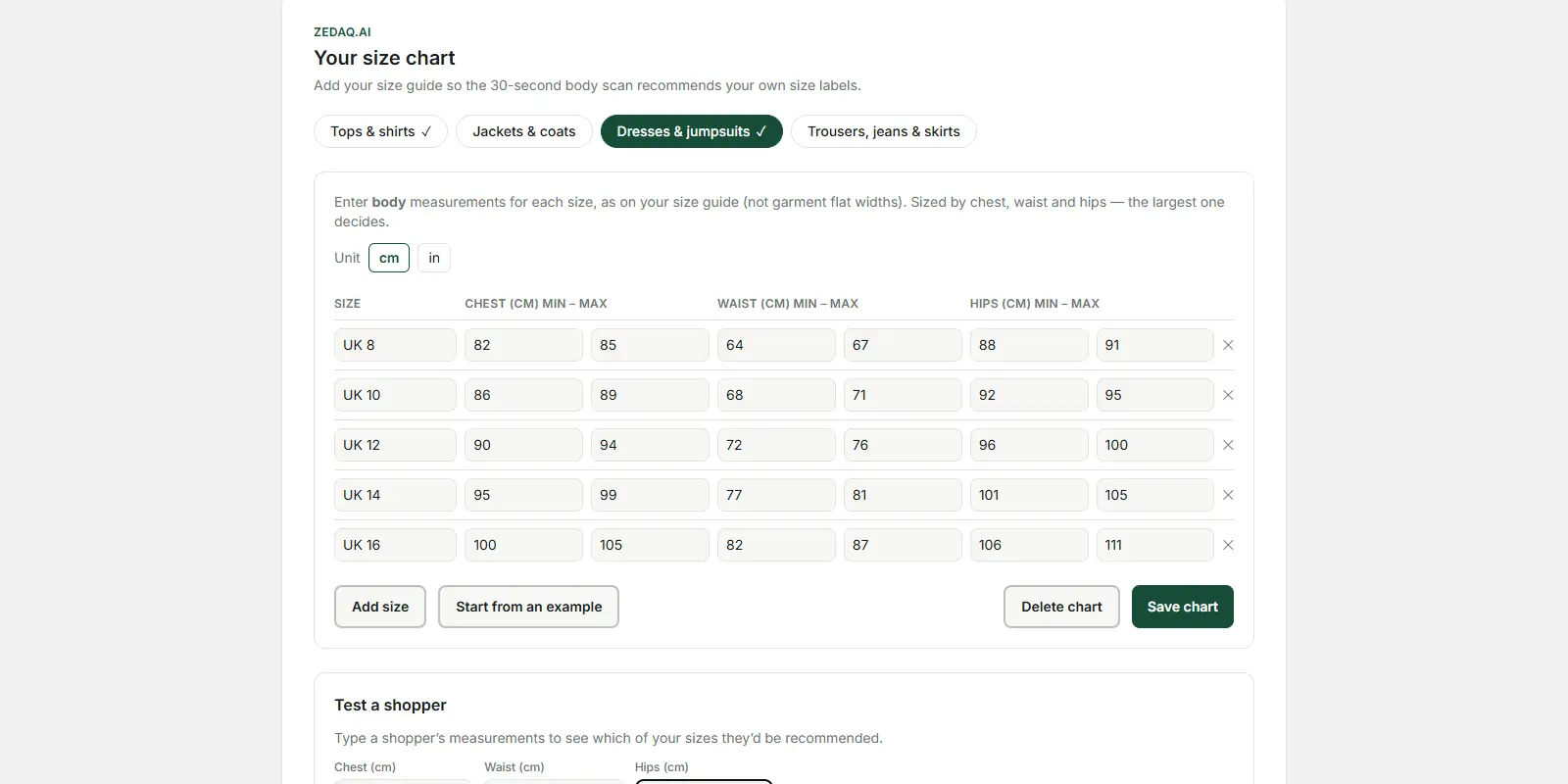
ZeDaq.ai recommends a size from a 30-second body scan, matched against the store's own size chart. The scan reads your body, so the store still needs to note how roomy the cut is.
See a garment on your own photo
Try it on yourself
Live renderUpload a photo, pick a piece, see it rendered on you.
Pick something to try on
See how a garment looks on you
FAQs
Should I size down in oversized clothes?
Only if the garment's measurements are larger than you want. For the intended look, take your usual size.
Why does my oversized top look too short?
A boxy cut with a wide body often has a shorter length than it seems. Check the length measurement before you buy.
Do oversized clothes fit everyone?
No. Shoulders, torso length and height change how a cut sits. Use the measurements and the model's details.
What if the store has no garment measurements?
Ask the store, or compare to a similar item you own. Without data, choose a store with a clear return policy.
Try ZeDaq.ai free
Virtual try-on and Find my size for your store, plus client, order and invoicing tools for tailors, in one subscription.

