Offering a Stitching Service With Unstitched Fabric
By the ZeDaq.ai team · · 4 min read
On this page
- Why add a stitching service to unstitched fabric?
- What do you need before you start?
- How do you collect accurate measurements?
- How should you price and describe the service?
- How do you manage orders and timelines?
- How do you take care of the fabric and the finish?
- What does a worked example look like?
- What mistakes should you avoid?
To offer an unstitched fabric stitching service, add an optional "stitch it for me" choice to your fabric listings, collect the buyer's measurements through a simple form, and track each order from cutting to delivery. The buyer gets a made-to-measure outfit, and you earn more from the same fabric.
This guide is for fabric sellers and tailors who want to add that service. It sits within our advice on virtual try-on and sizing for African fashion brands, where made-to-measure is a common request.
Why add a stitching service to unstitched fabric?
Many buyers like unstitched fabric but dislike the work of finding a tailor. A stitching add-on removes that step, so you keep the sale and the relationship.
It also helps with sizing. A stitched outfit made to the buyer's own measurements avoids the guesswork that comes with ready-to-wear. For a comparison of the two product types, read unstitched vs stitched suits.
What do you need before you start?
Check these basics first:
- A tailor or workshop with the capacity to take extra orders.
- A list of styles you can sew, with photos.
- A clear price for each style, kept apart from the fabric price.
- A turnaround time that you can keep.
- A way to take measurements that the buyer can use alone.
Start with a small menu. Three or four styles you do well beat a long list you cannot deliver.
How do you collect accurate measurements?
Measurements are the center of the service, and mistakes cost you fabric. Give the buyer a clear guide and a simple way to send numbers.
- Write a short measuring guide with photos or drawings for each point.
- Ask for the main measurements: bust, waist, hips, shoulder, sleeve length, top length, and trouser length.
- Ask for height, which helps you check the numbers.
- Ask for a reference garment the buyer likes, if they have one.
- Confirm by message before cutting, and repeat the key numbers back.
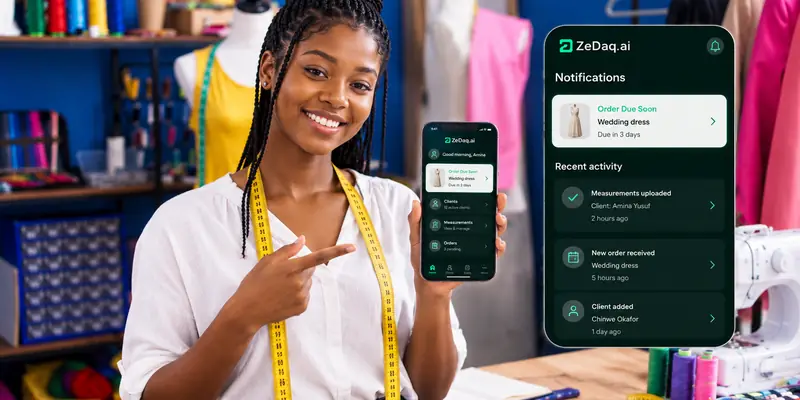
ZeDaq Business, our tailor tool, can collect measurements through a link the client opens on their phone, so you do not have to type numbers from chat messages. It also keeps a client list, orders and a delivery calendar, with invoicing in multiple currencies including NGN, GBP and USD. The ZeDaq Business app is on iOS and Android.
How should you price and describe the service?
Price the stitching as its own line. This keeps the fabric price comparable with competitors and makes the add-on easy to understand.
Include on the page:
- What styles are included, and what costs extra, such as lining or heavy embellishment.
- Whether the price covers one fitting or alterations.
- The timeline, counted from the day measurements are confirmed, not the day of payment.
- Whether the order is final once the fabric is cut.
Be firm about the final-sale point. Cut fabric cannot be resold, so state it before payment.
How do you manage orders and timelines?
Treat each stitching order as a small project with stages.
- Received: the order and fabric are paid for.
- Measurements confirmed: the buyer has approved the numbers.
- Cut and sewing: work has started.
- Quality check: a final check against the measurements.
- Shipped: with tracking.
Update the buyer at each stage. A short message prevents most "where is my order?" questions. For tailors who manage many orders, a delivery calendar keeps busy periods from catching you out.
If you also sell ready-made versions, see how selling made-to-measure clothing online compares.
How do you take care of the fabric and the finish?
Fabric care affects the result, so share care steps with the buyer. Our guide to caring for Ankara fabric is a good model for what to include, such as washing, pressing and storage.
Pre-wash or pre-shrink fabric before cutting if the material is likely to shrink, and tell the buyer you did so. Keep offcuts for small repairs and mention that you can supply them.
See how ZeDaq Business handles measurements and orders
What does a worked example look like?
A buyer picks an unstitched lawn suit and adds the stitching service for a straight kameez with plain trousers. At checkout, a note field asks for the style and a link to the measuring form.
You then confirm the numbers in a short message, repeating bust, hip and length. The buyer replies "confirmed", and only then do you cut. If a number looks odd, such as a hip smaller than the waist, you ask before you cut.
The clear "confirmed" step is what protects both sides. It turns a vague request into a record you can point to if there is a question later.
What mistakes should you avoid?
- Taking orders before you know your capacity.
- Skipping the confirmation step before cutting.
- Mixing the fabric price and the stitching price.
- Promising delivery dates without a buffer.
- Forgetting to explain what happens if the fit is off.
You can also offer a store-side size scan for your ready-to-wear range, as described in our guide to a virtual fitting room for clothing websites.
FAQs
How much should I charge for stitching?
Base it on your time, materials and complexity. Check what local tailors charge for similar styles before you set a price.
Can I stitch fabric I did not sell?
You can, if you want. State the rules clearly, since you cannot judge the quality of fabric you did not choose.
What if the finished garment does not fit?
Decide in advance. Many sellers offer one free adjustment if the garment differs from the confirmed measurements.
How do I handle international buyers?
Collect measurements remotely and confirm them in writing. Add shipping time to your stitching timeline.
Try ZeDaq.ai free
Virtual try-on and Find my size for your store, plus client, order and invoicing tools for tailors, in one subscription.