Nationwide Clothing Delivery in Nigeria: Lagos to Kano
By the ZeDaq.ai team · · 7 min read
On this page
- What delivery options do Nigerian fashion brands use?
- How do you choose the right option for each order?
- How should you package clothing for long trips?
- How do you keep customers updated during delivery?
- Who pays for delivery, and how do you show it?
- What happens when the wrong size travels across the country?
- How do you plan delivery for peak seasons?
Nationwide clothing delivery in Nigeria usually means mixing three options: dispatch riders inside your city, a courier company for interstate parcels, and a park waybill for budget orders. The right choice for each order depends on how far it is going, how fast the customer needs it and how much risk you can carry.
A Lagos brand shipping an Owambe gown to Kano faces a very different trip than a same-day order to Lekki. This guide compares the options, shows how to package and track clothing, and explains how fit problems turn into delivery costs. If you are also thinking about how shoppers outside Lagos choose a size, see our guide to virtual try-on for African fashion brands.
What delivery options do Nigerian fashion brands use?
Most brands end up using more than one method. Here is how they compare in plain terms.
| Option | Best for | Speed | Tracking | Main risk |
|---|---|---|---|---|
| Dispatch rider (in-city) | Same-city orders in Lagos, Abuja, Port Harcourt | Same day or next day | Phone calls and WhatsApp updates | Rider reliability varies |
| Courier company (interstate) | Orders to other states and cities | A few working days | Tracking number from the courier | Cost on heavy or bulky parcels |
| Park waybill (transport company) | Budget interstate orders | Often fast on busy routes | Usually a waybill slip and phone number | Customer must collect at the park |
| Customer pickup | Repeat local buyers, Aso-ebi group leaders | Whenever they come | None needed | Uncollected orders |
Speeds and prices change by route, season and provider. Always check the current rates on each courier's own website before you quote a customer.
Dispatch riders for city orders
Dispatch riders work well when the customer is in the same city as your workshop. In Lagos, a rider can move a dress from Yaba to Ikeja in hours, which matters when someone needs an outfit for a Saturday party.
The downside is that quality depends on the person. Build a short list of riders you trust, and agree in writing how they handle failed attempts and cash collection.
Courier companies for interstate parcels
A courier company is the safer choice for orders going from Lagos to Kano, Enugu or Jos. You get a tracking number, a receipt and a clear process if something goes wrong.
Ask each courier you are considering:
- Do they deliver to the customer's door, or only to a branch office?
- How do they handle a customer who is not reachable?
- What is the claims process for lost or damaged parcels?
- Do they offer discounts for regular business volume?
Park waybills for budget orders
Many Nigerian sellers send parcels through interstate transport companies at the motor park. It can be cheap and fast on popular routes, such as Lagos to Abuja.
The trade-off is convenience. The customer often has to collect the parcel at the destination park, and there may be little help if the parcel goes missing. Use it for customers who ask for it and understand the process.
How do you choose the right option for each order?
Use a simple decision path for every order. It saves you from re-thinking each one.
- Is the customer in your city? Use a dispatch rider or offer pickup.
- Is the order urgent, such as a wedding outfit needed this week? Use a courier with a known delivery time, and confirm the event date before you ship.
- Is the order high value, such as a beaded gown or a full agbada set? Use a courier with tracking and a claims process.
- Is the customer price-sensitive and happy to collect? Offer a park waybill as a cheaper option.
- Is it a group Aso-ebi order? Ship to one coordinator and let them share it out locally.
Write this path down and share it with anyone who books deliveries for you. Consistency is what keeps customers trusting your timelines.
How should you package clothing for long trips?
Clothing travels well if you protect it from water, dust and crushing. A gown that leaves Lagos crisp should not arrive in Kano creased and dusty.
- Use a waterproof outer layer. A sealed poly mailer or a plastic-lined bag protects against rain during the wet season.
- Fold with tissue. Tissue paper between folds reduces creasing, especially on structured pieces and lace.
- Box anything with structure. Corset gowns, embellished pieces and caps need a box, so they don't get crushed under heavier parcels.
- Label clearly. Print the customer's name, phone number and full address. Add a landmark, because many Nigerian addresses rely on one.
- Include a note. A short card with care instructions and your WhatsApp number makes it easy for the customer to reach you.
For Aso-ebi orders, label each piece with the guest's name inside the package. That one step prevents many arguments at the party.
Keep a photo of every packed parcel before it leaves your hands. If a customer later says something was missing or damaged, you have a clear record of what you sent and how it was packed. Store the photos in a folder named by order number so you can find them fast.
How do you keep customers updated during delivery?
Most Nigerian shoppers expect updates on WhatsApp. A simple message sequence reduces anxious calls and failed deliveries.
- When the order ships: send the courier name, tracking number and expected delivery window.
- The day before delivery: confirm the address, landmark and a second phone number.
- On delivery day: remind the customer to keep their phone on.
- After delivery: ask if everything fits and arrived in good condition.
Save these as quick replies in WhatsApp Business so you can send them in seconds. The fourth message matters most. It is your chance to catch a fit problem before it becomes a dispute.
Who pays for delivery, and how do you show it?
Be clear about delivery costs before the customer pays. Surprise fees at the end of a WhatsApp chat are a common reason buyers go quiet.
Common approaches:
- Flat zones. One price for your city, one for nearby states and one for far states such as Kano, Sokoto or Maiduguri.
- Actual cost. Quote each order based on the courier's rate. This is fair but slower.
- Free delivery above a set order value. This works if your margins can absorb it. Work out the math first.
Put your delivery zones on your website, in your Instagram highlights and in a pinned WhatsApp message. Delivery terms and returns terms belong together, so update both at once. Our guide to writing a returns and exchange policy shows how to word them.
What happens when the wrong size travels across the country?
A wrong size that has to come back from Kano costs you twice: once to send it and once to return it. For diaspora orders, the cost is even higher, as explained in our guide to handling returns from customers abroad.
Fit problems usually start before the order is placed. A shopper picks a size from a vague chart, or guesses because they are between sizes. Our guide on where fit-related returns come from breaks down the most common causes.
You can reduce the guesswork in a few ways:
- Publish measurements, not just labels. "M" means different things to different brands. Bust, waist and hip in centimeters or inches are clearer.
- Ask for measurements on made-to-order pieces. Confirm them in writing before you cut fabric.
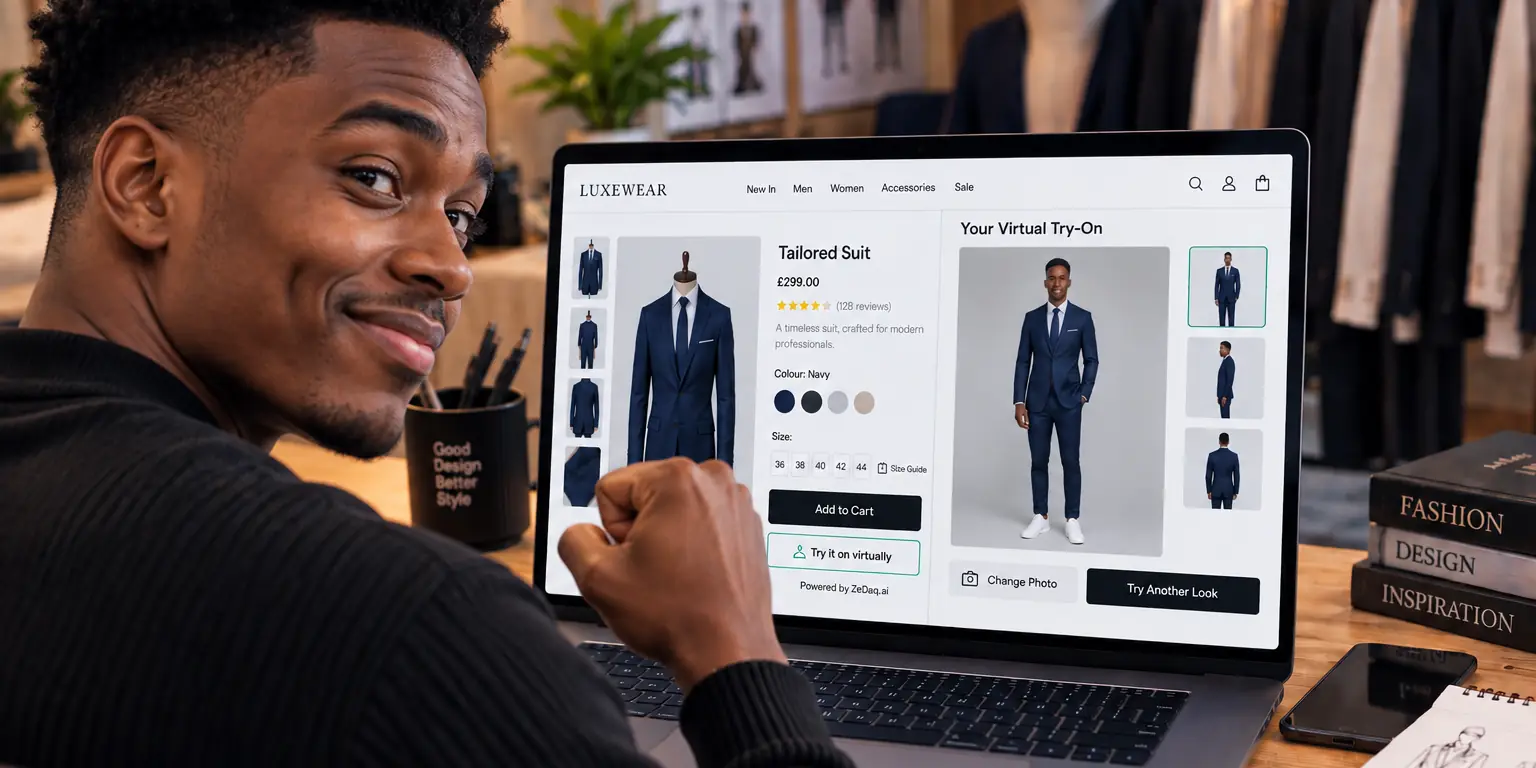
- Offer size help on the product page. ZeDaq.ai adds a "Find my size" option that recommends a size from your own size chart after a short body scan, using one photo and the shopper's height. It can also show shoppers your real garment on their own photo with AI virtual try-on.
ZeDaq.ai does not book couriers or connect to delivery companies. It works on the product page, before the order, to help shoppers pick a size with more confidence.
How do you plan delivery for peak seasons?
Owambe weekends, December weddings and Sallah celebrations put pressure on every courier and rider. Parcels slow down exactly when customers need them most.
Plan ahead:
- Set order cut-off dates. Tell customers the last day to order for delivery before a key date, by region.
- Batch your shipping days. Send interstate parcels on fixed days so you can drop them off together.
- Keep a backup courier. If your main provider is overloaded, you need a second option ready.
- Confirm event dates. For wedding outfits, ask for the event date at checkout and ship with a buffer.
Post your cut-off dates early and repeat them. Customers are more forgiving of a clear deadline than a late parcel.
Help shoppers across Nigeria pick the right size
FAQs
Should I offer free nationwide delivery?
Only if your prices can carry it. Many brands offer free delivery within their own city and charge by zone for other states.
Is a park waybill safe for expensive clothing?
It carries more risk than a courier with tracking and a claims process. For high-value gowns and full native wear sets, a courier is usually the safer choice.
How do I handle customers who give incomplete addresses?
Ask for a landmark and a second phone number before shipping. Confirm both on WhatsApp the day before delivery.
Can ZeDaq.ai book deliveries for my store?
No. ZeDaq.ai provides virtual try-on and size recommendations on your product pages. You arrange delivery with your own riders or courier.
Try ZeDaq.ai free
Virtual try-on and Find my size for your store, plus client, order and invoicing tools for tailors, in one subscription.

