Men's Trouser Size Chart: How to Read It
By the ZeDaq.ai team · · 4 min read
On this page
A men's trouser size chart pairs a waist size with a leg length, so 32x30 means a waist of 32 inches and an inseam, the inside leg length, of 30 inches. To read a chart, measure your own waist and inseam, find both numbers in the brand's table, and pick the size that matches.
This guide explains the labels, shows how to measure, and covers what to do when you fall between sizes. The same logic powers AI size recommendation for fashion stores, which matches body measurements to a store's own chart.
What do the numbers in 32x30 mean?
The first number is the waist. The second is the inseam, measured from the crotch seam down to the hem.
- 32x30 is a 32-inch waist and 30-inch inseam.
- 34x32 is a 34-inch waist and a longer 32-inch leg.
- Some brands add a fit name, such as slim or relaxed. That changes how the leg and seat are cut, not the waist number.
Many brands sell waist and length separately in the US. Others, especially in Europe, use one number or a letter size, so always read the chart.
How do you measure yourself for trousers?
You need a soft tape measure and a pair of trousers you already like, if possible.
- Waist. Wrap the tape around your natural waist, usually just above the belly button, over a thin shirt. Keep it snug but not tight.
- Hips or seat. Measure around the fullest part. Slim fits can be tight here even if the waist is right.
- Inseam. Lay a pair of well-fitting trousers flat and measure from the crotch seam to the hem.
- Rise. Measure from the crotch seam up to the top of the waistband, if the chart lists it.
Measuring trousers you own is often easier than measuring your body, because you cannot misjudge where the leg ends.
How do you read the chart itself?
Check the unit first. Charts use inches or centimeters, and sometimes both. Use an online converter if the chart is in a unit you do not usually measure in.
Then check whether the chart shows body measurements or garment measurements. Body measurements describe the person who fits the size. Garment measurements describe the flat trousers, and are usually a little larger.
Here is how an example might look. This is an example format only, so check your brand's own chart.
| Label | Waist | Inseam |
|---|---|---|
| 30x30 | 30 in | 30 in |
| 32x30 | 32 in | 30 in |
| 32x32 | 32 in | 32 in |
| 34x32 | 34 in | 32 in |
Notice that the same waist can come with two leg lengths. Pick the waist first, then the length that reaches your shoe.
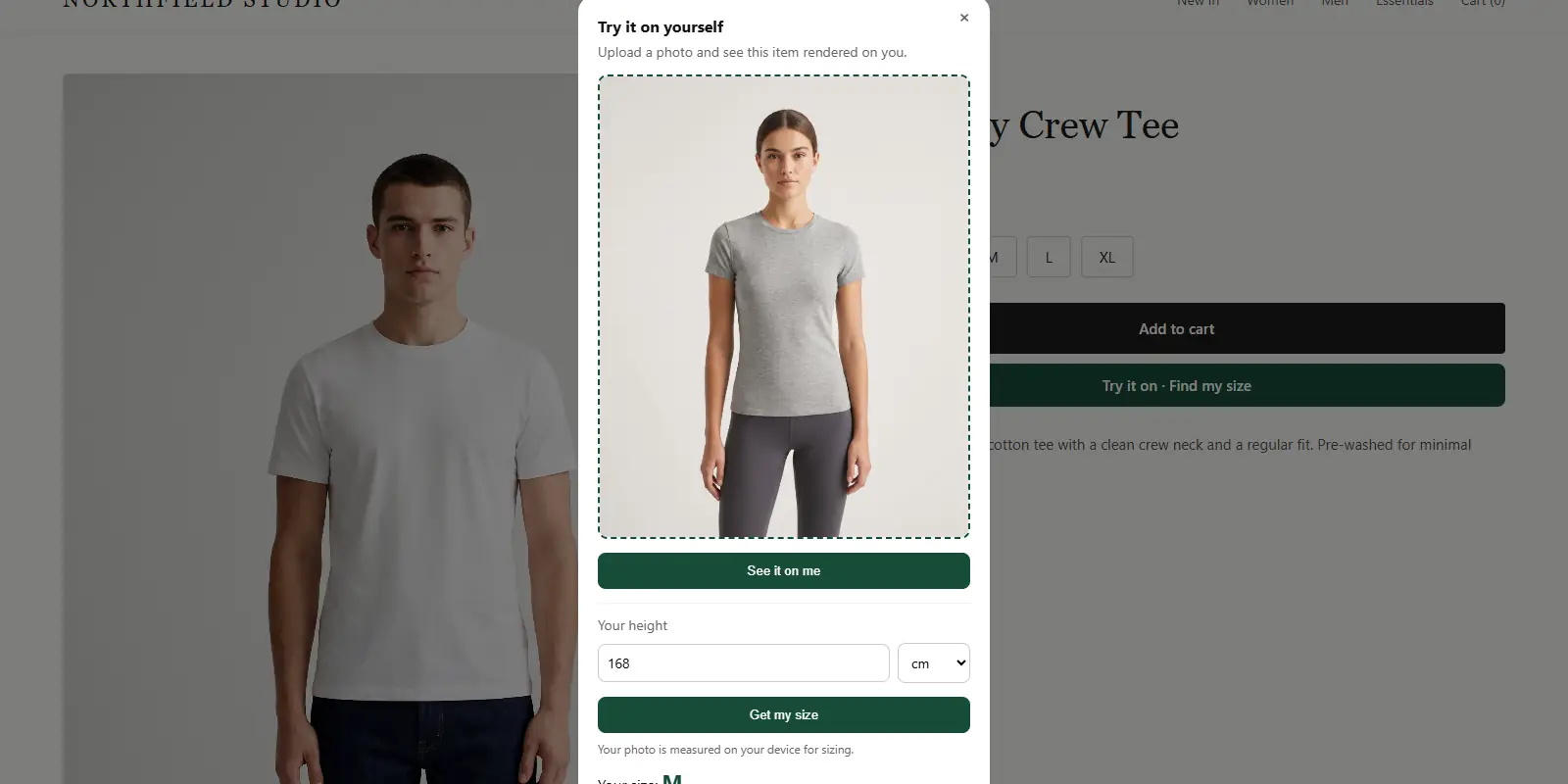
Try the size finder on a real garment
Try it on yourself
Live renderUpload a photo, pick a piece, see it rendered on you.
Pick something to try on
What if you fall between sizes?
Use the part of the body that is hardest to alter. Waists and seats can often be taken in, and hems can be shortened. Taking trousers out or lengthening them is harder.
A few rules of thumb:
- If your waist is between two sizes, take the larger one and use a belt or a tailor.
- If your thighs or seat feel tight on a slim fit, try a relaxed cut in the same waist.
- If the inseam is between lengths, choose the longer one and have it hemmed.
Sizes also vary between brands, and the same label can fit differently, which is why a brand's own chart beats a general one. A chart cannot show everything, as discussed in virtual try-on versus size charts.
How do trouser charts compare to suit and shirt charts?
Trousers are the only one of the three where length comes separately and matters as much as width. Jackets and shirts focus on chest, shoulders and sleeves.
If you are buying a full outfit, read each chart separately. The guides for men's suit sizes and men's shirt sizes explain those labels. Suit trousers often come unhemmed, so ask the seller about it.
What should store owners show next to the chart?
If you sell trousers, a clear chart reduces wrong-size orders. Show the unit, say whether numbers are body or garment, and list the inseam options. Add a note on the cut.
Stores that want to go further can offer a size recommendation from a short body scan. ZeDaq.ai matches the scan to the store's own chart, with a generic UK, US, EU or AU chart as a fallback. You can try the live demo to see it from the shopper side.
See how a size recommendation works
FAQs
What does 32x30 mean on trousers?
It means a 32-inch waist and a 30-inch inseam. The first number is waist, the second is leg length.
Should I size up in trousers?
Only if you are between waist sizes or the seat and thighs feel tight. A waist that is too big can be taken in more easily than one that is too small.
Is a pants size the same as a waist measurement?
Not always. Some brands label sizes a little smaller than the true waist. Always compare your tape measurement to the chart, not to the label alone.
How do I find my inseam?
Measure a pair of trousers that fit well, from the crotch seam to the hem. Or ask a friend to measure from your crotch to the ankle.
Try ZeDaq.ai free
Virtual try-on and Find my size for your store, plus client, order and invoicing tools for tailors, in one subscription.

