Link-in-Bio Shops vs Real Stores for Fashion Sellers
By the ZeDaq.ai team · · 7 min read
On this page
- What is a link-in-bio shop?
- What is a real store?
- How do they compare for fashion sellers?
- When does a link-in-bio shop make sense?
- When should you move to a real store?
- Which option fits your situation?
- How should you test a link-in-bio shop before committing?
- How do you move without losing followers?
- What can you add to a real store that helps with fit?
Link-in-bio shops suit fashion sellers who are testing a product or selling small drops to their followers. Real stores suit sellers who need size charts, variants, returns handling and their own customer data. Most sellers start with a link in bio shop for fashion and move to a full store as orders grow.
This guide compares the two for fashion, where fit and returns make the choice harder than for digital products. If you move to a full site, tools like virtual try-on for WooCommerce are possible only on stores where you control the product page.
What is a link-in-bio shop?
A link-in-bio shop is a simple page, linked from your social profile, that lists what you sell. Providers describe themselves in different ways. Linktree, for example, calls itself "the link-in-bio platform used by creators, businesses and artists" and says paid plans include commerce features (Linktree, checked November 2026). Stan Store presents itself as "Your Creator Store" (Stan, checked November 2026).
Features, fees and limits change often and differ by plan. Check each provider's own pricing page before you decide. This article does not compare their prices.
What is a real store?
A real store is a website you control, with its own domain, product pages and checkout. It could be built on a store platform or on your own code. Because you own the product page, you can add size charts, variant options and tools of your own.
The cost is more setup. You choose a theme, write policies and manage shipping and tax settings.
How do they compare for fashion sellers?
The table shows the typical differences. Details vary by provider, so treat it as a checklist of questions, not a claim about any product.
| Question | Link-in-bio shop | Real store |
|---|---|---|
| Setup effort | Usually quick | More work |
| Size and variant options | Check what the provider supports | You decide |
| Size chart on product page | Depends on the provider | Yes, you can add your own |
| Control of customer data | Depends on the provider | Yours |
| Custom checkout and policies | Often limited | Broad control |
| Add-on tools | Limited to what the provider offers | Apps, scripts and APIs |
Ask the provider about each row before you commit. Fashion needs sizes, colors and stock per variant, so test with a real product with three sizes.
When does a link-in-bio shop make sense?
It makes sense when you are:
- Testing whether anyone wants your product.
- Selling a small, one-off drop of a single style.
- Selling mostly to followers who already know your sizing.
- Without time or budget to build a full site yet.
Keep the number of products small. Each extra size and color adds work, and fit questions arrive in your messages.
When should you move to a real store?
Move when any of these start to happen:
- You answer the same size questions every day. A size guide and size recommendation on the product page can take that load.
- Returns eat your time. You need clear policies and tracking.
- You want customer emails and data in one place.
- You run ads or sell beyond your followers. Strangers need a trustworthy site.
The guide on Instagram-only fashion sellers and when to get a website goes deeper on this point. If you sell handmade pieces, Shopify versus Etsy for handmade clothing covers another route.
Which option fits your situation?
Fashion differs from many other products because of sizes, colors and fit. Three common situations show how the choice plays out.
You sell one limited drop
You made twenty pieces of one style and will sell them over a weekend. A link-in-bio page is a reasonable fit. Keep the size options few, put measurements in the product text, and say clearly that the drop is final sale if that is your policy.
You sell a growing range with many sizes
You now have several styles, each in four or five sizes and two colors. Stock per variant, size charts per garment type and clear return rules become important. A real store handles this better, because you control the product template and policies.
You sell made-to-measure pieces
Each order needs measurements from the client. You need somewhere to collect them and a clear way to confirm the order. Check whether a link-in-bio provider can collect that information, and whether you can export it. On a real store you can add order fields or a form.
If you are a tailor, the ZeDaq.ai tailor tools include a measurement link clients open on their phone, which keeps measurements out of chat threads.
How should you test a link-in-bio shop before committing?
Run one real product through it before you move your whole range. Use this checklist:
- Can you offer three sizes and two colors on one product?
- Can you show a size chart image and text?
- Can you set your own shipping and return wording?
- Can you export customer emails and order data?
- Can you connect your own domain?
- What fees does the provider state for each sale?
- What happens to your data if you leave?
Answer each from the provider's own help pages, and note the date you checked. These products update often, so an answer from last year may no longer be right.
What about returns and customer service?
Fit-related questions and returns are part of selling clothes online. Decide how you will handle them before the first order, whichever route you choose.
On a link-in-bio page, you may be answering sizing questions in direct messages. That works for a few orders a week. As volume grows, replies take time, and an answer given in a chat is easy to lose.
On a real store, you can put the answer on the page: a size chart, a fit note and a clear return policy. Shoppers find the answer without asking, and you can point to the page when they do ask. Our guide to writing size guides that reduce returns shows how to build a chart that works.
What should you do in the first week after switching?
Treat the first week as a test. Place an order yourself and check the confirmation email, the shipping options and the return instructions. Ask a friend to find a size chart without help. Fix whatever confuses them, and only then announce the store widely.
How do you move without losing followers?
You do not have to drop the bio link. Point it at your new store, or at a short landing page that links to it.
A simple plan:
- Launch the store with your five best sellers.
- Add your size chart for each garment type.
- Change your bio link to the store.
- Email or message past buyers about the new site.
- Keep the old page live for a short time with a link forward.
Whichever route you take, keep a simple record of sales by product and size. It tells you which styles to remake, and which sizes cause the most questions. Even a spreadsheet works, as long as you keep it up to date every week.
What can you add to a real store that helps with fit?
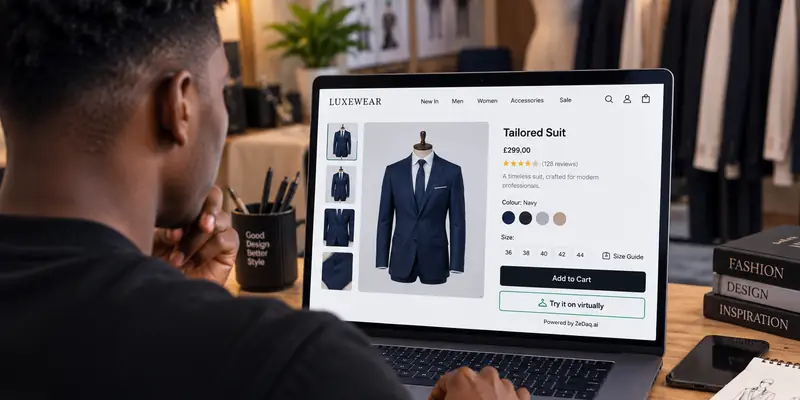
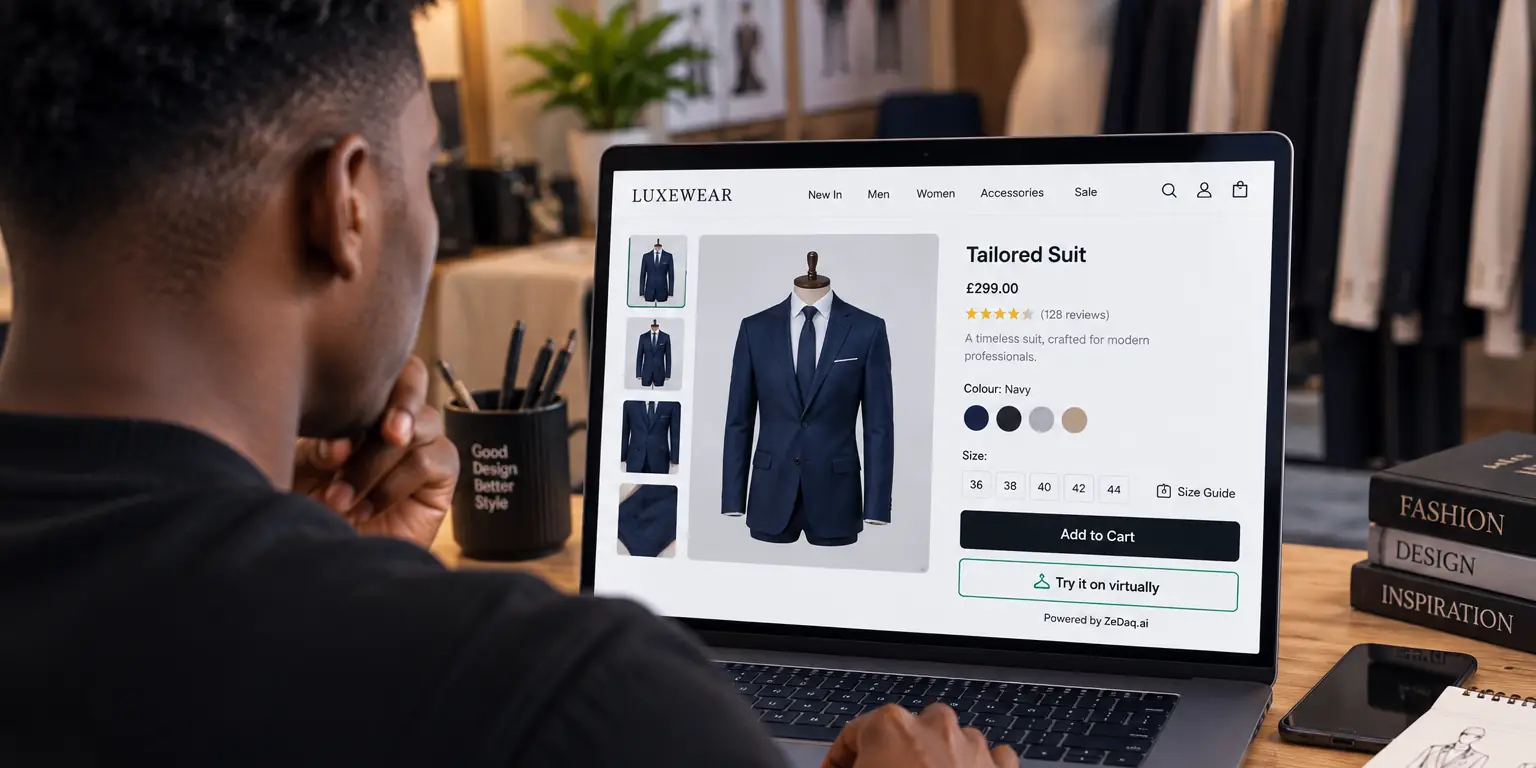
On a store where you can edit the product template, you can add fit tools. ZeDaq.ai offers a script-tag widget for WooCommerce, Wix, Squarespace, BigCommerce and custom sites. You paste one script tag into the product template, with an API key locked to your domain. It adds "Try it on" and "Find my size" buttons.
The shopper uploads one photo and sees your real garment on their body. For sizing, a 30-second body scan matches measurements to your own size chart. Developers can also call the REST API; see the virtual try-on API for developers and the API reference.
A link-in-bio shop usually does not let you paste your own script. Confirm with your provider before you assume it will.
Add try-on and size help to your own store
FAQs
Can I sell clothes with only a link-in-bio page?
Yes, many sellers do at first. Expect to manage sizes and returns by hand, and check what your provider allows for variants and policies.
Is a link-in-bio shop cheaper than a store?
It depends on the provider and plan. Compare current prices on each provider's own site, and include any transaction fees they state.
Do I need my own domain?
A domain is not required to start, but it builds trust and lets you move platforms later without losing your address. Most store platforms let you connect one.
Can I keep my link-in-bio page after I open a store?
Yes. Many sellers keep it as a simple social hub that links to the store.
Try ZeDaq.ai free
Virtual try-on and Find my size for your store, plus client, order and invoicing tools for tailors, in one subscription.