Khimar and Niqab Product Pages: Sizing and Descriptions
By the ZeDaq.ai team · · 4 min read
On this page
A good khimar or niqab product page states the finished length, the drop at the back, the fabric, the layers and how the item fastens or ties. Shoppers cannot try these pieces on, so every dimension and fabric detail you leave out becomes a question or a return.
This guide is for store owners selling modest headwear online. It sits alongside our broader look at virtual try-on for African fashion brands, where fit confidence is also the main hurdle. Headwear sizing is mostly about clear measurements, so most of the work is in your wording.
What should a khimar listing say about size?
Most khimars are sold in a few lengths rather than numbered sizes. State the length of each style as a finished garment measurement, and say where it is measured from.
List these on every khimar page:
- Length at the front, measured from the top of the head or shoulder seam.
- Length at the back, if it differs.
- Width at the widest point, for cape-style or wide cuts.
- Head opening, and whether it stretches.
- Model height and the length it falls to on the model, such as waist or hip.
Add a short sentence on how it falls: "Reaches mid-thigh on a model who is average height." Avoid relative words without an anchor. "Long" means different things to different shoppers.
How should you describe a niqab?
A niqab is sized by how it sits on the head and face, so describe the fit points directly. State the style (one layer, two layers, half or full), the way it fastens, and which parts are adjustable.
Cover these details:
- Fastening. Ties, elastic, Velcro, or pins.
- Eye opening. Say whether it is fixed or adjustable.
- Layers. Number of layers and whether they lift separately.
- Length. How far it falls below the chin or chest.
- Fit around the head. Whether one size fits most or you offer alternatives.
Be factual and respectful. Use the terms your customers use and avoid commentary on how others should dress.
How do you describe fabric so shoppers understand?
Fabric decides breathability, drape and how a piece behaves in warm weather, so name it plainly. "Crepe," "chiffon," "jersey" and "cotton blend" are all clearer than "soft premium fabric."
Add a short line on opacity and stretch. A shopper who wears a khimar daily wants to know if it slips, bunches or shows light through.
Use real photos in natural light, and show the item on at least two heights if you can. Close-ups of stitching and edges help buyers judge quality.
What does a sizing table look like?
Use a simple table with finished measurements. This is an example layout, so fill it with your own numbers.
| Style | Front length | Back length | Width | Fabric |
|---|---|---|---|---|
| Short khimar | (your measurement) | (your measurement) | (your measurement) | (your fabric) |
| Medium khimar | (your measurement) | (your measurement) | (your measurement) | (your fabric) |
| Long khimar | (your measurement) | (your measurement) | (your measurement) | (your fabric) |
Replace the bracketed cells with centimeters or inches, and use only one unit on the page. For swim-style modest wear, see the guide to modest swimwear and burkini sizing, which uses body measurements instead.
How do you handle headwraps and similar pieces?
Wraps that are tied rather than fitted still need length and width. The guide to gele and headwrap sizing covers fabric length and tying styles.
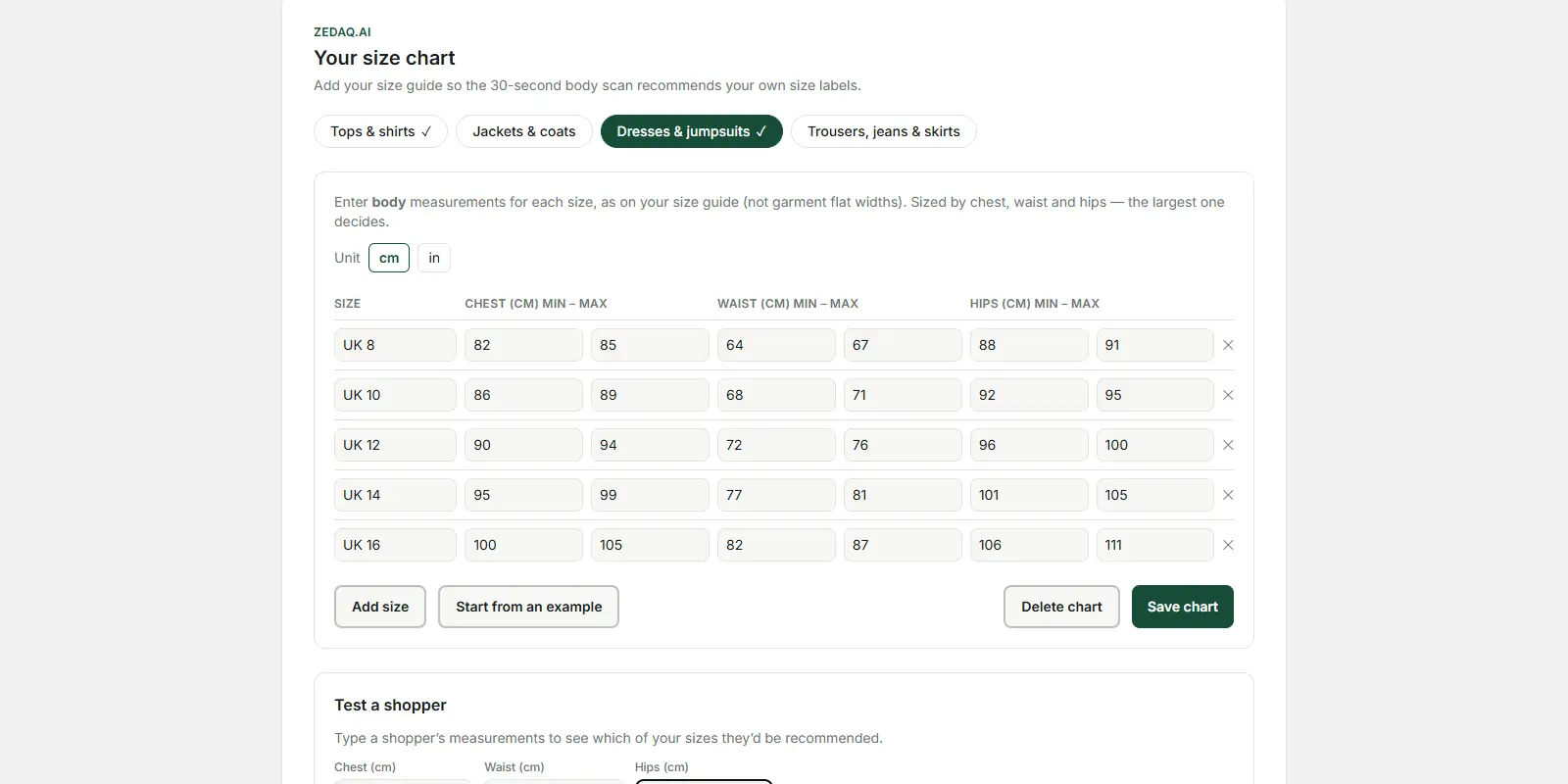
Where a store sells matching abayas, dresses or tops with the headwear, those items do use a body-based size chart. Our walkthrough on showing size recommendations on Shopify product pages explains how that works with a chart of your own.
What questions do shoppers ask most often?
Reading your own customer messages will show you the gaps. These questions come up often for modest headwear, so answer them on the page before they are asked:
- Will it stay in place without pins?
- Is the fabric see-through in bright light?
- Does it cover the chest and shoulders, or stop above them?
- Can it be worn with glasses or a cap underneath?
- How does it wash, and does it need ironing?
Put the answers in short bullets under the description. Then add the best three to your FAQ block. Real questions from your inbox beat guesses, and they also help search visitors who type those exact words.
What should you check before publishing?
Run through this list on every headwear page:
- Finished lengths are listed, with the point they are measured from.
- Model height and the fall point are stated.
- Fabric, opacity and stretch are described.
- Fastening is explained in one line.
- Photos show front, back and a close-up.
- Care instructions are included.
- Return terms are clear for hygiene-sensitive items.
Try ZeDaq.ai on your modest fashion store
FAQs
What size khimar should I buy?
Compare the finished length with where you want it to end, such as waist or hip. Check the model's height and fall point on the page.
Should I list one size or several?
List several lengths if you sell several. If you sell one size, state its exact dimensions and the height it suits.
Do I need to explain the fabric?
Yes. Name the fabric and describe opacity, stretch and drape in one or two plain sentences.
Can shoppers return a niqab or khimar?
That is your policy to set. Some stores limit returns on headwear for hygiene reasons. Say so clearly on the product page.
Try ZeDaq.ai free
Virtual try-on and Find my size for your store, plus client, order and invoicing tools for tailors, in one subscription.

