How to Measure Your Hips Correctly
By the ZeDaq.ai team · · 4 min read
On this page
- What do you need to measure your hips?
- How do you measure hips step by step?
- How do you measure hips without help?
- What mistakes make hip measurements wrong?
- How do you use your hip measurement with a size chart?
- How do hip measurements apply to modest and traditional garments?
- How do you record your measurements so you can reuse them?
- Can you get a size from a photo instead?
To measure your hips correctly, wrap a soft tape around the widest part of your hips and seat, keeping it level with the floor. Stand with your feet together, wear thin clothing, and read the number where the tape meets the end without pulling it tight.
Your hip number is one of the main measurements used to match you to a size. Many stores now turn measurements like this into a suggestion, as explained in the guide to AI size recommendation for fashion stores.
What do you need to measure your hips?
- A soft, flexible tape measure (a tailor's tape, not a metal builder's tape)
- Thin, fitted clothing or underwear
- A mirror, or a helper
- A pen and paper, or your phone's notes
If you only have a ruler and string, lay the string around your hips, mark it, and measure the string against the ruler.
How do you measure hips step by step?
- Stand straight. Keep your feet together and your weight even on both legs.
- Find the widest point. For most people it sits across the fullest part of the seat, below the waist and above the thighs. Use the mirror to see where the tape sits widest.
- Wrap the tape around. Keep it parallel to the floor all the way around, front and back.
- Check the tape is snug but not tight. You should be able to slide one finger under it.
- Breathe out normally and read the number. Write it down with the unit.
- Repeat once. If the two numbers differ, take a third and use the one that appears twice.
Where exactly is the widest part of your hips?
The widest part is not always at the hip bone. The bone you feel at your side is the top of your pelvis, which sits higher than where most people are widest. Measure over the fullest part of the seat instead, and make sure the tape does not dip at the back.
How do you measure hips without help?
A mirror makes this work. Stand side-on to a mirror and check that the tape stays level at the back. If it droops, raise it. Placing a hand at the back to hold the tape in place can help.
Taking the measurement twice, a few minutes apart, helps you spot slips. Our guide to photo-based measuring for tailors explains how photos can be used when no helper is available.
What mistakes make hip measurements wrong?
- Measuring over bulky clothing. Jeans and thick leggings add inches.
- Pulling the tape too tight. This gives a number that is too small.
- Letting the tape sag at the back. It makes the number too large.
- Standing with one hip shifted. Keep your weight even.
- Measuring at the hip bone. This usually misses the widest part.
How do you use your hip measurement with a size chart?
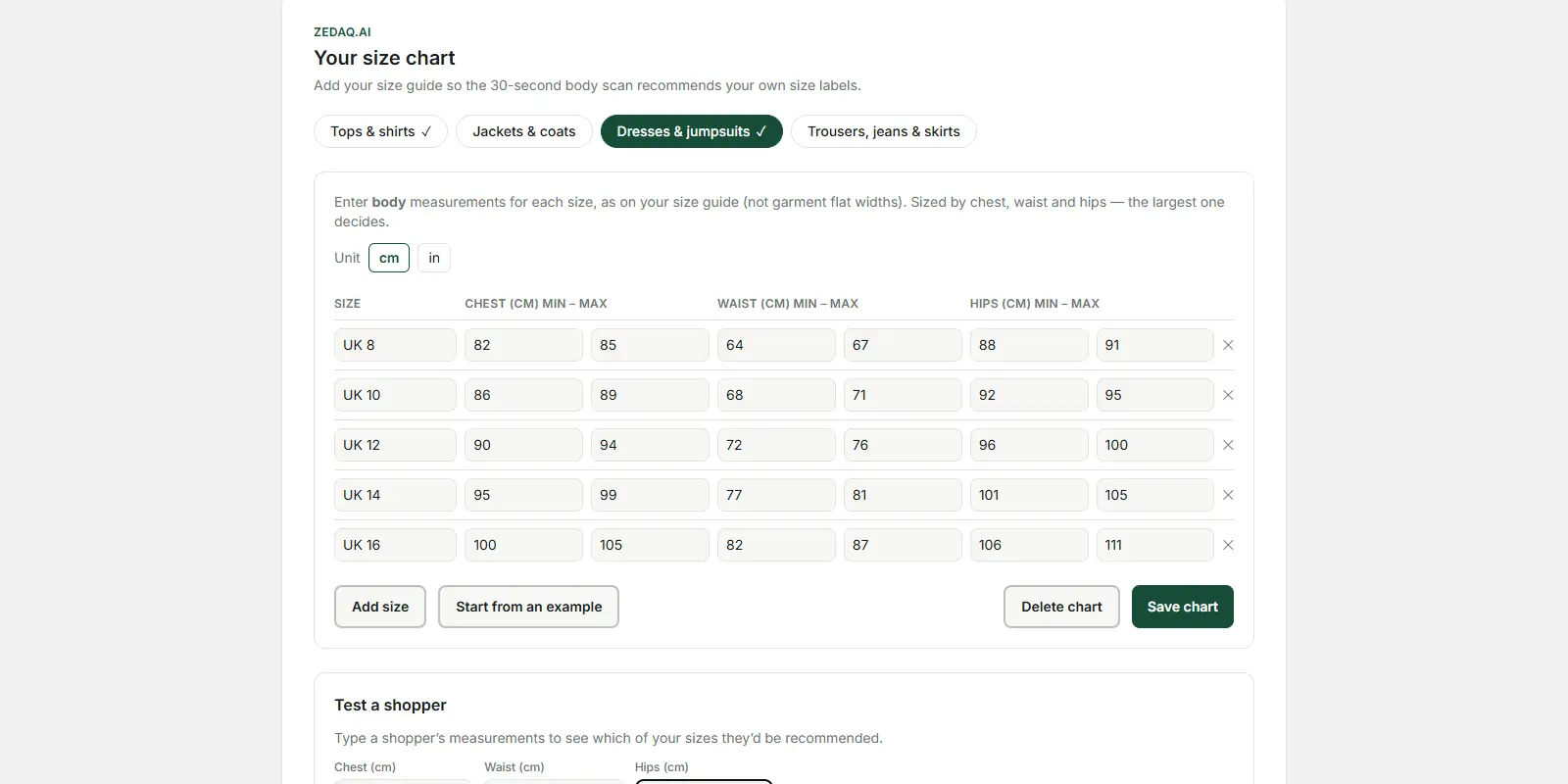
Compare your number to the brand's own chart, using the same unit. Charts differ between brands, so a hip number that is a medium in one store can be a large in another. Each store's chart is the one that counts.
If you land between two sizes, many brands suggest sizing up for comfort, especially for fitted bottoms. That is also how ZeDaq.ai's recommendation works: it matches your measurements to the store's chart and sizes up to the largest relevant measurement.
If your waist and hips fall in different sizes, choose by the garment. Trousers and skirts usually need to fit the hips first, then be altered at the waist. For a different view of fit, the article on virtual try-on vs size charts compares the two approaches.
How do hip measurements apply to modest and traditional garments?
Loose garments need room for movement more than a tight match. The steps for taking the measurement stay the same, but allow ease for the cut. For flowing styles, see how to measure for an abaya and how to measure for a kaftan.
How do you record your measurements so you can reuse them?
Write all of your measurements in one place, not only your hips. A short list saves time every time you shop for fitted clothing:
- Date measured
- Unit (centimeters or inches)
- Hips, waist and chest
- Height
- Notes, such as "measured over thin leggings"
Update the list when your body changes. Keep it in your phone notes so it is with you when you shop.
What if the numbers seem off?
If your hip number looks different from last time, check the basics before you worry. Was the tape level? Were you wearing thicker clothing? Did you stand with your weight on one leg? Repeat the measurement under the same conditions and compare.
Can you get a size from a photo instead?
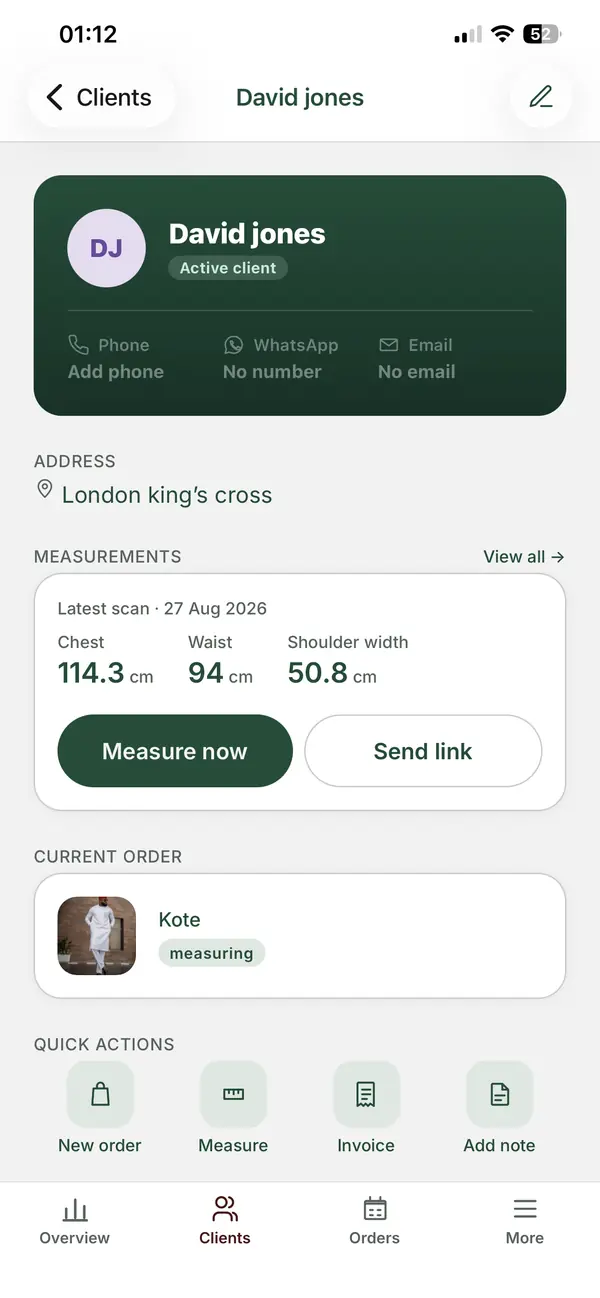
Yes. ZeDaq.ai's size recommendation uses a 30-second body scan: one photo plus your height. The measurements are matched to the store's own size chart, with a generic UK/US/EU/AU chart as a fallback. You can try it on the live demo.
Try the scan and see your size
Try it on yourself
Live renderUpload a photo, pick a piece, see it rendered on you.
Pick something to try on
Find your size from one photo
FAQs
Should I measure hips with my feet together?
Yes. Standing with your feet together gives a consistent measurement, and spreading your legs can make the tape sit differently.
Should I measure over underwear or clothes?
Measure over underwear or very thin, fitted clothing. Thicker fabric adds to the number.
Are hips the same as seat?
They are close. Most size charts use "hips" to mean the widest part of the hips and seat together.
How often should I re-measure?
Measure again when your body changes or before ordering fitted clothing from a new brand.
Try ZeDaq.ai free
Virtual try-on and Find my size for your store, plus client, order and invoicing tools for tailors, in one subscription.

