How Should a Wedding Dress Fit?
By the ZeDaq.ai team · · 4 min read
On this page
- How should the bodice fit?
- Where should the waist sit?
- How should the hips and skirt fit?
- How long should the hem be?
- What should you check at each gown fitting?
- Can you buy a wedding dress online and still get a good fit?
- What should you wear and bring to a fitting?
- What are warning signs that a gown doesn't fit yet?
- How can a store help buyers pick a gown size?
A wedding dress should fit closely through the bodice, sit at your natural waist without digging in, and leave enough room to breathe, sit and dance. The skirt should skim the floor at the length you chose, with shoes on.
Most gowns need alterations, so "fit" means the dress after fittings, not the size you tried on. If you sell dresses online, the same principles apply to AI size recommendation for fashion stores.
How should the bodice fit?
The bodice should be snug without pinching. When you stand, the fabric should lie flat against your body with no gaps at the neckline or underarms.
Check these points:
- Bust: the cups should hold you without spilling or gaping.
- Sides and back: no bulges at the zipper or lacing, and no wrinkles that pull sideways.
- Straps and sleeves: they should stay put when you lift your arms.
- Boning or corset: it should support you without poking.
Take a deep breath and sit down. If the bodice is too tight to do either, it needs adjusting.
Where should the waist sit?
The waistline seam should land at your natural waist for most styles. That is the narrowest part of your torso. Empire and drop-waist gowns are cut to sit elsewhere on purpose.
If the seam rides up or slips down, the bodice length may need to be altered. It is a common fix at fittings.
How should the hips and skirt fit?
The dress should skim your hips without pulling across them. Fitted silhouettes like mermaid or sheath cuts follow your shape and need more precise fitting than a full ballgown.
For fuller skirts, check that you can walk, climb stairs and sit. The skirt should not twist or lock your steps.
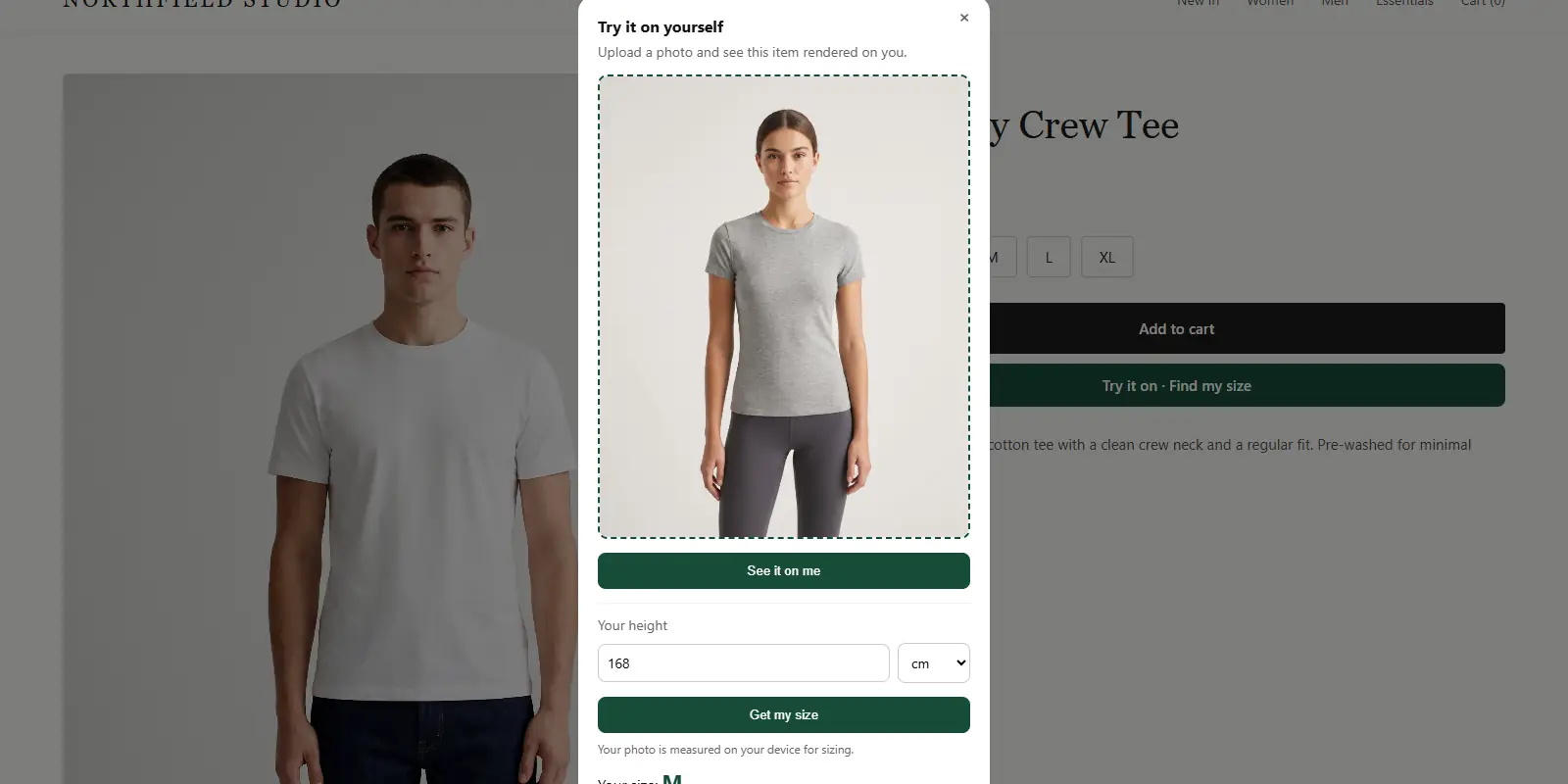
Preview a gown on your own photo
Try it on yourself
Live renderUpload a photo, pick a piece, see it rendered on you.
Pick something to try on
How long should the hem be?
Decide your shoes first. The hem should graze the floor, or sit a little above it, when you stand in the shoes you will wear on the day. Wearing the wrong shoes at the fitting is a common reason hems end up too long or too short.
For a train, check that it falls evenly behind you and is easy to bustle.
What should you check at each gown fitting?
Gown fittings are normally done in stages. Use this checklist:
- First fitting: check the overall size, silhouette and bodice shape.
- Middle fitting: check bust, waist, hem and any structural changes.
- Final fitting: wear your shoes and undergarments, then sit, walk, raise your arms and practice the bustle.
Bring the same underwear and shoes to every fitting. Tell the seamstress if your measurements might change before the wedding.
Can you buy a wedding dress online and still get a good fit?
Yes, if you plan for alterations. Choose a size by your largest measurement, since taking a gown in is usually easier than letting it out. Check the seller's size chart against your own measurements. Our guide on how a dress shirt should fit shows how to compare chart numbers to your body for other formal pieces.
For sellers, a tidy size chart and honest fit notes cut surprises. Our article on fit-related returns explains where mismatches come from, and the guide on how a t-shirt should fit gives a simple model for describing fit in words.
What should you wear and bring to a fitting?
Fit depends on what is under and around the gown. Bring:
- The right undergarments, including any shapewear or bra you will wear on the day.
- Your wedding shoes, or shoes with the same heel height.
- Accessories, such as a veil or belt, if they affect the neckline or waist.
- A trusted friend, who can take photos and notice what you can't see in the mirror.
Take photos from the front, side and back at each fitting. They help you compare changes between visits.
What are warning signs that a gown doesn't fit yet?
Look out for these before you accept the dress:
- Fabric dragging or puddling at the back of the neck.
- A zipper or lacing that strains or leaves a gap.
- A hem that is uneven when you walk.
- A neckline that moves when you lift your arms.
- A skirt that catches under your heels.
Mention each one to your seamstress at the time. Small issues are easy to fix early and hard to fix on the wedding day.
How can a store help buyers pick a gown size?
ZeDaq.ai's size recommendation uses a 30-second body scan from one photo and height, then matches the result to the store's own size chart. If the shopper falls between two sizes, it picks the larger one, which suits gowns that will be taken in. Try it on the live demo first.
See how a size recommendation works
FAQs
Should a wedding dress be tight?
It should be snug in the bodice but not painful. You must be able to breathe, sit and move. If it only works while holding your breath, it needs adjusting.
How many fittings does a wedding dress need?
It varies by gown and seamstress. Ask your bridal shop or seamstress how many they plan.
Is it better to buy a gown too big or too small?
Too big is usually easier to fix, because a seamstress can take a gown in more easily than let it out.
Should I fit the dress with my shoes on?
Yes. Heel height changes the hem, so wear your wedding shoes for the final fittings.
Try ZeDaq.ai free
Virtual try-on and Find my size for your store, plus client, order and invoicing tools for tailors, in one subscription.

