Ease Allowance Explained for Fashion Brands
By the ZeDaq.ai team · · 4 min read
On this page
- What is ease allowance in plain terms?
- What is the difference between wearing ease and design ease?
- What affects how much ease a garment needs?
- How do you build an ease chart?
- How does ease change the size you recommend?
- How do you talk about ease with a pattern maker?
- Why does this matter for returns?
- What mistakes do brands make with ease?
Ease allowance is the extra room a garment has beyond the measurements of the body it is made for. Brands that skip it ship clothes too tight to move in.
This guide explains the two kinds of ease, how to record them in your specs and how they affect the size advice you give shoppers. It is written for brand owners and designers, and it supports any AI size recommendation setup you plan to use.
What is ease allowance in plain terms?
Take a body measurement, such as a 90 cm chest. The garment's finished chest must be larger than that, or the wearer couldn't breathe, sit or lift an arm. The difference is the ease.
Ease is set by the pattern maker when the pattern is drafted. It is part of the design, not a mistake.
What is the difference between wearing ease and design ease?
- Wearing ease is the minimum extra room for comfort and movement. Every garment has some.
- Design ease is extra room added on purpose for the look, such as a boxy jacket or an oversized sweater.
Total ease is wearing ease plus design ease. A fitted dress might have little beyond wearing ease. A relaxed shirt might have a lot more.
What affects how much ease a garment needs?
Several things change the amount:
- Fabric stretch. Stretch fabrics need less built-in ease than woven ones.
- Garment type. Outerwear is worn over other layers, so it needs more room than a T-shirt.
- Intended fit. Slim, regular and relaxed fits are defined by their ease.
- Where on the body. The chest, waist and hips often have different amounts.
- Movement. Sportswear needs room for stretching and bending.
Seasonal items show this clearly. The guide on seasonal fit problems with coats, swimwear and formalwear covers how layering and stretch change what shoppers should order.
How do you build an ease chart?
An ease chart is a simple table that records the room your team intends for each style. Create one with these steps:
- List your garment types and fits, such as shirt (slim), shirt (relaxed) and coat.
- For each, record the body measurement the size is designed for.
- Record the finished garment measurement.
- Subtract the body measurement from the garment measurement. That is the ease.
- Keep the table with your size specs so new designs follow the same rules.
An example layout, with made-up numbers for illustration only. Use your own pattern notes.
| Style | Body chest | Finished chest | Ease |
|---|---|---|---|
| Fitted shirt | 96 cm | 102 cm | 6 cm |
| Relaxed shirt | 96 cm | 112 cm | 16 cm |
| Wool coat | 96 cm | 120 cm | 24 cm |
How does ease change the size you recommend?
Shoppers choose by body measurements, but they feel the garment's ease. Two people of the same size can pick differently because they like a different amount of room.
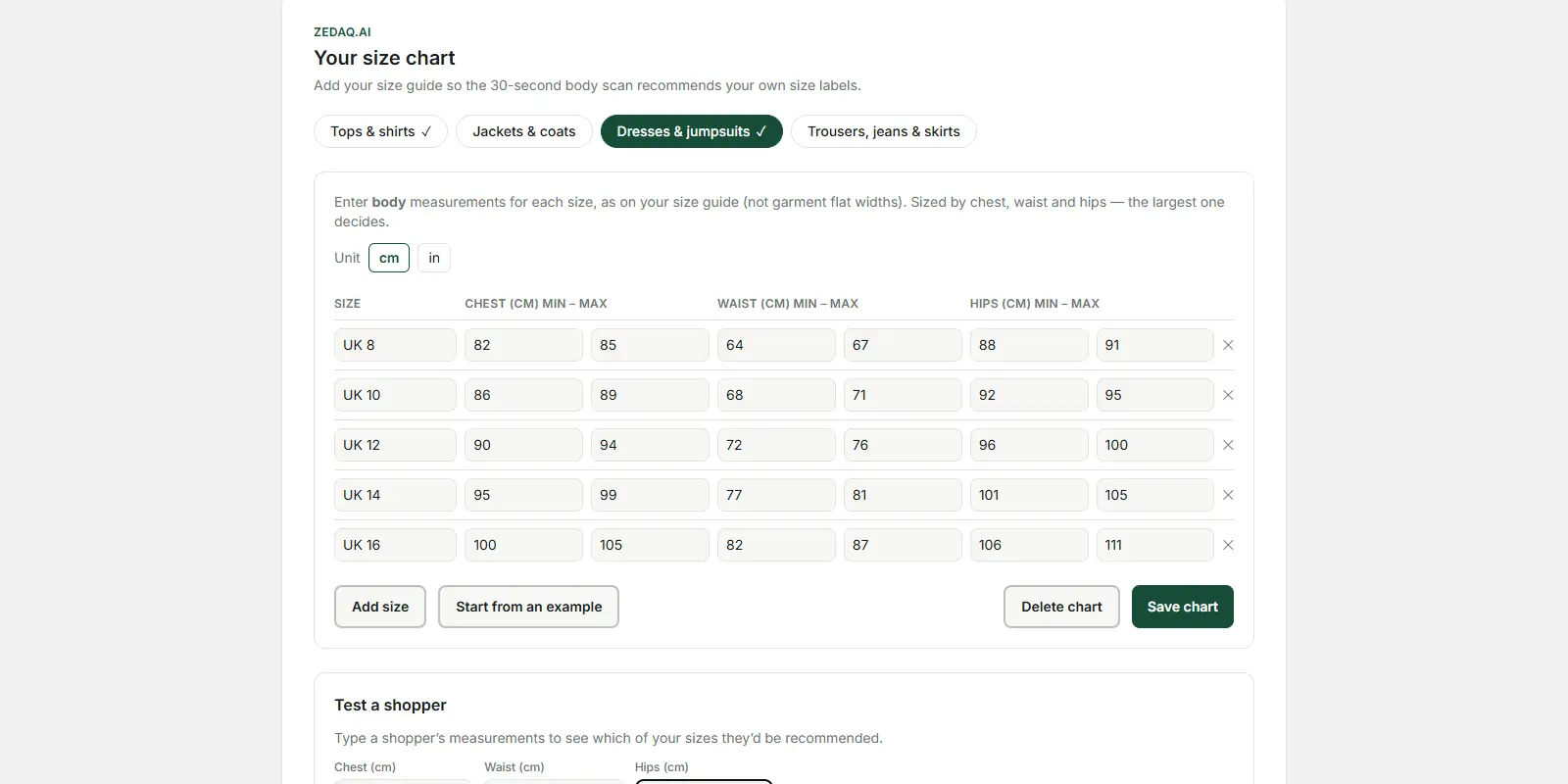
That is why one chart per garment type helps. In ZeDaq.ai, merchants enter their own size guide in Dashboard → Size charts (or in the Shopify app), one chart per garment type, and the scan recommends the store's own labels. Because ease differs between garment types, keeping charts separate by type is sensible.
Judge any tool against fitting-room results, not just a headline score. The article on evaluating a size recommendation tool's accuracy shows how.
How do you talk about ease with a pattern maker?
Ask direct questions, and write the answers down:
- What ease did you build into each size at the chest, waist and hips?
- Is the ease the same across the size range, or does it grow in larger sizes?
- Which part of this style is design ease, and which is wearing ease?
- What would change if we switched to a stretch fabric?
Keep the answers with the pattern files. When the pattern maker or the supplier changes, the notes tell the new team what the fit was meant to be.
Why does this matter for returns?
When a garment's real fit doesn't match the shopper's expectation, they send it back. Unclear ease is one of the reasons. The overview of fit-related returns lists others.
A fit note such as "runs roomy, size down for a closer fit" tells shoppers what the ease feels like. Pair it with a body-measurement chart, as explained in garment vs body measurements.
Match your own sizes to a 30-second body scan
What mistakes do brands make with ease?
- Changing the ease between seasons without updating the size chart
- Grading every size by the same amount, even when the larger sizes feel tighter
- Using a size chart from another brand with a different idea of "regular"
- Skipping a fit session with a real person for each new style
Each of these makes the chart disagree with how the clothes feel. A short fit check on a real person catches most of them before launch.
FAQs
Is ease the same as stretch?
No. Stretch is how far a fabric extends, while ease is the extra room in the cut. Stretch fabrics often need less ease.
Can a garment have negative ease?
Yes. Very stretchy items, such as some activewear, are cut smaller than the body so they hug it. The stretch makes up the difference.
Who decides how much ease a garment gets?
The designer and pattern maker set it when drafting the pattern, based on fit, fabric and garment type.
Should I show ease on my product page?
Not as numbers for most shoppers. A short fit note such as "relaxed" or "true to size" is usually clearer.
Try ZeDaq.ai free
Virtual try-on and Find my size for your store, plus client, order and invoicing tools for tailors, in one subscription.

