Asian to US Clothing Size Conversion
By the ZeDaq.ai team · · 4 min read
On this page
- Why do Asian sizes not convert cleanly to US sizes?
- What should you measure before you shop?
- How do you read an Asian seller's size chart?
- What does a worked example look like?
- What if you are between two sizes?
- How do Asian sizes compare with other conversions?
- What should stores do for shoppers buying across borders?
There is no single Asian to US size conversion, because sizes differ by country and by seller, and many Asian size labels run smaller than US ones. The reliable method is to ignore the tag, measure your body in centimeters, and compare those numbers with the seller's size chart.
This guide shows how to do that for clothes bought from Asian sellers and marketplaces. Stores that want to spare shoppers this work can use AI size recommendation, which matches a body scan to the store's own chart.
Why do Asian sizes not convert cleanly to US sizes?
Three things get in the way.
- No shared standard. China, Japan and Korea each use their own labeling habits, and marketplace sellers add their own.
- Different target bodies. Garments are cut for the customers the brand expects, and cuts differ from brand to brand.
- Letter sizes mean little. An "L" from one seller can match a US "S" or "M" from another.
Because of this, charts you find online disagree with each other. Treat any single chart as a rough guide only, and use the seller's own measurements to decide.
What should you measure before you shop?
Take these measurements with a soft tape, in light clothing. Write them down in centimeters, since Asian sellers usually list sizes that way.
- Bust or chest. Measure around the fullest part, keeping the tape level.
- Waist. Measure at the narrowest part of your torso.
- Hips. Measure around the fullest part of your hips.
- Height. Stand against a wall without shoes.
- Shoulder width (for tops). Measure from one shoulder edge to the other across your back.
To convert inches to centimeters, multiply by 2.54. A hand calculator is enough.
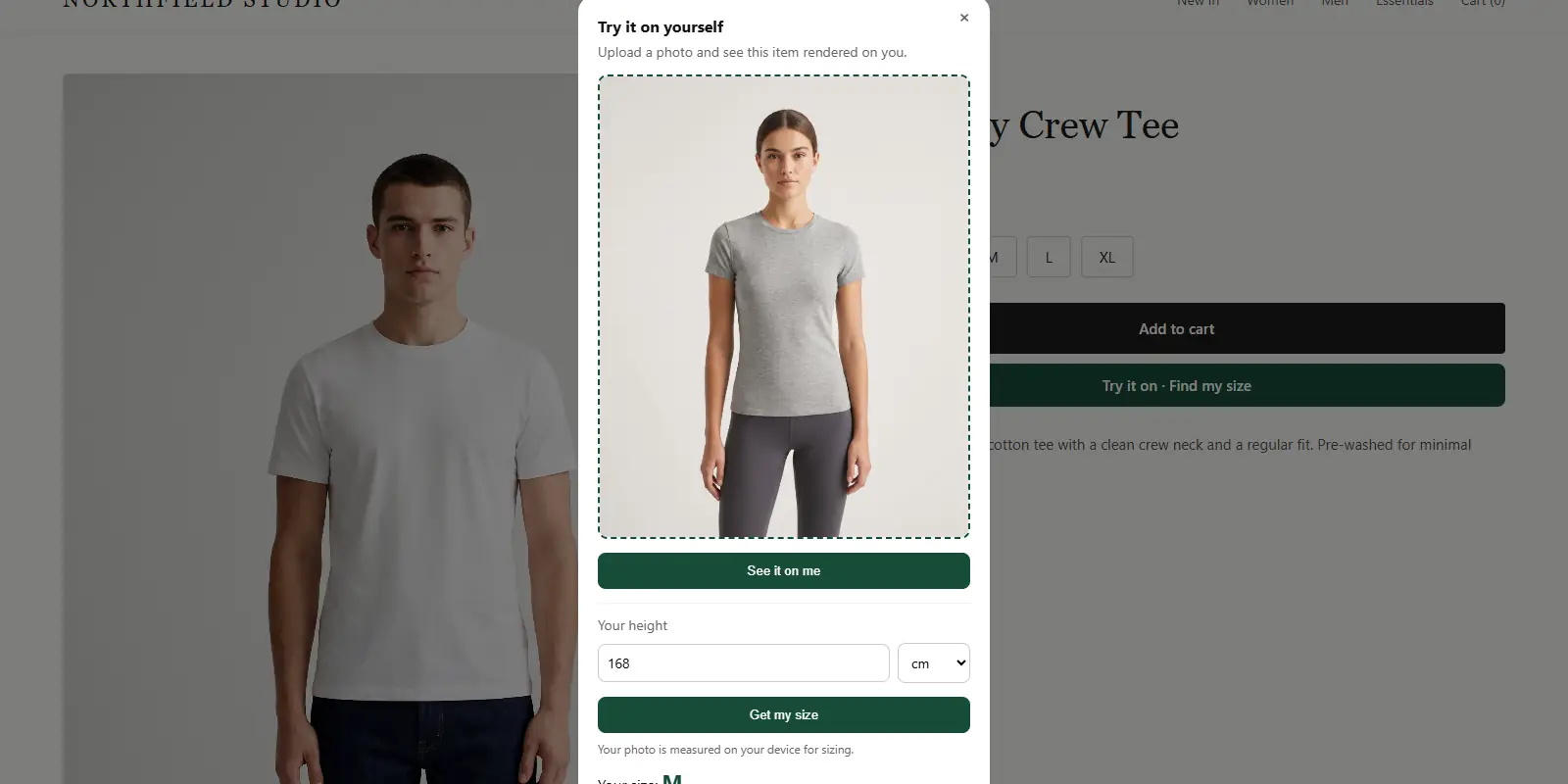
See how a body scan picks a size
Try it on yourself
Live renderUpload a photo, pick a piece, see it rendered on you.
Pick something to try on
How do you read an Asian seller's size chart?
Look for three things in the chart.
- Is it body size or garment size? Body charts list the person the garment is for. Garment charts list the flat measurements of the item. They are not the same, and mixing them up is a common cause of bad fits.
- What unit is used? Centimeters are typical. Check before you compare.
- Is there a tolerance note? Some sellers state that measurements can differ slightly, since they are taken by hand.
If the chart shows garment measurements, compare them with a similar item you own. Lay your best-fitting shirt flat, measure it, and match it to the closest row.
What does a worked example look like?
Here is a hypothetical shopper to show the method. It is not conversion data.
Maya takes a US size in most stores. She wants a jacket from a marketplace seller whose chart lists garment chest widths in centimeters. She lays her favorite jacket flat and measures it across the chest, then doubles that number to get the full chest. She finds the seller's row with the closest chest width. Because the jacket is meant to be worn over a sweater, she picks the next row up.
She reads the listing's reviews for fit comments before ordering. The method takes ten minutes and avoids guessing from the tag.
What if you are between two sizes?
Choose the larger size for most garments. A slightly loose garment is easier to wear or alter than one that is tight across the chest or hips.
Make an exception for items meant to be snug, such as base layers. For those, read the stretch description and the reviews.
Also check fabric. Stretch knits forgive more than woven fabrics or structured jackets.
How do Asian sizes compare with other conversions?
Each region has its own traps. Australian labels, for example, are usually numeric and run higher than US numbers, as explained in AU to US size conversion. European men's sizes are covered in US to EU men's size conversion.
The common thread is the same everywhere: measurements beat labels.
What should stores do for shoppers buying across borders?
If you sell clothing sourced from Asia, or ship to US shoppers, publish your measurements in both centimeters and inches. Say whether your chart shows body or garment measurements, and label example tables as "example chart, check your brand's own chart" if they are general.
Fit-related returns are a known cost for online stores, and clear sizing helps. Our guide to where fit-related returns come from explains the causes.
ZeDaq.ai's "Find my size" takes one photo plus height, then matches the measurements to the store's own chart. The shopper sees the store's own label, so there is no conversion to guess.
Give shoppers a size from your own chart
FAQs
Do Asian sizes run smaller than US sizes?
Many shoppers and sellers describe them that way, but there is no single standard. Always compare your measurements with the seller's chart.
Is Asian size L the same as US size L?
Not reliably. Letter sizes vary between sellers, so use centimeter measurements instead.
Should I size up when buying from an Asian marketplace?
Often the larger size is the safer choice if you are between two rows. Check the chart, the fit notes and the reviews first.
Can I use one conversion chart for every brand?
No. Brands cut differently, so a general chart is only a starting point. The seller's own chart is the better guide.
Try ZeDaq.ai free
Virtual try-on and Find my size for your store, plus client, order and invoicing tools for tailors, in one subscription.

