What Size Clothes Should I Buy for a 2-Year-Old?
By the ZeDaq.ai team · · 4 min read
On this page
- What is the difference between 2T and 24 months?
- How do you measure a toddler?
- How do you read a toddler size chart?
- Should you buy a size up?
- What if your child is between sizes?
- What should you look for besides size?
- How do sizes vary between countries?
- Can a store help you choose?
- How should you plan a small toddler wardrobe?
What size clothes should you buy for a 2-year-old? Start with size 2T or 24 months, then check your child's height and weight against the brand's own chart. Age is only a starting point, because children of the same age vary a lot and brands cut sizes differently.
This guide is for parents and gift buyers. It uses the same method as AI size recommendation for fashion stores: measure first, then match to the chart.
What is the difference between 2T and 24 months?
Both labels are used for toddlers, but they are cut for different shapes.
- 24 months is a baby size. It usually has more room for a diaper and a shorter, rounder fit.
- 2T is a toddler size. It is often longer in the leg and body, with a slimmer shape for a child who walks and runs.
A child who is tall for their age may already fit 2T before turning two. A small child may stay in 24 months for longer. Brands differ, so read the chart.
See how a size recommendation works
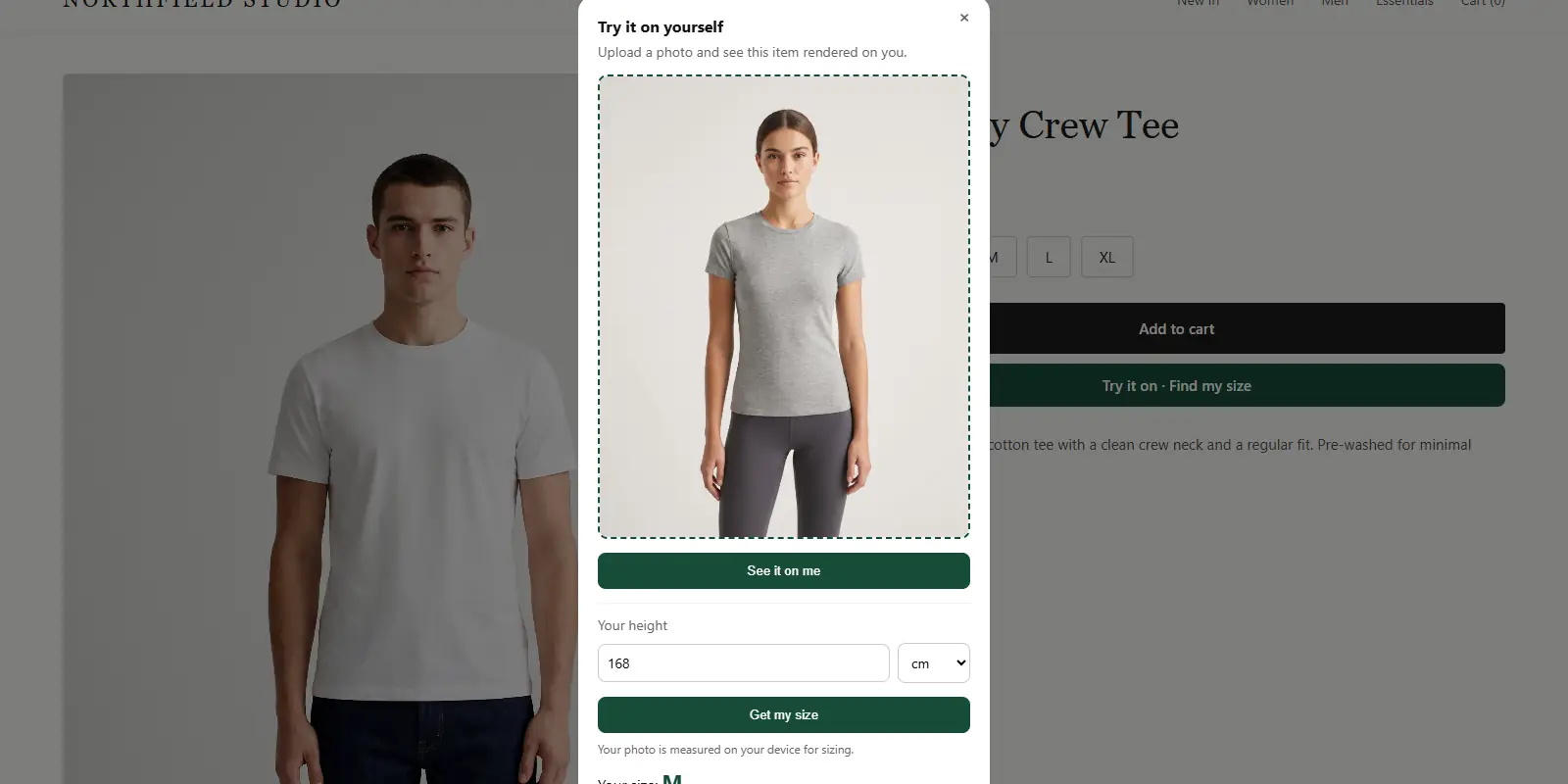
Try it on yourself
Live renderUpload a photo, pick a piece, see it rendered on you.
Pick something to try on
How do you measure a toddler?
Measure when your child is calm, in a light layer of clothes. Use a soft tape measure.
- Height: stand your child against a wall, without shoes, and mark the top of the head.
- Chest: measure around the fullest part, under the arms.
- Waist: measure around the natural waist, above the hips.
- Inseam: measure from the crotch to the ankle, along the inner leg.
Write the numbers in both centimeters and inches. Toddlers grow fast, so remeasure before each big purchase.
How do you read a toddler size chart?
Find the row that matches your child's height first. Then check chest and waist. If the numbers fall in different sizes, go by the largest one.
Here is how to read the common columns:
| Column | What it tells you | Tip |
|---|---|---|
| Age | A rough guide only | Don't rely on it alone |
| Height | Overall length of the garment | The most reliable starting point |
| Weight | Build | Useful when height sits between sizes |
| Chest and waist | Fit around the body | Use for tops and trousers |
| Inseam | Trouser leg length | Check if your child is tall or small |
This is an example layout. Use your brand's own chart, since each brand sets its own sizes.
Should you buy a size up?
Often, yes. Toddlers grow quickly, and a slightly roomy item lasts longer. Roll cuffs, adjust straps or use adjustable waists to make a bigger size work now.
Don't go up too far, though. Very loose clothes can be a trip hazard, and long sleeves and legs can get in the way. Buy one size up at most unless the brand says it runs small.
For items you need right away, such as party outfits, buy the true size.
What if your child is between sizes?
Choose by use:
- Everyday wear: go up a size and let your child grow into it.
- Special occasions: choose the closest fit, so the outfit looks right.
- Layers and coats: check the fit with a sweater under them.
- Shoes and hats: these follow their own sizing. Our guide to measuring your hat size shows the method for head size.
What should you look for besides size?
Fit is not only about the label. For a 2-year-old, a few features make a real difference:
- Easy openings: wide necks, snaps or zippers make dressing faster.
- Soft seams and tags: these reduce irritation on sensitive skin.
- Stretch fabric: it forgives small errors in size and moves with an active child.
- Washability: toddler clothes get washed often, so check the care label.
- Diaper room: trousers and rompers should allow for it if your child still wears them.
Check the reviews for comments on shrinking after washing, since cotton often does.
How do sizes vary between countries?
UK, US and European labels differ, and toddler labels are often given by age or height in centimeters. When you shop from another country, compare measurements, not labels. The article on Italian to US clothing size conversion shows how to handle that for adult clothes, and the same principle applies to children.
Can a store help you choose?
Some stores offer a "Find my size" tool. ZeDaq.ai scans use a photo and height to match body measurements to a store's chart. Check with the store whether that suits children before relying on it.
Store owners can find out why sizing mistakes happen in fit-related returns and how to cut them.
See a size recommendation in action
How should you plan a small toddler wardrobe?
Buy a few pieces in the true size and a few one size up, so you always have something that fits as your child grows. Keep the tags on for a short time in case you need to exchange.
Check the store's return policy before you buy, since many parents swap sizes after the first wash.
FAQs
Is 2T bigger than 24 months?
Usually, yes. 2T tends to be longer and slimmer, while 24 months is cut roomier for a diaper. Brands differ, so check each chart.
Should I buy by age or height?
Buy by height first, then check chest and weight. Age is only a rough guide.
How much room should I leave for growth?
One size up is usually enough. More than that can make clothes loose and awkward.
Do sizes change between brands?
Yes. Always compare your child's measurements with the brand's chart.
Try ZeDaq.ai free
Virtual try-on and Find my size for your store, plus client, order and invoicing tools for tailors, in one subscription.

