Suit Drop Explained: Jacket vs Trouser Sizes
By the ZeDaq.ai team · · 4 min read
On this page
- What is the drop on a suit?
- Why do suits have a drop?
- How do you find your drop from body measurements?
- What if your jacket and trouser sizes don't match?
- How does drop relate to how a jacket fits?
- How does drop relate to length?
- How should a store show drop to shoppers?
- What is a quick checklist before you buy separates?
Suit drop is the difference between the chest size on a suit jacket and the waist size on its matching trousers. A bigger drop means the trousers are cut with a smaller waist relative to the jacket's chest.
Drop matters most when you buy a jacket and trousers separately, or when you sell them that way. It is one of the facts a shopper needs for a good fit, and it is why AI size recommendation for fashion stores often asks for chest and waist separately.
What is the drop on a suit?
Drop is a simple subtraction: jacket chest size minus trouser waist size. The result is the drop.
Here is an illustration. These are example numbers, not a standard, so check your brand's own chart.
| Jacket chest size | Drop | Matching trouser waist size |
|---|---|---|
| 40 | 6 | 34 |
| 40 | 4 | 36 |
| 40 | 8 | 32 |
Read across: the same jacket can come with different trousers, depending on the drop the maker uses. The numbers show the arithmetic only. Brands choose their own drops, and the unit (inches or centimeters) depends on the market.
Why do suits have a drop?
Most men's chests are larger than their waists, so jackets and trousers need different sizes to fit the same body. Drop builds that difference into a suit's sizing.
A suit sold as one set already pairs a jacket and trousers with a drop the maker chose. A jacket sold alone has no trousers attached, so the shopper has to work it out.
How do you find your drop from body measurements?
You compare your chest and waist, then compare them with the brand's chart.
- Measure your chest and your natural waist. The guide to how to measure yourself for a suit walks through it.
- Subtract waist from chest to see your body's difference.
- Look at the brand's chart for the jacket size that suits your chest.
- Check the trouser waist sizes the brand offers with that jacket.
- Choose the combination that is closest to your measurements, then ask a tailor to adjust the rest.
Trousers can often be let out or taken in at the waist. A jacket's chest is harder to change, so fit the jacket first and adjust the trousers.
What if your jacket and trouser sizes don't match?
You have three options:
- Buy separates. Many stores sell jackets and trousers individually, so you can pick each size on its own.
- Choose a different drop. Some brands offer more than one cut.
- Alter the trousers. A tailor can adjust the waist, which is often easier than changing a jacket.
If you buy the jacket and trousers as a set and the sizes don't match your body, check whether the store lets you swap one piece.
How does drop relate to how a jacket fits?
Drop only describes the pairing of sizes. It doesn't tell you whether the jacket fits your shoulders or sleeves. Those need their own check, and the guide on how a suit jacket should fit explains what to look for.
A good order of checks:
- Shoulders first, because they are hard to alter.
- Chest and jacket length next.
- Trouser waist and length last, because a tailor can adjust them easily.
How does drop relate to length?
Drop is about width, not length. Jacket length is a separate choice, usually labeled short, regular or long. The guide to short, regular and long suit jacket lengths covers that. A shopper needs both: the right drop for the waist and the right length for their height.
How should a store show drop to shoppers?
A good product page makes drop easy to see. Do this:
- State the drop in the product details, and which unit you use.
- Offer jackets and trousers as separate size choices when you can.
- Show a size chart with chest on the jacket rows and waist on the trouser rows.
- Say whether your chart lists body measurements or garment measurements.
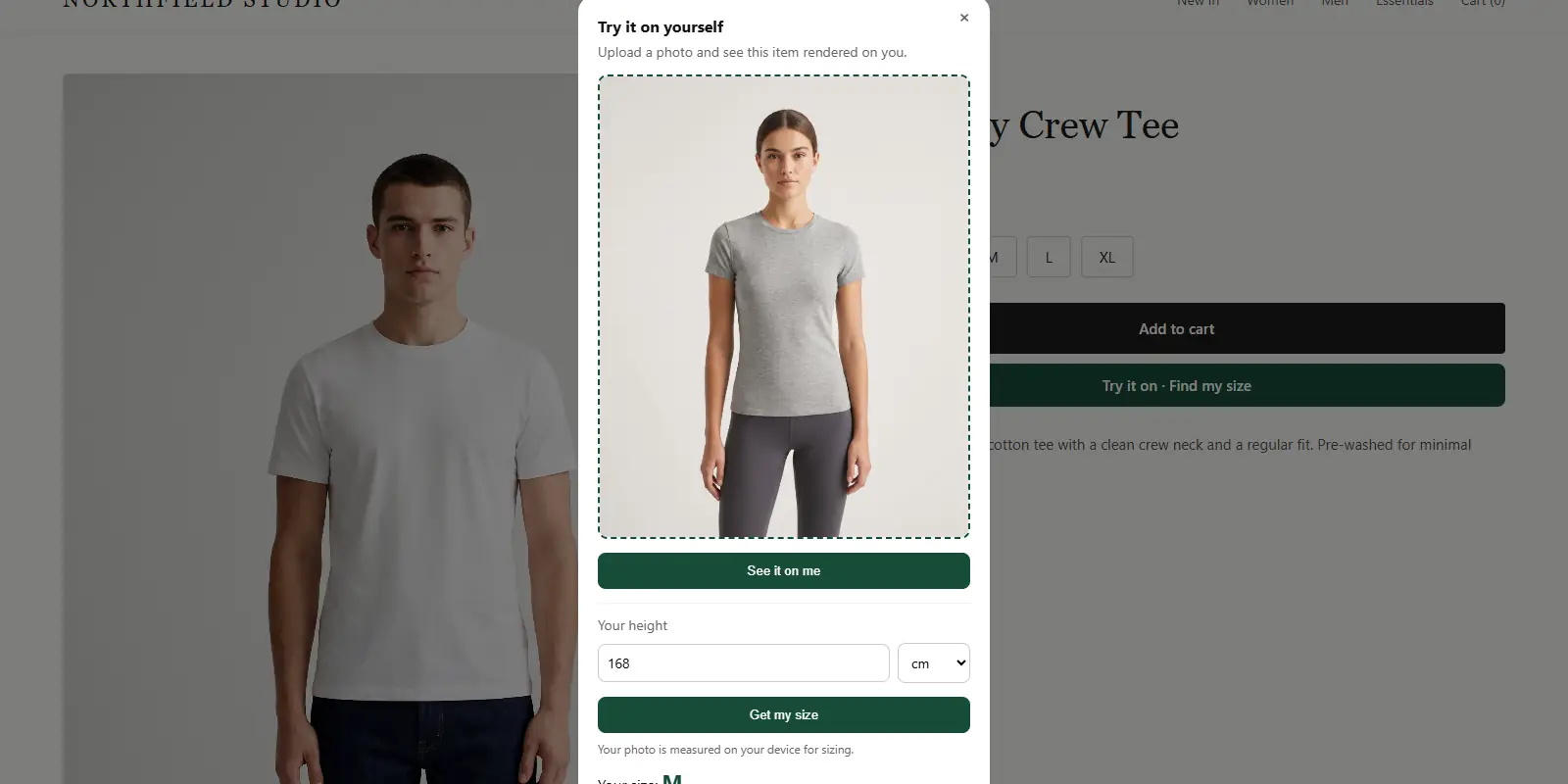
ZeDaq.ai recommends a size from a 30-second body scan, using one photo plus height, matched to the store's own size chart. A store enters one chart per garment type, such as outerwear for jackets and bottoms for trousers. That way a shopper's chest guides the jacket size and their waist guides the trousers.
Our comparison of virtual try-on and size charts explains how a chart and a try-on work together.
Try a size recommendation yourself
Try it on yourself
Live renderUpload a photo, pick a piece, see it rendered on you.
Pick something to try on
See how a body scan picks a size
What is a quick checklist before you buy separates?
- Know your chest and your waist, in the same unit as the chart.
- Check which unit the brand uses.
- Find out if the trousers come in the drop you need.
- Ask about alterations and who pays.
- Confirm you can swap one piece if the size is wrong.
FAQs
What does drop 6 mean on a suit?
It means the trouser waist size is six units smaller than the jacket chest size, in whatever unit the brand uses. It describes the proportion, not the fit style.
Is a bigger drop better?
No. A bigger drop suits a person whose chest is much larger than their waist. A smaller drop suits a straighter build.
Can I buy a jacket and trousers in different sizes?
Yes, if the store sells them separately. If it sells them as a set, ask whether you can change one piece.
Does drop change between countries?
Brands set their own drop, and sizing conventions differ by market. Always check the maker's chart and conversion notes.
Try ZeDaq.ai free
Virtual try-on and Find my size for your store, plus client, order and invoicing tools for tailors, in one subscription.

