Kids' Eid Outfits: What Parents Look For Online
By the ZeDaq.ai team · · 4 min read
On this page
- Why is sizing the biggest worry for parents?
- What do parents look for in a kids' Eid outfit?
- Which outfits do parents search for?
- What should a kids' product page show?
- How do you take a child's measurements for the chart?
- How can a store help with fit?
- What reassurance do parents want before they pay?
- How should you photograph children's outfits?
- How should you plan around the Eid deadline?
Parents shopping for kids' Eid outfits online look first for the right size, then for comfort, a modest and festive look, and delivery that arrives before Eid. Children grow fast and the day is fixed, so a wrong size has no easy second chance.
This guide is for store owners who sell children's occasion wear. It lists what to put on the page so parents can decide with confidence. If you sell to African and modest fashion customers, virtual try-on for African fashion brands shows how shoppers can see garments before ordering.
Why is sizing the biggest worry for parents?
Kids' sizes are hard to guess. A child's age, height and build do not always match the age label on a garment. Brands also label differently.
Parents are often buying for a child who is not with them, or for a gift. They need the information in numbers, not labels alone.
What do parents look for in a kids' Eid outfit?
Most parents weigh the same handful of things:
- Right size with room to grow. Many prefer a little extra length so the outfit lasts beyond one day.
- Comfort. Soft fabric, no scratchy seams, and easy fastenings for a long day of prayers and visits.
- Modest coverage. Sleeves and hems that suit the family's preferences.
- A festive look. Color, embroidery and detail that feel special.
- Easy care. Clothes that can be washed after the day.
- Delivery time. Arrival before Eid, with room for an exchange.
Which outfits do parents search for?
Search terms vary, but typical examples include a boys' kurta, a girls' abaya or dress, and matching family sets. Describe each piece in plain words: what it includes, the fabric, the closure and the length.
For African print styles and event clothing, the guide to African outfits for kids' events covers what families look for.
What should a kids' product page show?
Add the details parents cannot guess:
- A size chart with child height and chest, plus length of the garment.
- A note on whether sizes run small or large.
- Fabric, lining and whether it itches.
- Photos on a child, front and back, with the child's height and size worn.
- A close view of embroidery, buttons and zips.
- Care instructions.
- A delivery cut-off date for Eid.
Use your own chart and say so. Check that the size ranges you list are measured on children, not adults scaled down.
How do you take a child's measurements for the chart?
Parents can measure at home in a few minutes. Share these steps on the product page:
- Stand the child straight, without shoes.
- Measure height from the floor to the top of the head.
- Measure around the chest at its fullest point, under the arms.
- Measure around the waist, where the child bends sideways.
- For long garments, measure from the shoulder to where the hem should fall.
Ask parents to measure the child, not an old outfit, unless you also list garment measurements.
How can a store help with fit?
For a small child, a store can add a measuring tip: use height first, then chest. Allow a note about growth room.
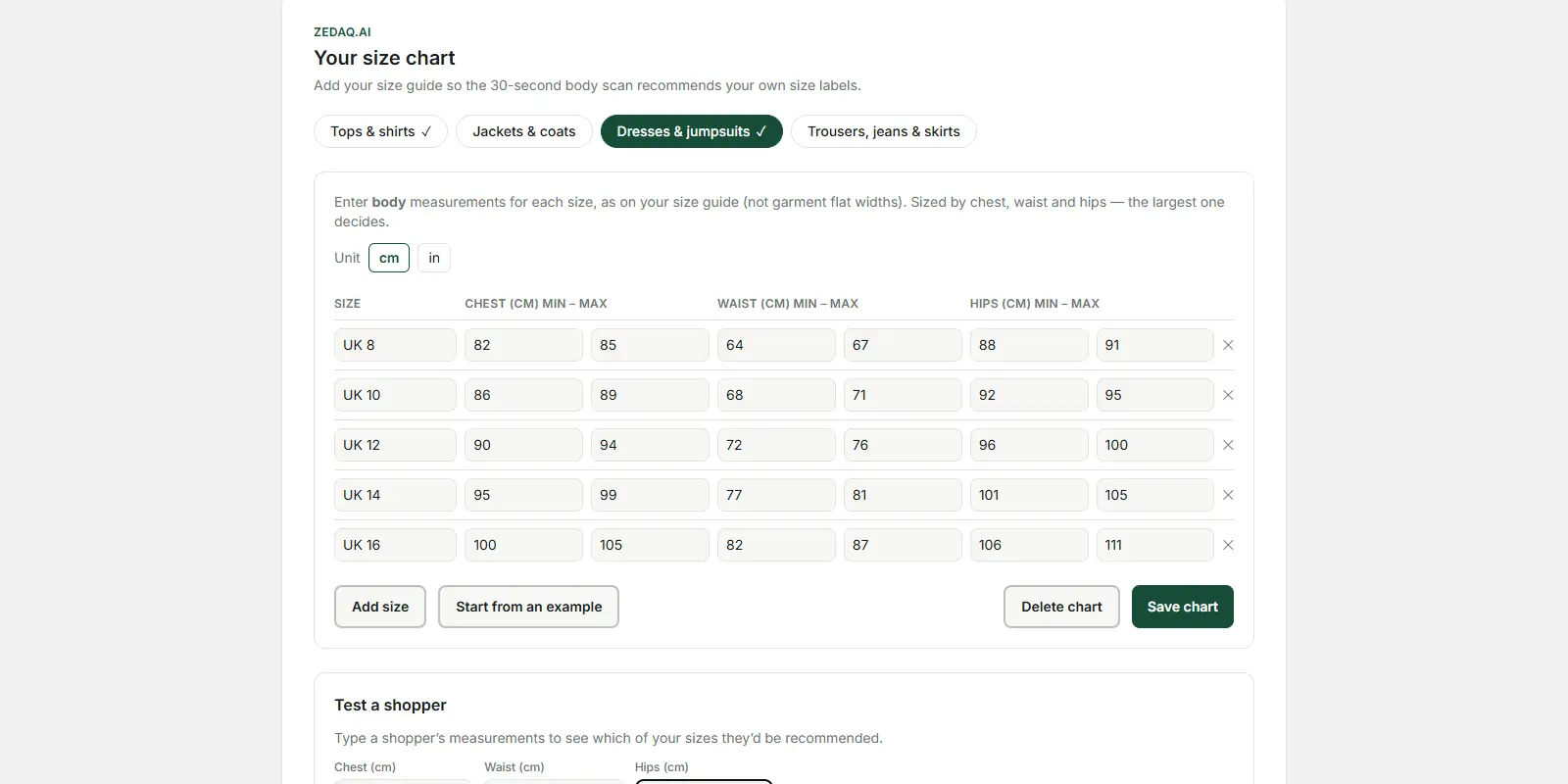
ZeDaq.ai's size recommendation is designed around the store's own size chart. Check what the tool supports before promoting it for children's wear, and ask whether your garment types fit the tool. The shopper-facing scan uses one photo plus height, and your chart decides the labels. To see how an adult-scale chart is set up, read AI size recommendation for fashion stores.
What reassurance do parents want before they pay?
Because the date is fixed, parents look for signs that a problem can be fixed in time:
- A clear exchange policy with a stated turnaround.
- Contact details that get a reply, such as WhatsApp or email.
- Honest stock notes, for example "last few in this size".
- Delivery tracking.
Keep your policy simple and visible on the product page, not buried in the footer.
How should you photograph children's outfits?
Good photos answer questions parents would otherwise email you. Show the outfit on a child close to the age you are selling, standing and moving. Include a back view, because many occasion outfits have buttons, bows or zips there.
Add a flat lay so parents see the true color and the length. If you do not have child models, a photo on a mannequin with the height noted still helps.
How should you plan around the Eid deadline?
Eid cannot be moved. Plan your calendar backward:
- Set a last-order date and show it on every page.
- Offer exchanges, and say how long they take.
- Prepare stock early, and mark low sizes clearly.
- Send a reminder email as the cut-off approaches.
For the wider launch schedule, see Eid collection launch planning, which covers timing and collections for the season.
Help parents pick the right size first time
FAQs
Should parents buy by age or by measurements?
Measurements are safer, because age labels vary between brands. Height is the best starting point for children.
Should I size up for a child's Eid outfit?
Many parents do, for comfort and growth. A fit note on the page helps them decide.
What is the best way to show kids' outfits online?
Use photos on real children with their height and size worn, plus a chart and clear care notes.
Can I use an adult size chart for kids' wear?
No. Children are proportioned differently, so create a separate chart for them.
Try ZeDaq.ai free
Virtual try-on and Find my size for your store, plus client, order and invoicing tools for tailors, in one subscription.

