Kaftan Sizing: Is One Size Really One Size?
By the ZeDaq.ai team · · 4 min read
On this page
- What does "one size" or "free size" mean on a kaftan?
- Which measurements decide whether a kaftan fits?
- How do you check a kaftan against your body?
- Why do some shoppers still need more than one size?
- What do fabric and cut change?
- How can you test a kaftan you already own?
- How should stores list kaftan sizes online?
- Can a size scan help with loose garments?
Kaftan sizing is looser than most, but a one size kaftan is not really one size. It is cut loose enough to suit a range of bodies, but its width, length and sleeve still favor some shoppers over others. Check the garment's actual measurements before ordering, because "free size" is a label, not a promise.
This guide is for shoppers and for store owners who sell kaftans online. Sellers who want clearer sizing can use AI size recommendation for fashion stores alongside their own chart.
What does "one size" or "free size" mean on a kaftan?
It means the seller made a single pattern meant to fit many body types. There is no standard behind the label, so every brand decides what "one size" covers.
A kaftan cut wide and straight forgives more than a fitted one, but its length and sleeve opening do not change. A tall shopper may find the hem short. A petite shopper may find it swallows them.
Which measurements decide whether a kaftan fits?
Ask for the garment's measurements, lying flat, and compare them with your own body.
- Width across the chest or bust. Measure the garment flat and double it, to compare with your body measurement.
- Length. From the shoulder or neckline to the hem.
- Sleeve length and opening. Matters for wrist and elbow comfort.
- Shoulder drop. Wide drop shoulders change how long the sleeve looks.
- Neckline depth. Affects how much it shows and how it sits.
Garment measurements and body measurements are different. Make sure you compare like with like.
How do you check a kaftan against your body?
- Measure your bust, hips and height.
- Find the flat width of the kaftan at the chest and hem.
- Double the flat width to get the full circumference.
- Check that the circumference is larger than your bust and hips, with room to move.
- Compare the length with where you want it to fall, such as knee or ankle.
The guide to how to measure for a kaftan walks through taking each body measurement.
Why do some shoppers still need more than one size?
Some brands offer a standard size and an extended size. Others list sizes such as S/M and L/XL. This helps because a pattern wide enough for a small frame can look shapeless on a larger one, while a pattern cut for fuller bodies may overwhelm a slim shopper.
For menswear, see buba and sokoto sizing for men, where length and sleeve shape matter differently. The related guide on dashiki sizing and looseness covers another loose garment.
What do fabric and cut change?
The same measurements can feel very different depending on the cloth. A soft, flowing fabric such as chiffon drapes close to the body, while stiff cotton or brocade holds its shape and adds bulk. The guide to virtual try-on for flowing garments explains why loose pieces are harder to judge from photos.
Cut matters as well. A straight kaftan with a center seam fits differently from one cut with side gussets or a wide A-line. Embroidery at the neckline or hem can add weight, which changes how the garment hangs. If a listing names the fabric and cut, you can picture the result more accurately.
How can you test a kaftan you already own?
Lay your best-fitting kaftan flat and measure it the same way as the listing. Note the chest width, length and sleeve length. When you shop, compare each listing with those three figures. This takes two minutes and is far more reliable than guessing from the label.
Keep the numbers in your phone notes, so you can reuse them every time you shop.
How should stores list kaftan sizes online?
A good listing replaces the single word "one size" with facts.
| Detail | Why it helps |
|---|---|
| Flat chest width | Lets shoppers calculate fit |
| Total length | Shows where the hem falls |
| Sleeve length | Avoids surprises at the wrist |
| Model height and what she wears | Gives a visual reference |
| Fabric and drape | Stiff fabric fits differently from soft |
Include a line such as "suits bust up to your stated figure" only if you have checked it with real garments. Do not guess.
Can a size scan help with loose garments?
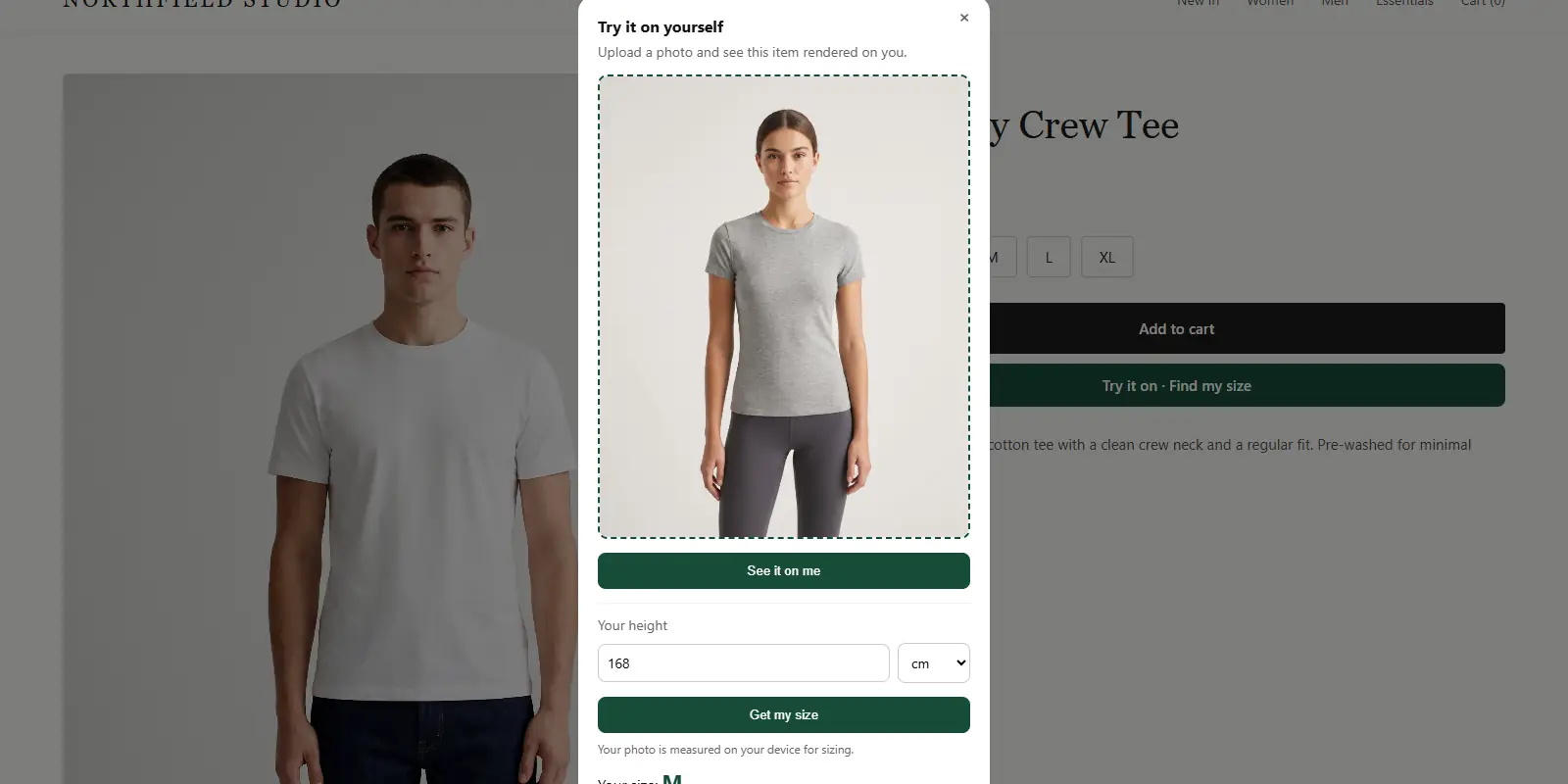
Yes, as one tool among others. ZeDaq.ai's scan takes one photo and the shopper's height, then matches measurements to the store's own chart. For a kaftan, the store would enter the range it suits, then the shopper sees whether it falls inside.
See the real flow with the live demo below. For a bigger picture on choosing between methods, read virtual try-on versus size charts.
Try the live demo and check a garment on your body
Try it on yourself
Live renderUpload a photo, pick a piece, see it rendered on you.
Pick something to try on
Let shoppers check fit before they buy
FAQs
What size is a one size kaftan?
There is no universal answer. Each seller sets what "one size" covers, so look for the garment's measurements.
Can I wear a one size kaftan if I am plus size or petite?
It may work, but check the width and length first. If the listing only says "one size," ask the seller for measurements.
How much room should a kaftan have?
It should be roomier than your bust and hips so the fabric can drape. How much more is a style choice.
How do I describe a kaftan size for my store?
Use flat measurements and the model's height. That is more helpful than a single label.
Try ZeDaq.ai free
Virtual try-on and Find my size for your store, plus client, order and invoicing tools for tailors, in one subscription.

