Big Cartel vs Shopify for Indie Clothing Brands
By the ZeDaq.ai team · · 7 min read
On this page
Big Cartel suits indie clothing brands that want a simple, low-cost shop with a small catalog, while Shopify suits brands that expect to grow and want a large app ecosystem and more control. The right choice depends on how many products you sell, how much you want to customize, and what tools you need around the store.
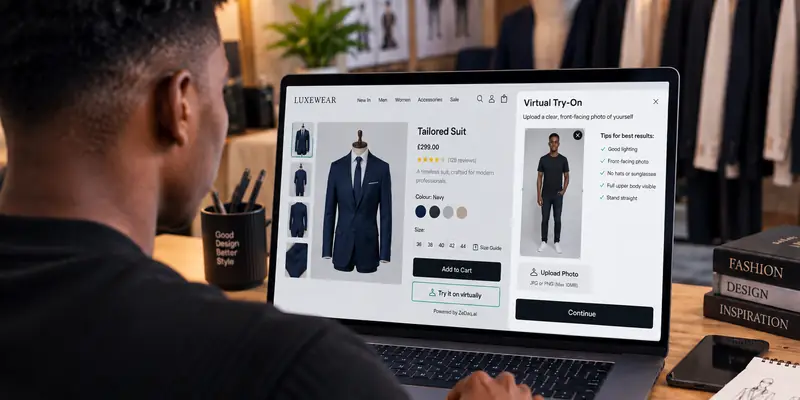
This comparison uses each company's public pricing page, checked in November 2026. Prices change, so confirm them before you decide. If you plan to add extras such as virtual try-on for your online store later, platform flexibility matters more than it first appears.
What are the main differences at a glance?
| Area | Big Cartel | Shopify |
|---|---|---|
| Focus | Small shops for artists and makers | General ecommerce, from small to large |
| Entry paid plan | Platinum | Basic |
| Apps | Print-on-demand and other apps, plus Zapier on the top plan | Large App Store |
| Growth path | Two paid tiers | Four tiers, up to enterprise |
Sources: Big Cartel pricing and Shopify pricing, both checked November 2026.
How do the prices compare?
Big Cartel lists three plans. Gold is a limited free plan, Platinum is listed as "7 days free, then $15/mo", and Diamond is $30 a month, according to its pricing page (checked November 2026). The page offers an annual option but does not show its prices.
Shopify lists Basic at $39 a month billed monthly or $29 a month billed yearly, and Grow at $105 monthly or $79 yearly, on its pricing page (checked November 2026). It also lists card processing rates by plan, which you should read before you compare total costs.
Plan price is only part of the picture. Compare these as well:
- Payment fees. Shopify's page lists rates for its own payments and a fee for third-party gateways. Big Cartel's pricing page, as we read it, does not state transaction fees, so check its payments documentation.
- Apps. App subscriptions can add up on either platform.
- Your time. A simpler tool costs less to learn and maintain.
What does each platform include?
On Big Cartel, the Platinum plan includes custom domains, physical and digital products, shipping labels and order tracking, shop design customization, inventory tracking and bulk product editing, according to its pricing page. Diamond adds abandoned cart recovery, scheduled product drops, password-protected products and a Zapier connection.
Shopify's plans include an online store, unlimited products, 24/7 live chat and built-in marketing tools, per its pricing page. Higher plans add more staff accounts, per the same page.
For a clothing brand, product drops and password-protected products can be useful for limited releases. Big Cartel lists these on Diamond. Check whether Shopify's plans or the apps you would add cover the same need.
Which is better for design control?
Both let you customize your shop. Big Cartel positions design customization as a Platinum feature. Shopify has a theme store, a theme editor and app blocks, so you can place tools exactly where you want them on a product page.
If your brand relies on a distinctive look, check each platform's theme options and try a demo store. Look at the product page on your phone, because that is where most shoppers see it.
Which is better for adding sizing and try-on tools?
This is where platforms differ most for fashion. Clothing has a high return risk when shoppers guess a size, so tools that help them choose matter.
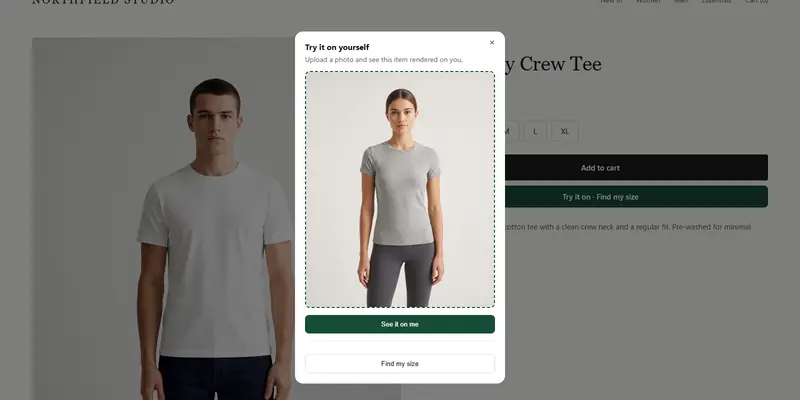
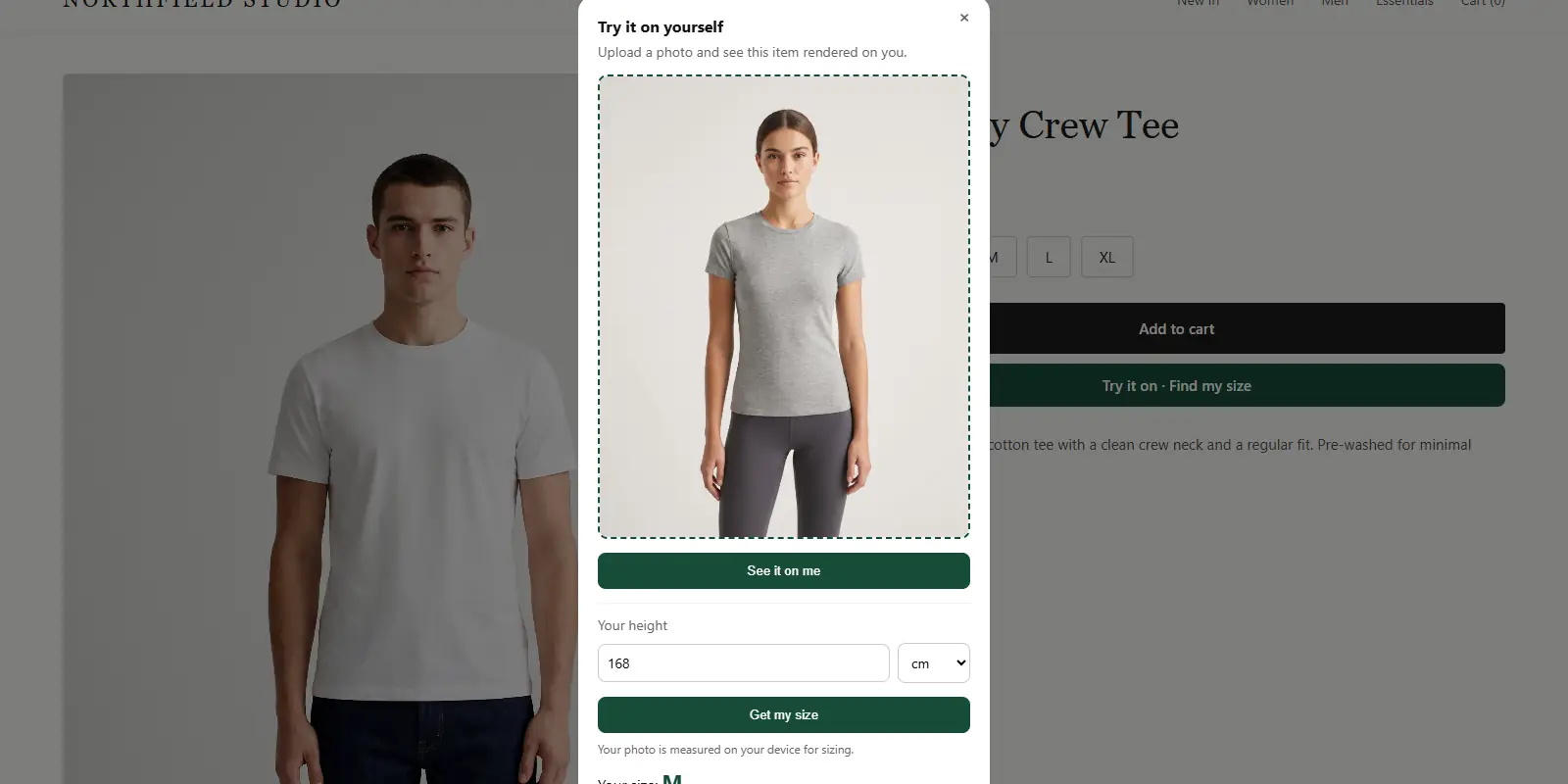
On Shopify, you can install an app from the App Store and switch it on in your theme. ZeDaq.ai is available as a Shopify app, and it recommends a size from a 30-second body scan matched to your own size chart.
On Big Cartel, our guide to try-on options on Big Cartel explains what is possible today. Check it before you assume a tool will work on your shop.
Which platform fits which brand?
What does a worked comparison look like?
Imagine two brands. The first sells one capsule collection of a few styles, takes orders through social media and ships them itself. The second plans to add new styles every season, sell in several sizes and colors, and add email, reviews and sizing tools.
The first brand may never use most of what Shopify offers, so Big Cartel's lower entry price is a good fit. The second brand will likely want an app ecosystem and finer control over product pages, which points to Shopify.
Neither choice is permanent. The point is to match the platform to the next year of your business, not the next five.
How do add-on costs change the picture?
A platform plan is only the base. Sizing, email and review tools usually add monthly subscriptions, so price them early.
If you choose Shopify and add ZeDaq.ai, the Free plan includes 3 try-ons, 3 measurements and 5 invoices a month. The Micro plan costs $1 for the first month, then $14 a month, and the first-month price applies to monthly plans only, once per store. Every paid plan has a 3-day free trial with no card required, and current details are on the pricing page.
How should you treat fees you cannot compare directly?
Some costs are hard to line up. Big Cartel's pricing page does not list transaction fees, and Shopify lists them by plan. Rather than guess, open both payment help pages and write down the rate for your country.
Then run one sample order through each. Take a typical $60 order, subtract the fees, and see what is left. That gives you a margin comparison based on real numbers instead of plan names. Also add shipping, packaging and returns, since those costs hit clothing brands every month and often matter more than the platform fee.
Which platform is easier to run day to day?
That depends on you, so test it. Each platform offers a trial or free plan, so add the same three products to both and time how long it takes.
Note how many steps you needed and how many settings you had to look up. A tool that feels clear on day one is likely to be easier to maintain.
How do you choose between them?
What should you do before you pick?
Use a short checklist:
- Count your products. Write down how many styles and variants you expect in the next year.
- List the tools you need. Email, reviews, sizing, shipping and accounting.
- Price two years. Add plan, payment and app costs for each platform, using today's public prices.
- Test the admin. Start a trial and add three real products on each.
- Check migration. Big Cartel lists import from Etsy, Squarespace and Shopify on its pricing page, which helps if you start elsewhere.
If you decide on Big Cartel first, the guide to setting up a clothing store on Big Cartel walks through the build.
When does Big Cartel make sense?
Big Cartel can fit when:
- You sell a small number of styles, such as a capsule collection.
- You want a quick launch and low monthly cost.
- You sell mostly to a social audience and don't need many integrations.
When does Shopify make sense?
Shopify can fit when:
- You expect your catalog to grow past a single capsule.
- You want to add apps for sizing, reviews, email or subscriptions.
- You want finer control over product pages and checkout.
- You plan to sell in several markets.
What if you want to build your own tools?
Developers can connect a store to ZeDaq.ai through a REST API. You send a request to POST /api/v1/tryon with an x-api-key header, and the full reference is in the API docs. The guide to a try-on API for developers shows how this works on a custom storefront.
There is also a script-tag widget for custom sites, including a "Try it on" button and "Find my size". Setup details are in the widget docs.
Add try-on and sizing to your own storefront
FAQs
Is Big Cartel cheaper than Shopify?
On the entry paid plans, yes. Big Cartel's Platinum plan is listed at $15 a month, compared with $39 for Shopify's Basic on monthly billing (both checked November 2026). Total cost also depends on payment fees and apps.
Can you move from Big Cartel to Shopify later?
You can rebuild your catalog on Shopify, but check Shopify's help pages for current import options before you commit. Plan any move for a quiet sales period.
Which platform is better for a first clothing brand?
If you are launching a small capsule on a tight budget, Big Cartel is easy to start with. If you expect many products and want more tools, Shopify gives you more room.
Does either platform have built-in size recommendations?
Neither pricing page lists size recommendations as a built-in feature. On Shopify you can add a sizing app, and ZeDaq.ai matches a body scan to your own size chart.
Try ZeDaq.ai free
Virtual try-on and Find my size for your store, plus client, order and invoicing tools for tailors, in one subscription.